
Tooth loss is everyone’s worst nightmare. Moreover, severe tooth loss can be hard to come to terms with, even from a distance. Fortunately, today’s dental treatment technology offers much easier and more natural solutions to such problems.
Undoubtedly, All-on-4 and All-on-6 treatments are among the best of these solutions. These treatments make you feel as if you have your natural teeth and eliminate all the fears and tensions associated with total tooth loss thanks to their long lifespan and aesthetic appearance. For those of you who are unsure whether All-on-4 or All-on-6 is more suitable, we will compare the two treatments.
What Is The All-on-4 Technique?
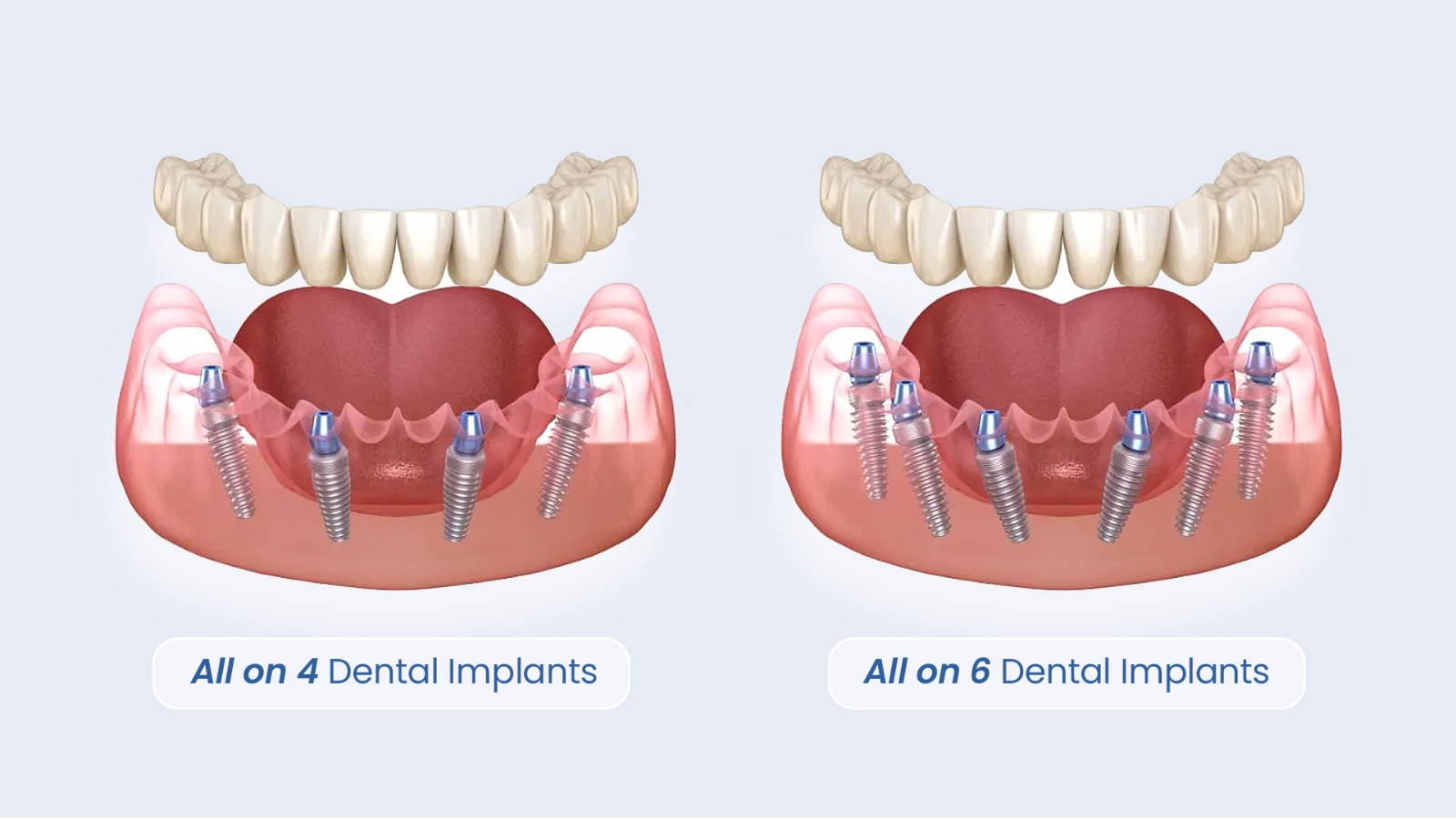
All-on-4 treatment is a reconstructive surgical procedure that may be recommended following the complete loss of teeth. In this procedure, four implants are placed into the jawbone. Other fixed prosthetic teeth are then placed on top of these implants to fill the gaps caused by tooth loss. Since temporary teeth can be fitted on the same day as the implants, this treatment is also known as 'same-day fixed teeth'.
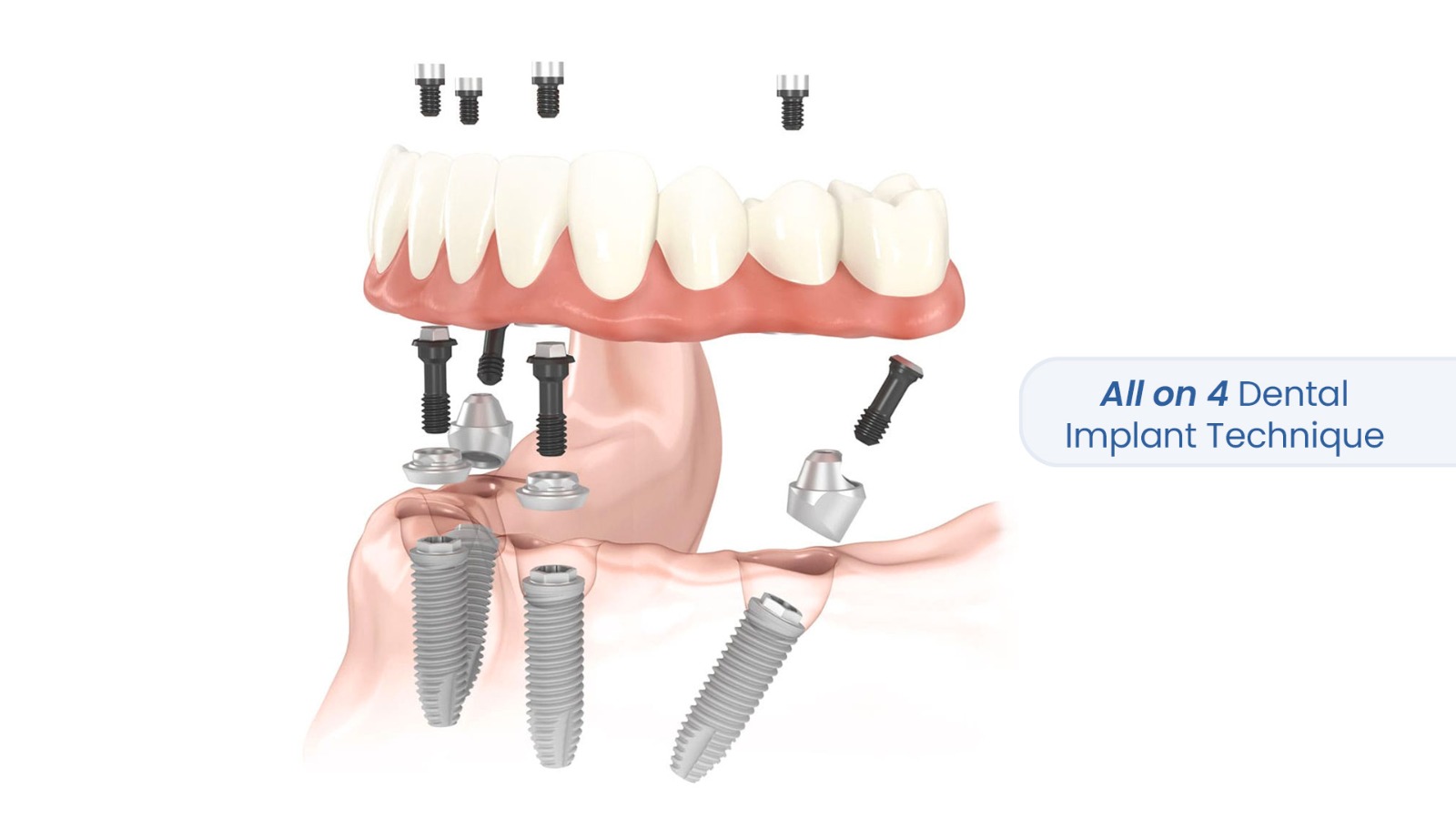
This treatment offers the advantage of being able to place many fixed teeth with fewer implants. Thanks to this advantage, the healing process can be faster and more comfortable. At the same time, having fewer implants placed into the bone eliminates the need for the bone to have perfect volume and density.
When performed by an experienced, specialised dentist in an appropriate clinical environment, the All-on-4 treatment can deliver natural-looking, long-lasting results that are comfortable to wear.
What Is The All-on-6 Technique?
All-on-6 is a reconstructive procedure performed following significant tooth loss. This surgical treatment is performed by a dentist. Six implants are placed into the jawbone. The name 'All-on-6' comes from the six implants that are inserted. Permanent prosthetic teeth are then attached using a bridge. All-on-6 can be used for both the upper and lower jaw.
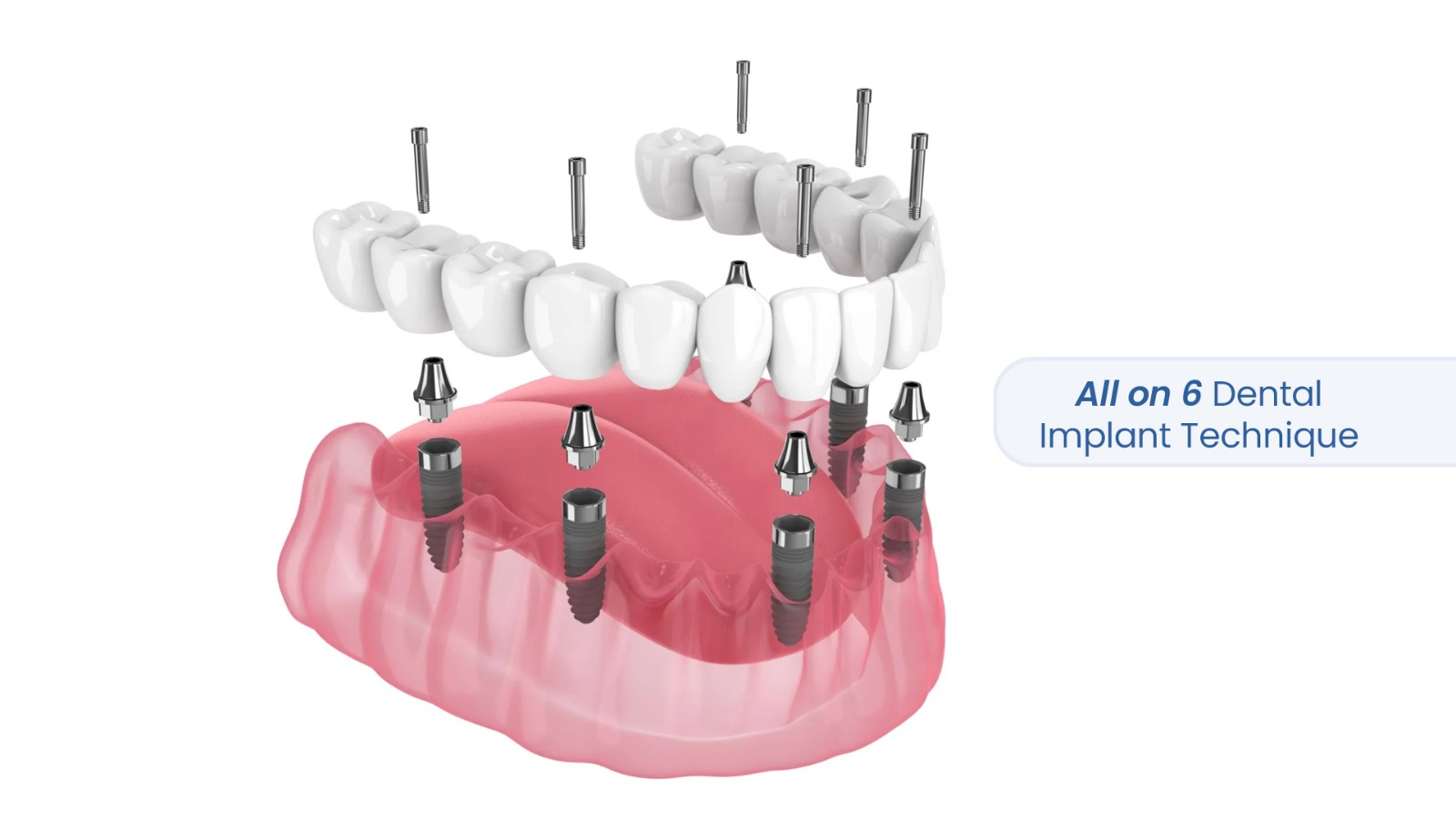
As it is fixed, it does not move. Thanks to their natural appearance, they create the sensation of real teeth.
This method is especially recommended for people who have experienced significant tooth loss, as it makes the treatment and healing process easier due to the limited number of implants placed.
Once the All-on-6 treatment has healed, patients usually feel as if their prosthetics are their natural teeth. This provides comfort in use. Aesthetically, the result is also very natural.
When regular care is carried out as recommended by the dentist, All-on-6 implants have a long lifespan. With proper maintenance and regular check-ups, they can be used for life.
What Is The Main Difference Between All-on-4 And All-on-6?
In All-on-4 and All-on-6 treatments, screws are inserted into the jawbone through the gums to support the prosthetics. This creates vertical supports that resemble natural tooth roots and hold the fixed prosthetic teeth in place. The All-on-4 treatment involves four of these supports. In other words, four supporting screws are placed into the jawbone. In the All-on-6 treatment, this number is six.
Types of Materials Implants Are Made From
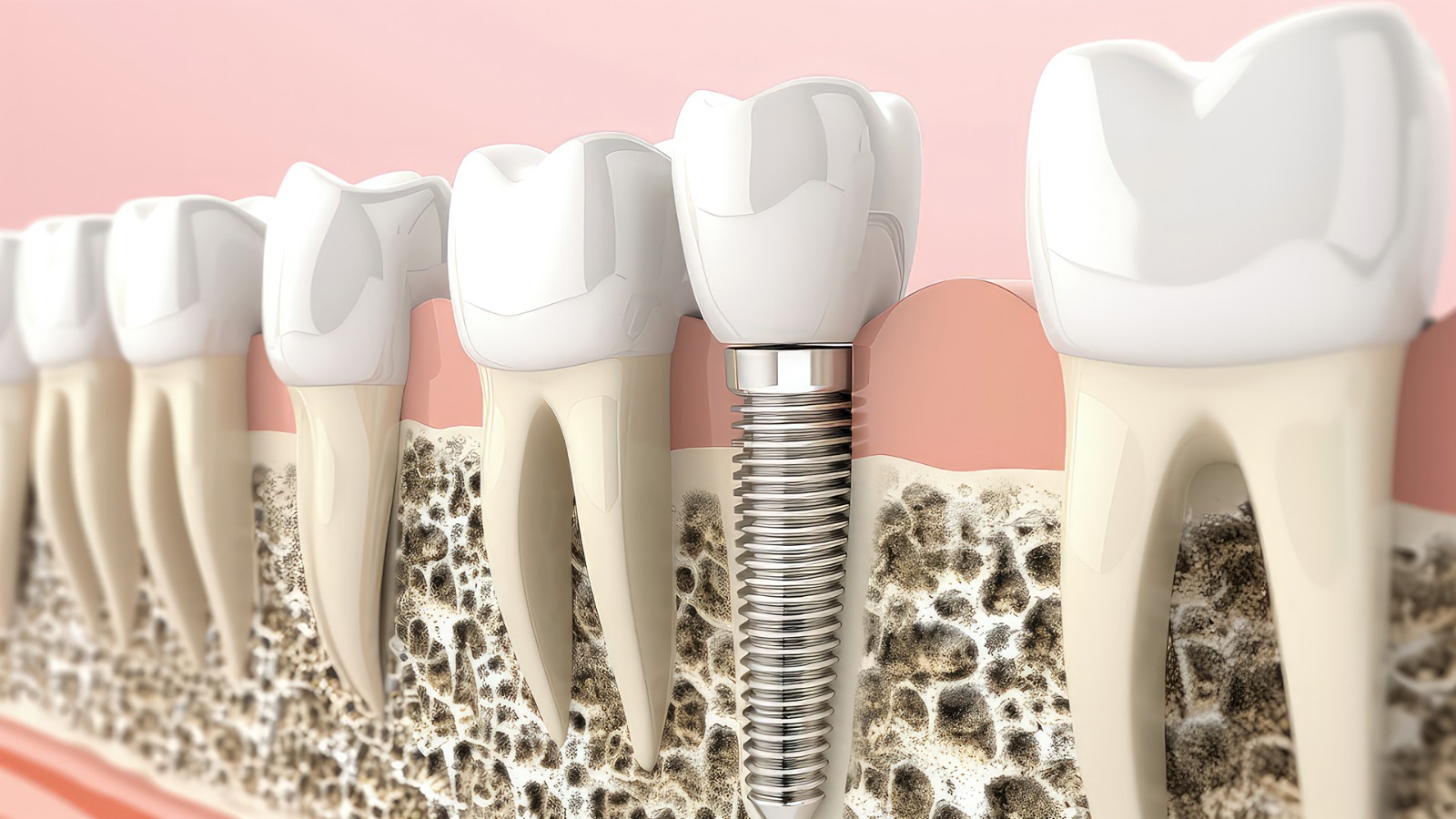
As previously mentioned, the All-on-4 and All-on-6 treatments involve placing four or six implants into the jawbone. Please note that these implants can be made from various materials. You can choose the material according to your health conditions, expectations, needs, and budget. However, you should consult your dentist to decide which option would be best for you.
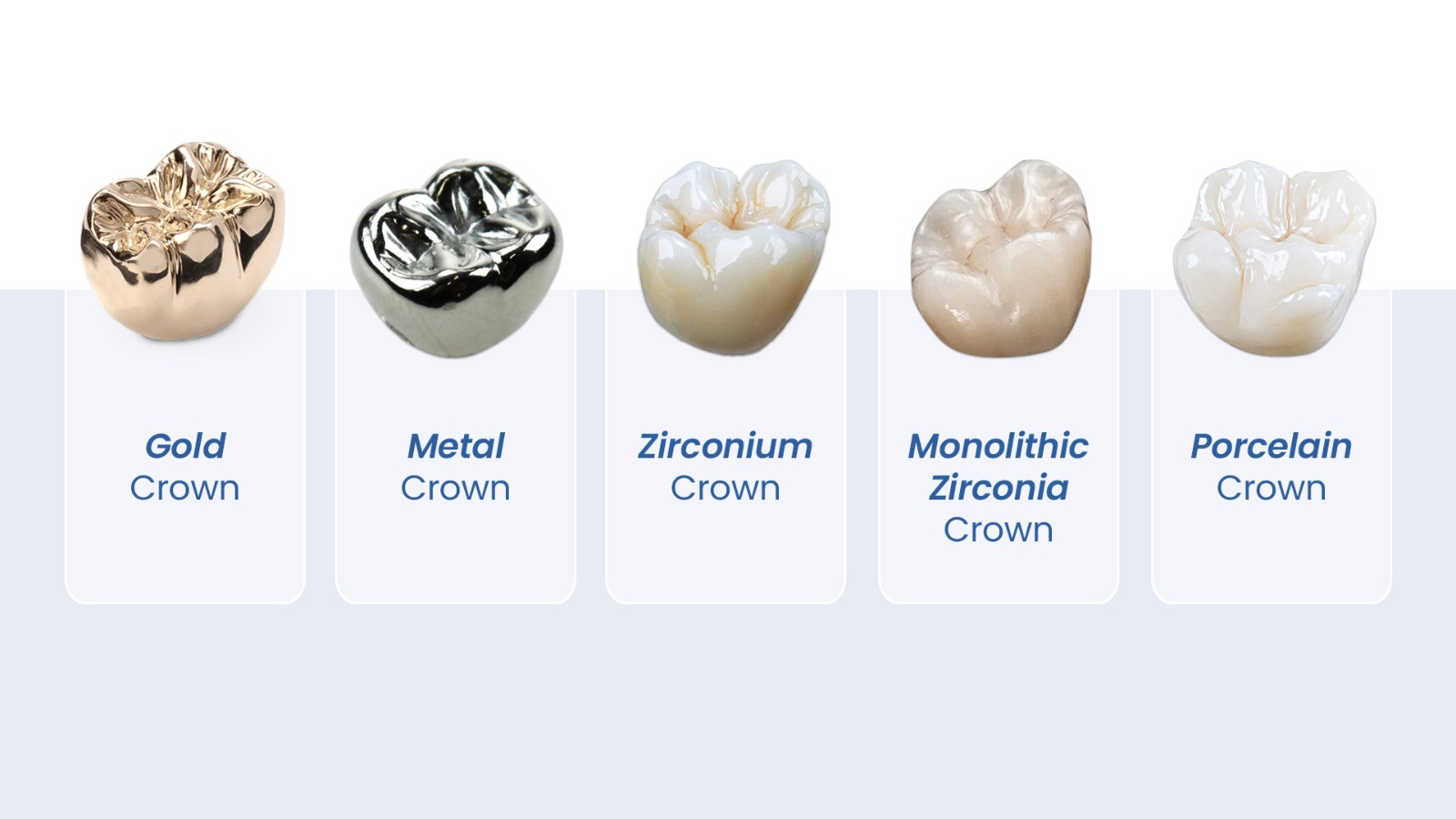
Acrylic and metal substructure
This material is generally preferred for fixed temporary prostheses. The reason for this preference is its lightness. Since it does not put pressure on the implant, the healing process is shortened. The metal substructure makes the prosthesis durable and ensures it can be used long-term. It is also cost-effective.
Zirconium
Zirconium is a highly biocompatible material. Its reflective surface provides it a highly natural appearance. It is also resistant to colour changes. It does not have a metal substructure. It is also highly durable, which gives it a long lifespan. However, zirconium is an expensive option because it possesses many desirable features.
Porcelain and metal substructure
Porcelain provides a natural appearance. However, while the metal substructure ensures durability, it can cause the gums to turn grey over time. It is more affordable.
Monolithic zirconia
This technique is also called full zirconia. Its production as a single block gives it very high durability. Although this option is expensive, polishing or staining may be necessary when used for front teeth.
Hybrid prosthesis:
In this option, a titanium bar is used in conjunction with acrylic or composite material. In other words, the titanium bar is surrounded by acrylic or composite material. This option is considered temporary and cost-effective because it does not have a significant impact on your budget and offers medium-level durability and aesthetic appearance.
Advantages And Disadvantages of All on 4
Advantages
- All-on-4 treatment offers patients who have experienced significant tooth loss a fast, natural, safe and long-lasting treatment option. With this treatment, patients receive their temporary fixed prostheses immediately after the implants are placed. This satisfies patients both aesthetically and in terms of ease of eating.
- The All-on-4 treatment healing process is also considerably faster than that of other implant treatments.
- Depending on the chosen material, All-on-4 implants can offer a highly natural appearance. Zirconium, in particular, reflects light in the same way as natural teeth.
- This treatment method provides long-lasting results when proper care is taken. Patients who maintain good oral hygiene and attend regular dental check-ups can expect to enjoy their new teeth for life.
- Another advantage of All-on-4 implants is that the teeth feel natural. After the healing period, patients adapt to their permanent prosthetic teeth and come to feel as though they are their own. This treatment provides permanent teeth with far fewer implants, meaning bone grafts are generally unnecessary except in exceptional cases.
- Since the prostheses are fixed, problems such as teeth coming loose or shifting during daily activities do not occur.
Disadvantages:
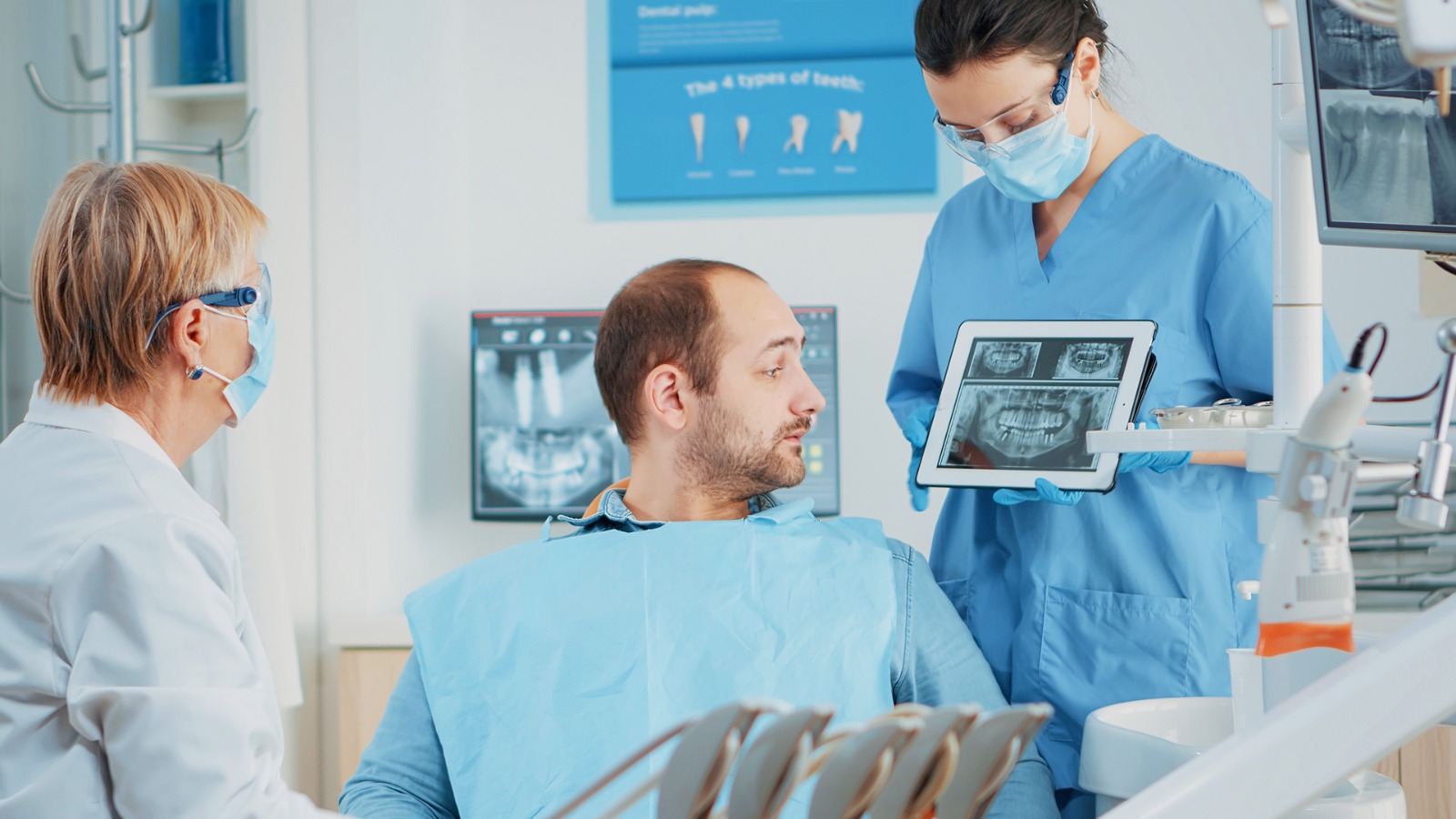
As with any treatment, the All-on-4 method may have certain features that could be considered disadvantages. Below, you will find information on the features of the All-on-4 treatment that could be considered disadvantages, despite it offering highly aesthetic and functional solutions.
- All-on-4 treatment may not be recommended if you have uncontrolled chronic conditions. If you have severe osteoporosis, diabetes or chronic immune disorders that are not well managed, your dentist may advise against this treatment.
- As All-on-4 is a surgical procedure, various complications may occur. However, these complications are generally temporary. Although rare, an implant may fail to integrate with the bone. If this occurs, the treatment plan must be reassessed and revised.
- After All-on-4 implant treatment, patients must pay close attention to their oral hygiene routine. Daily cleaning routines should be performed regularly and meticulously. Otherwise, undesirable conditions such as infection or implant loss may occur.
- Depending on the choice of material and adherence to the dentist’s recommendations, the prostheses may need replacing. Many of the listed disadvantages can actually become advantages, depending on your attitude and expectations.
Advantages And Disadvantages of All on 6
Advantages
- The All-on-6 treatment has many advantages. Firstly, placing six screws in the jawbone enables the prosthesis to be attached more evenly, distributing the force of chewing more uniformly. The applied force is also greater in proportion. This provides a more comfortable experience for the patient.
- Fixed prostheses closely resemble natural teeth. If the patient follows the dentist’s recommendations, their lifespan is quite long.
- The screws help to prevent bone erosion. As a result, bone loss is generally avoided.
- Following All-on-6 treatment, temporary prostheses are fitted after the implants are placed. This makes the healing process more comfortable for patients in terms of both appearance and function.
Disadvantages
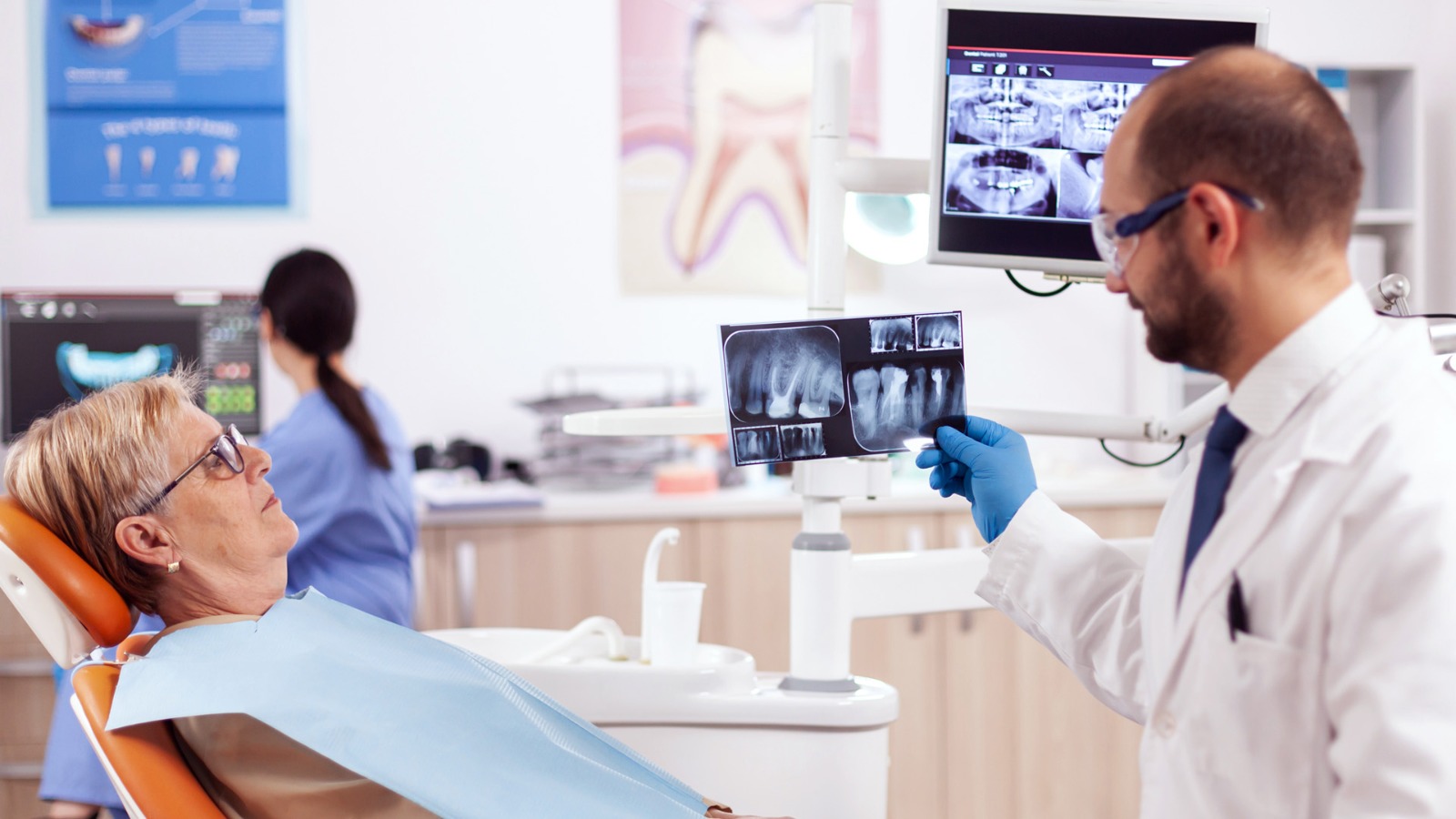
- All-on-6 treatment must be carried out carefully by an experienced dentist. The location and angulation of the implants are very important. If not done correctly, the prostheses cannot be positioned properly.
- In a mouth with six implants, the healing process may take longer than with All-on-4 treatment.
- The cost of the treatment is high.
- Sufficient bone health is required for placing six implants. If bone density or volume is insufficient, bone and tissue grafts may be necessary.
Who Is A Good Candidate for All on 4?
The All-on-4 treatment is not suitable for all patients experiencing tooth loss. Therefore, your dentist should decide how to proceed with the treatment after a careful examination. Patients who are generally considered suitable for All-on-4 treatment have the following characteristics:

- All-on-4 treatment may be appropriate for patients who have lost all or most of their upper or lower teeth.
- All-on-4 treatment can be recommended for patients with advanced decay in multiple teeth.
- For patients who have lost teeth due to gum disease, All-on-4 treatment can be recommended after periodontal treatment has been completed.
- For patients experiencing bone loss, such as from bone resorption, All-on-4 treatment may be recommended instead of full implants. Since only four implants are placed, with the posterior implants positioned at an angle, this treatment can be performed without the need for a bone graft.
- All-on-4 treatment may be a suitable option for patients who are uncomfortable with removable, non-fixed dentures. Because it is one of the options that most closely resembles natural teeth, this treatment allows patients to feel comfortable both functionally and aesthetically.
Who Is A Good Candidate for All on 6?
The All-on-6 treatment can only be applied if certain conditions are met. Otherwise, your dentist may not consider it suitable for you. The most accurate way to determine whether you are a candidate for All-on-6 is to consult an expert dentist in the field. Patients who are suitable for All-on-6 treatment include those who:
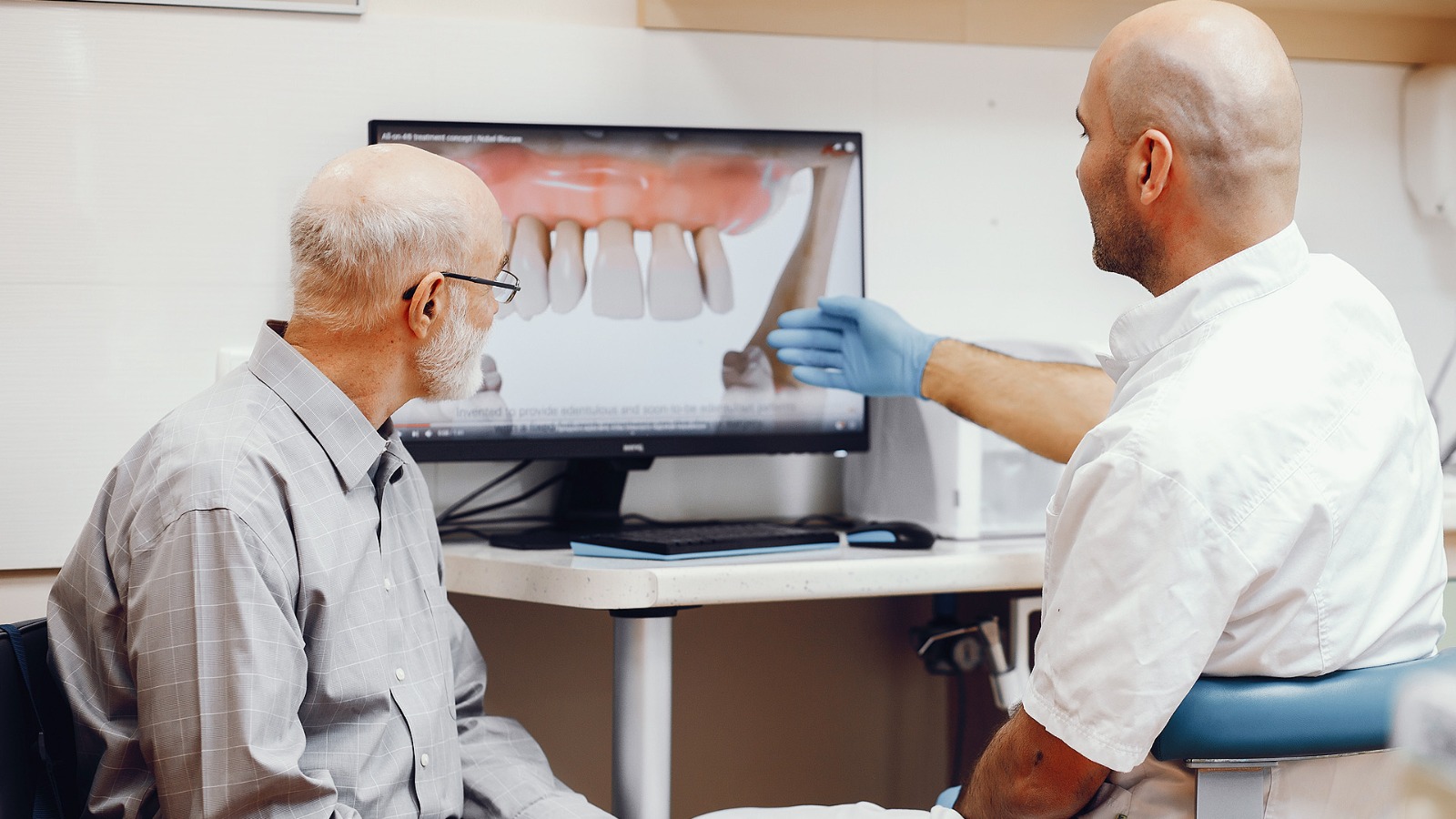
- Individuals who have lost all their teeth are suitable candidates for All-on-6 treatment. With All-on-6, they can comfortably use prosthetics aligned to their jaw and oral structure.
- Patients who have lost many teeth are also suitable candidates. However, any remaining teeth in the same jaw must be extracted before the procedure can begin.
- Patients who previously used removable dentures but found them uncomfortable can also undergo All-on-6 treatment.
- Patients with adequate bone volume and density are eligible for All-on-6 treatment.
- All-on-6 treatment is recommended for patients who have lost most of their teeth and are seeking functional and aesthetic solutions.
Comparing All on Four and All on Six
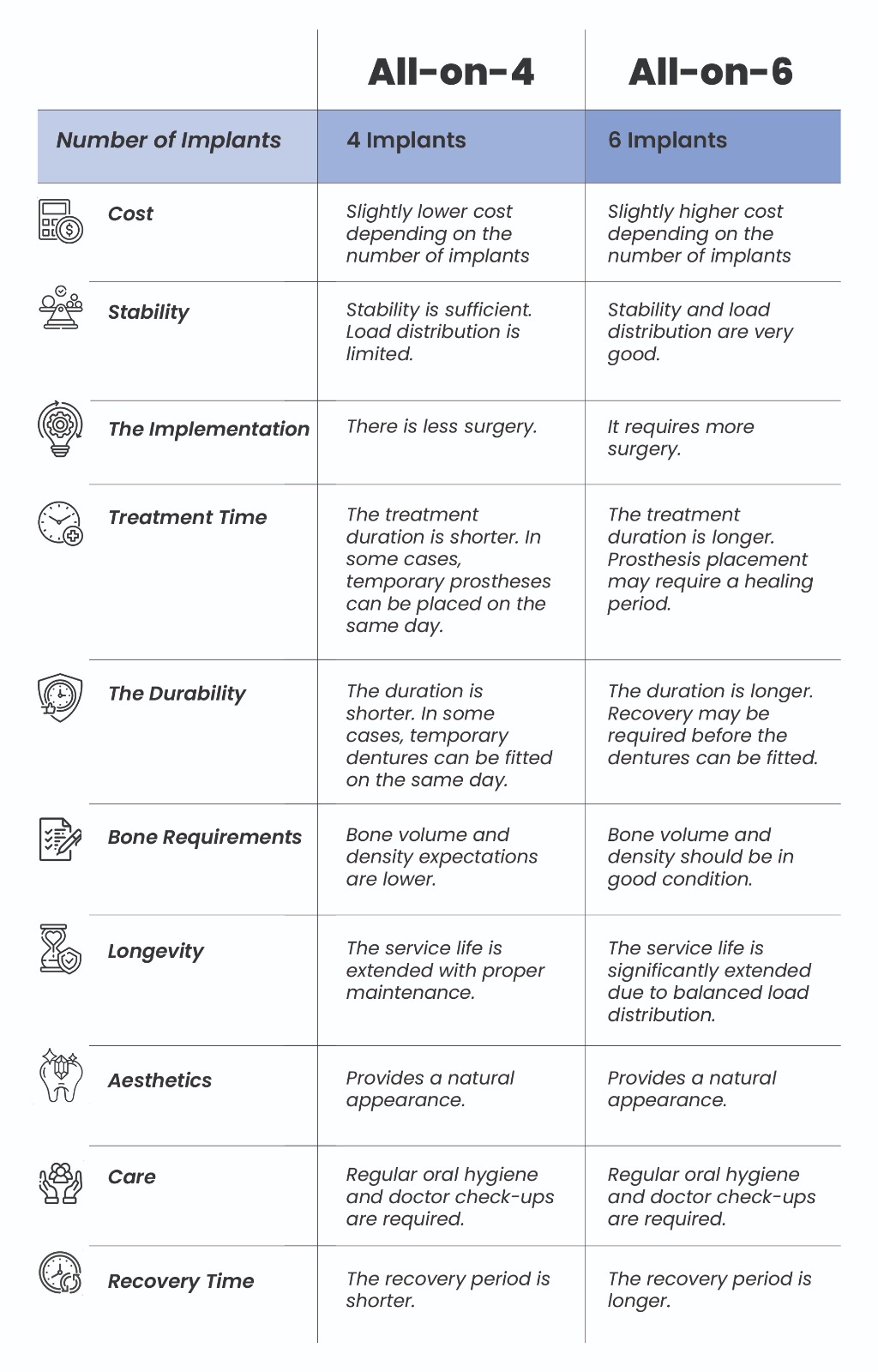
All-On-4 and All-On-6 Prosthesis Method
All-on-4 and All-on-6 are reconstructive dental procedures that are recommended for individuals who have lost most of their teeth or require multiple extractions. This treatment can be applied to the upper or lower jaw and involves placing six implants into the jawbone. These implants then support fixed prosthetic teeth. This gives the patient a regular, natural-looking dental appearance and proper functionality.

Initial Examination:
If you are considering All-on-4 or All-on-6 treatment, you should first schedule an appointment with a dentist who has experience in implant treatments. This treatment may, however, proceed as part of a multidisciplinary treatment plan. Oral surgeons may be involved in ensuring that your dental implants are placed at the correct angle and in the correct position within the jawbone; periodontists may be involved in checking the health of your gums and jawbone and treating any issues; and prosthodontists may be involved in designing dental prosthetics suited to you.
During the initial examination, you should provide your dentist with detailed information about your medical history, chronic conditions, expectations, daily routines and needs. Following this, your dentist will perform a physical examination to assess your oral and dental health. Alongside the examination, your dentist may use imaging techniques such as 3D tomography and X-rays, as well as digital measurement tools, to capture intraoral dimensions.
This allows your overall oral health status to be analysed alongside precise measurements.
Planning
Based on the detailed analysis obtained from the initial examination, your dentist will share the treatment steps with you. Your ideal dental design will be applied to high-resolution photographs taken from various angles. This application is carried out digitally with the support of specialized software. This allows you to see the expected results on your face before the treatment begins.
Your dentist will then explain in detail the treatment procedures required to achieve this result. At this stage, you will learn about any teeth that need extraction, the designed prosthetic appearance, and recommended brands or material options for the prosthetics and implants. All designs and options presented to you must be personalized and suitable for you. The appearance and positioning of the prosthetics should correspond to your jaw structure, facial features, and oral form. The material you choose should meet your lifestyle and needs, while the selected brand should fall within a budget range suitable for you.
All-on-4 and All-on-6 Treatment
Once you have agreed upon the personalised design and treatment plan with your dentist, the treatment phase can begin. If necessary, preliminary procedures will be carried out before starting the All-on-4 or All-on-6 treatment.
- If you have uncontrolled gum disease, this will be treated first.
- If there is severe bone loss, a bone graft procedure will be performed.
- If needed, a sinus lift procedure will be performed.
- Although not always required, tooth extraction is performed when necessary. In most cases, it is possible to start the implant treatment immediately after tooth extraction.
Local anaesthetic is applied at the beginning of the treatment. This ensures that you will not feel any pain or discomfort during the procedure. Four or six implants are placed into the jawbone through a surgical procedure. Temporary fixed teeth are usually placed immediately after this procedure. In some cases, these may be attached a few days later to make the recovery period more comfortable for the patient.
Recovery Process
The recovery process takes approximately 3–4 months. During this time, the implants should integrate and adapt to the surrounding tissue. You can think of the implants as artificial tooth roots in this regard. If the desired extent of recovery is not achieved, you may need to wait a little longer.
Placement of Fixed Prosthetic Teeth
Once your implants have fully integrated with your jawbone, your dentist will place your permanent fixed prosthetic teeth in your mouth. Once in position, they are carefully checked for aesthetic and functional suitability. The result should be visually harmonious and capable of performing the functions of chewing and biting effectively. If necessary, your dentist will make any adjustments.
Which Is Better for You?
Your specialist dentist should make the most accurate decision on which treatment is ideal for you after carrying out various examinations and imaging. However, as a brief overview: All-on-6 is a more costly and intensive surgical treatment, but it provides longer-lasting comfort. During chewing, the force is distributed more evenly. This treatment requires very good bone density and volume.

The All-on-4 treatment can be carried out more quickly and easily. It can also be used for patients with insufficient bone density and volume, if necessary with the help of a bone graft procedure. Fixed prosthetics are also very comfortable to use. Both treatments provide a high level of natural appearance.
Cost of All-on-4 and All-on-6 in the UK, USA and Turkey
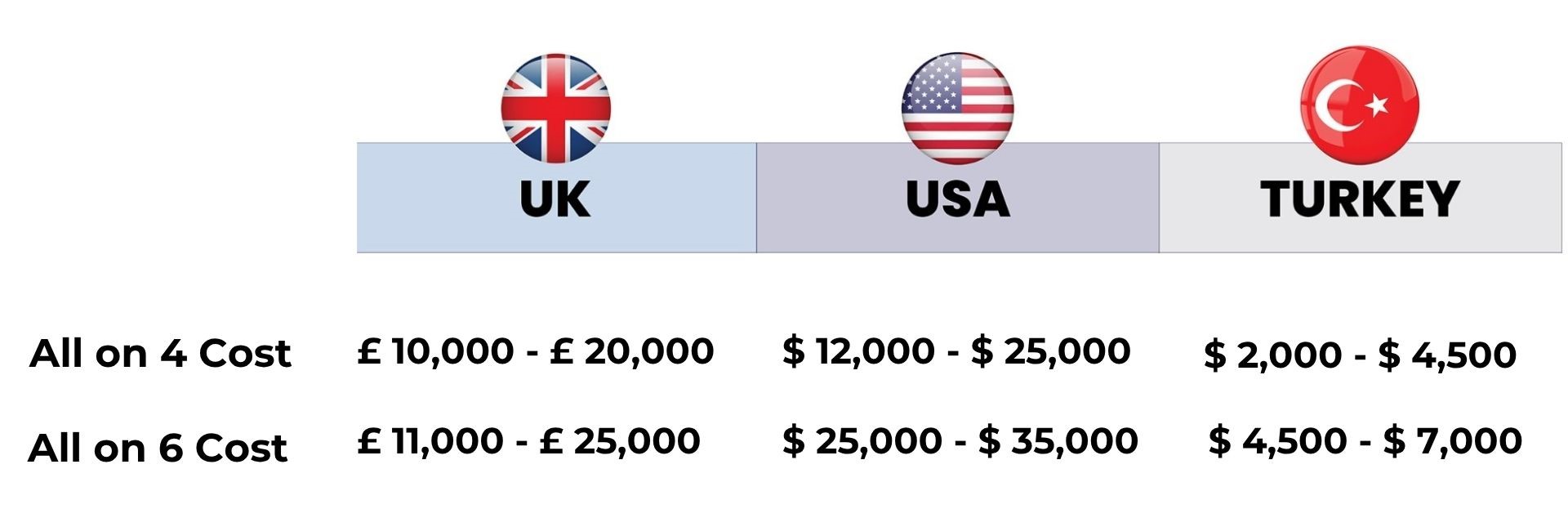
While the All-on-4 treatment costs between £10,000 and £20,000 at dental clinics in the UK, it costs between $12,000 and $25,000 in the USA. In Turkey, the cost is between $2,000 and $4,500.
The cost of All-on-6 treatment ranges from £11,000 £25,000 in UK dental clinics, $25,000–$35,000 in the USA and $4,500–$7,000 in Turkey.
Although the treatment uses the same brand/material and is of a similar quality, the price varies from country to country. The main reasons for these differences are exchange rates and varying fixed clinic expenses in each country.
Conclusion
In conclusion, the most suitable treatment for you will depend on your health and financial circumstances. It is important to note that, despite their different advantages and disadvantages, these two treatments will significantly improve your comfort, both aesthetically and functionally. Your dentist will be able to advise you on whether the long-lasting All-on-4 or All-on-6 treatment is most suitable for you. A treatment performed by experienced dentists in a clinic with the proper equipment and within your budget will solve the health and confidence issues caused by tooth loss.

Frequently Asked Questions
Which Treatment Is Good for You? All-on-4 or All-on-6?
Both treatments have their own unique advantages and disadvantages. If you have sufficient bone volume and your budget allows for it, the All-on-6 treatment may be more suitable for you. With six implants being surgically placed, the force during chewing is distributed much more evenly. However, the healing and treatment process is longer. If you have experienced bone and tooth loss, the All-on-4 treatment can provide a comfortable and aesthetic solution. Both treatments have a long lifespan.
How Long Do All-on-6 Implants Last?
If you maintain meticulous oral hygiene and attend routine dental check-ups, the All-on-6 implant can last for over 25 years.
How Long Do All-on-4 Implants Last?
The All-on-4 implant has a lifespan of over 20 years with careful, consistent oral hygiene.

Do All-on-4 and All-on-6 Implants Look Natural?
Both the All-on-4 and All-on-6 treatments offer highly natural-looking results in terms of both jawline and prosthesis appearance. The choice of material for the permanent fixed prosthesis is important here.
Is Getting All-on-4 and All-on-6 Painful?
Although All-on-4 and All-on-6 are surgical procedures, you will not feel any pain during treatment. This is because local anaesthetic is administered to the patient beforehand. Therefore, you will not experience any pain throughout the process. However, once the implants have been placed and the procedure is complete, you may experience pain, sensitivity and swelling for the first few days. This is an expected outcome.
This pain can be managed effectively with the painkillers recommended by your dentist. If you follow your dentist’s instructions, the healing process will be quick, and any pain or sensitivity will disappear within a short time. Applying a cold compress during the period of pain and swelling can also help to reduce them. Keeping your head elevated while sleeping during the first few days can help to balance blood circulation and reduce pain.
Can I Get Dental Implants All on 4 If I Have Bone Loss?
Yes, the All-on-4 treatment requires less bone density. Therefore, you are eligible for the treatment. However, if your bone density and volume are below the required level, a preliminary bone graft will need to be performed. Once your bone density has reached the desired level, the All-on-4 treatment can be performed.