
Composite vs Porcelain Veneers
Composite vs. porcelain veneers is one of the first questions people ask when they are planning a smile makeover. Both types can fix chips, gaps, stains and uneven teeth, but they differ a lot in price, durability and how they are fitted. This guide covers what each one involves, how they compare side by side, and what you can expect to pay for veneers in Turkey, one of the world's most popular destinations for dental work.
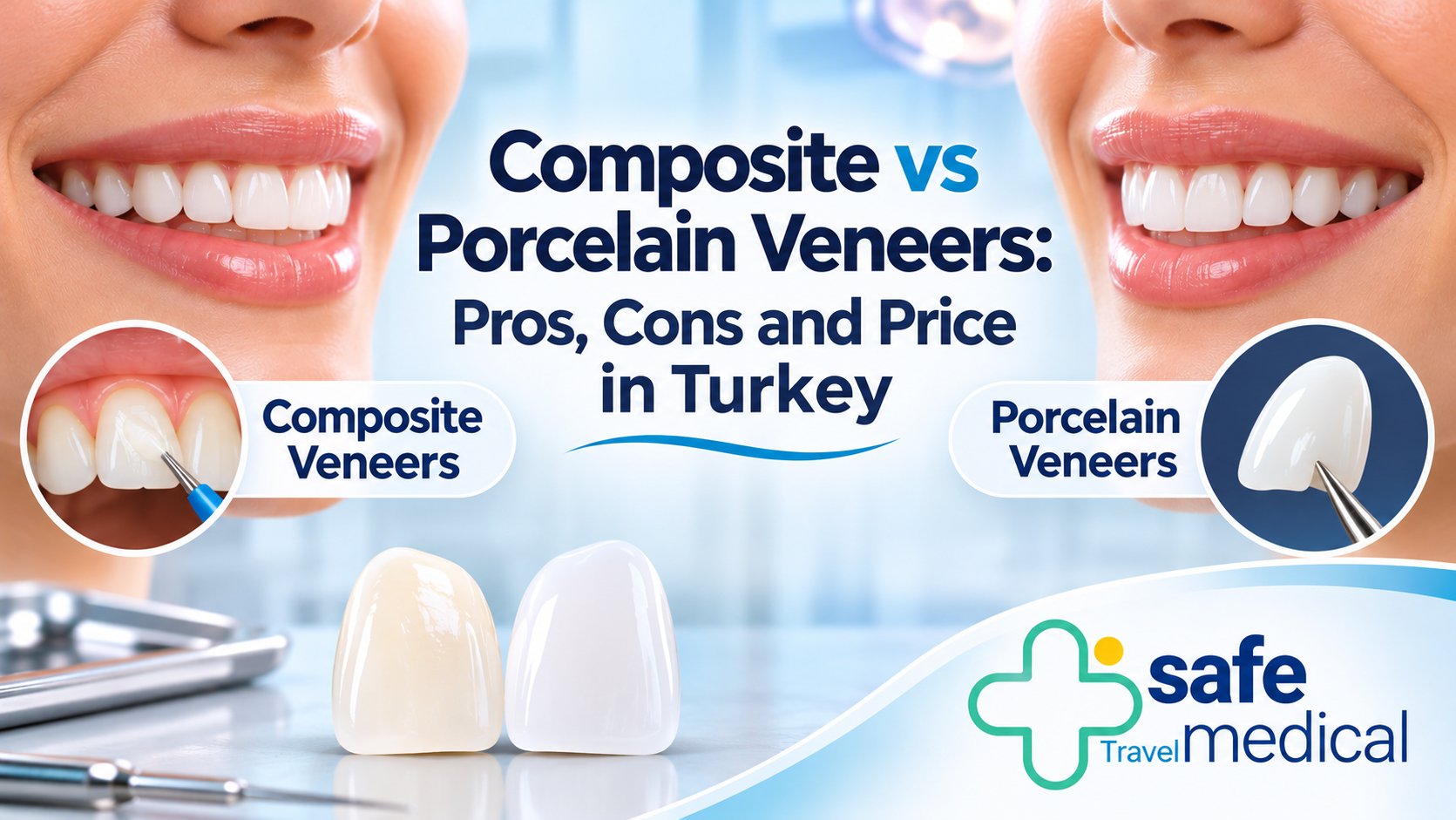
What Are Composite Veneers?
Composite veneers are made from tooth-coloured resin, the same material dentists use for white fillings. The dentist shapes it directly on your tooth, layer by layer, until it looks right. Because everything happens in the chair, composite is often seen as the faster and gentler way to change how your teeth look.
How Composite Veneers Are Applied
The process is fairly simple. Your dentist will choose a shade that matches your natural teeth or the shade you want. The surface of the tooth is lightly roughened so the resin bonds well, and in many cases little or no enamel needs to be removed.
The resin is then applied in thin layers. Each layer is hardened with a special curing light, and the dentist sculpts the shape as they go. Finally, the veneer is trimmed and polished to match the surrounding teeth. Depending on how many teeth you are treating, this can often be done in a single appointment.
Who Are Composite Veneers Best For?
Composite is a good solution for minor cosmetic problems such as small chips, tiny gaps, mild discolouration or slightly uneven teeth. It is also a good option for people who want to preserve as much of their natural tooth as possible or who prefer a treatment that can often be repaired or adjusted. For this reason, younger patients are often guided towards composite, as are those on a tighter budget who still want to see an improvement.
What Are Porcelain Veneers?
Porcelain veneers are thin ceramic shells that are made in a dental lab and bonded to the front of your teeth. They are known for their very natural look, because porcelain reflects light the way real enamel does. They are what most people mean when they talk about a "Hollywood smile".
How Porcelain Veneers Are Made and Fitted
This is a two-step treatment. On the first visit, the dentist prepares your teeth by removing a thin layer of enamel, generally between 0.3 and 0.7 mm, to make room for the veneer. They then take impressions or a digital scan and send them to the lab. Temporary veneers are placed while the lab makes your final ones.
On the second visit, the temporaries are removed and the final veneers are tried in. Once you're happy with the shape and colour, they are bonded permanently in place using a strong dental adhesive and a curing light. Many clinics in Turkey make porcelain veneers in their own in-house lab, so the whole process can usually be completed in 5 to 7 days.
E-max and Laminate Veneers Explained
You'll see these two terms a lot when you're comparing clinics, so it's useful to know what they mean.
E-max veneers are made from a special type of porcelain known technically as lithium disilicate glass-ceramic. It is strong, highly translucent and can be made very thin, which is why it is one of the most popular choices for front teeth. Thin porcelain veneers are often called laminate veneers. The word "laminate" simply refers to the thin layer that is bonded onto the tooth. So when a clinic offers laminate veneers, they are usually talking about porcelain.
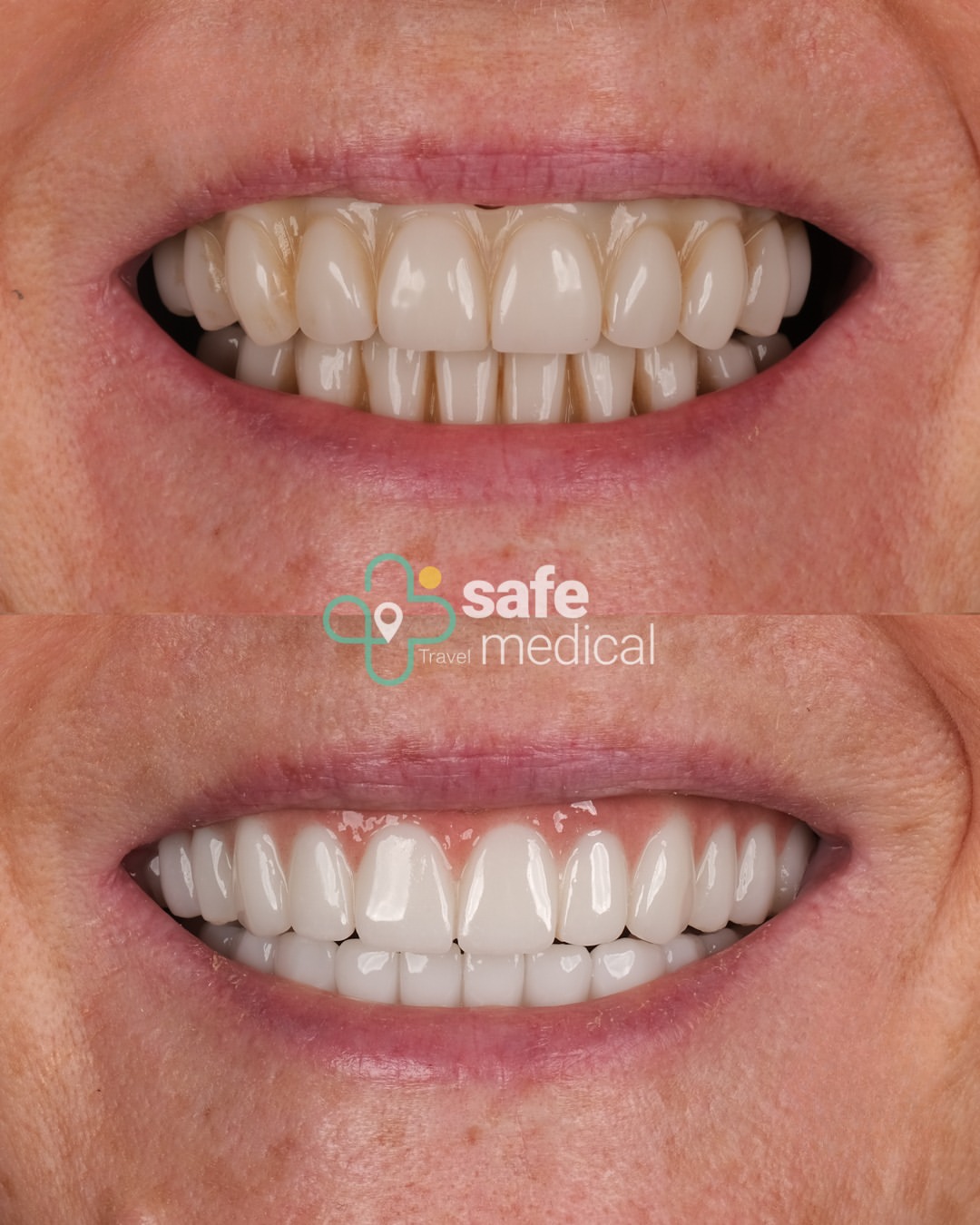
Our patient came to rediscover her smile—and left with a transformation that feels both beautiful and truly her own.
Her treatment was designed to enhance the natural harmony of her smile, creating a fresh, confident look while maintaining comfort and functionality.
With the guidance of Safe Medical Travel, every part of her journey was thoughtfully organised alongside experienced dental professionals, making the entire experience smooth and safe.
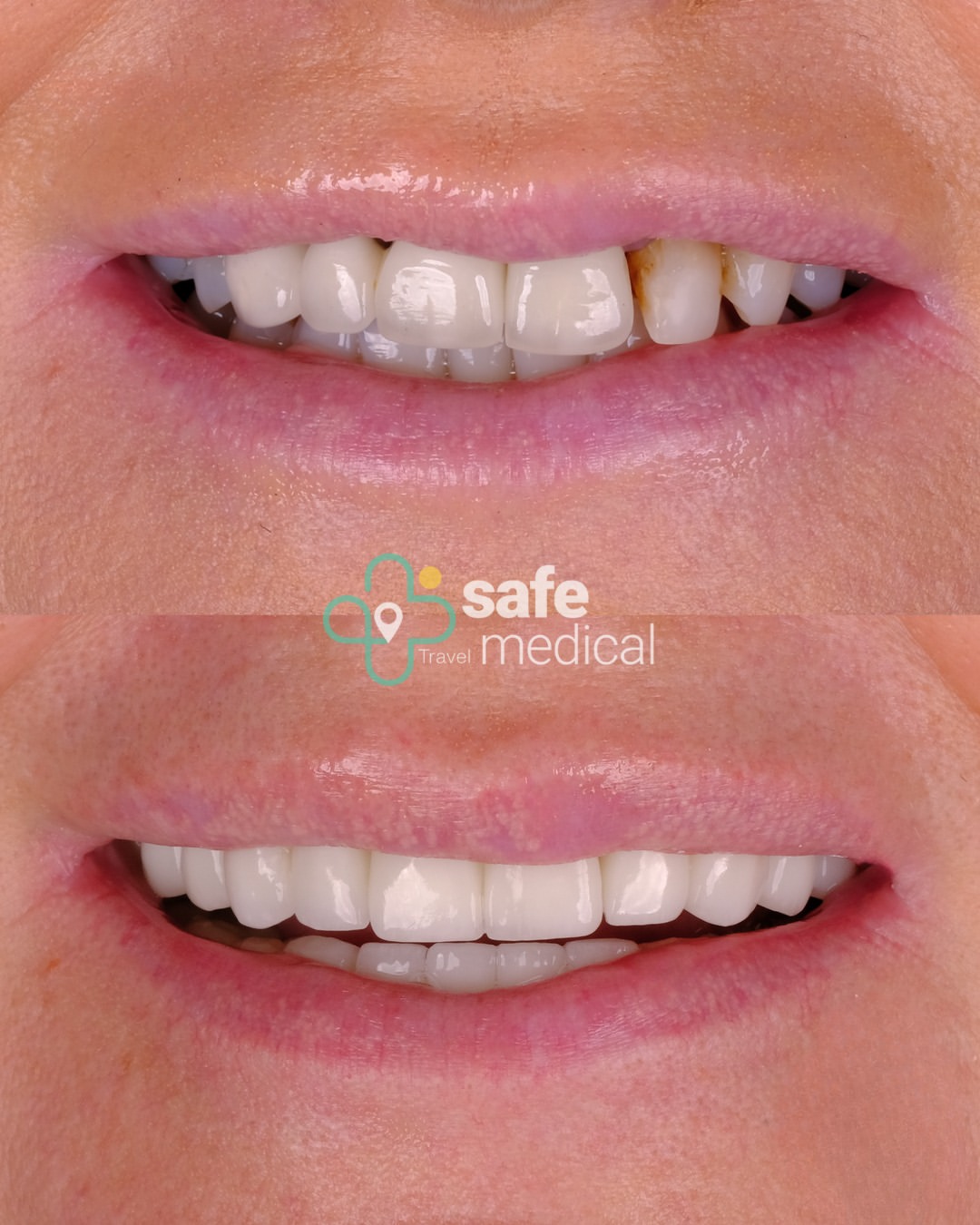
From the very beginning to the end of the treatment process, Safe Medical Travel provided a highly professional, patient-focused approach, ensuring a smooth, comfortable, and well-organized dental journey.
Composite vs Porcelain Veneers: Key Differences
| Feature | Composite Veneers | Porcelain Veneers |
|---|---|---|
| Lifespan | 4–8 years | 10–15+ years |
| Natural look | Good | Excellent |
| Stain resistance | Moderate | Very high |
| Enamel removal | Little or none | Thin layer removed |
| Visits | Usually 1 | 2 or more |
| Repairability | Easy | Difficult |
| Cost in Turkey (per tooth) | £100–£200 | £200–£450 |
Appearance and Natural Look
Porcelain comes out on top here. It has a depth and translucency that resin can't match, and it keeps its shine for years. A skilled dentist can make composite look very good, but the result depends heavily on their artistry, and composite tends to look a little flatter over time.
Durability and Lifespan
With good care, porcelain veneers can last 10 to 15 years, sometimes longer. Composite veneers generally last between 4 and 8 years before they need to be repaired or replaced. Composite is also more likely to chip and wear down, especially if you grind your teeth. For more detail, see our guide on how long veneers last.
Stain Resistance
Porcelain is glazed and non-porous, so it barely absorbs stains from coffee, tea or red wine. Composite resin is more porous and will gradually darken or lose its shine, especially if you drink a lot of tea or coffee or smoke. The good news is that composite can usually be polished back up.
Tooth Preparation and Enamel Removal
Composite needs little or no enamel removal, so it is the more conservative choice. Porcelain requires a thin layer of enamel to be ground away, and this can't be reversed. That doesn't make porcelain a bad option; it just means you should be sure before you go ahead.
Treatment Time and Number of Visits
Composite veneers are normally done in one visit. Porcelain veneers need two or more visits because they have to be made in a lab. This matters if you are travelling abroad for treatment, but most Turkish clinics plan porcelain treatment around the travel dates of international patients.
Repair and Replacement
If a composite veneer chips, the dentist can often fix it on the spot by adding more resin. Porcelain is harder to repair. Small chips can sometimes be smoothed or patched, but a badly damaged veneer usually has to be replaced completely with a new one made in the lab.
Pros and Cons of Composite Veneers
Advantages
- Lower cost per tooth
- Often completed in a single visit
- Minimal or no enamel removal
- Easy to repair if chipped
- Can be adjusted or redone later
Disadvantages
- Shorter lifespan than porcelain
- More likely to stain and lose shine
- Less natural-looking, particularly in larger cases
- More prone to chipping and wear
- Quality depends heavily on the dentist's skill
Pros and Cons of Porcelain Veneers
Advantages
- Most natural appearance
- Long-lasting, often 10 to 15 years or more
- Excellent resistance to staining
- Strong, especially E-max
- Can transform colour, shape and alignment in one treatment
Disadvantages
- Higher cost per tooth
- Requires removal of some enamel, which is irreversible
- Needs more than one visit
- Harder to repair if damaged
- Temporary veneers can feel less comfortable while you wait
Composite vs Porcelain Veneers Price in Turkey
Turkey is one of the most popular places in the world for dental work, and veneers are among the most requested treatments. The price of veneers in Turkey varies from clinic to clinic, so treat the figures below as illustrative estimates, not verified current clinic tariffs or quotes. Obtain a written, itemised treatment plan after a dental examination; travel, accommodation, follow-up and additional treatment may cost extra.
Composite veneers in Turkey cost roughly £100 to £200 per tooth. Porcelain veneers, including E-max, usually cost between £200 and £450 per tooth. Many clinics also offer packages for a full set of 8 to 20 teeth, which can bring the price per tooth down.
What Affects the Cost of Veneers?
Several factors can affect the final price:
- The material. E-max and premium zirconia cost more than standard porcelain, and any type of porcelain costs more than composite.
- Number of teeth. More teeth usually means a lower cost per tooth.
- The clinic and the dentist. Prices depend on the dentist's experience, the clinic's reputation and the quality of the lab.
- Other treatments. If you need whitening, gum contouring, a root canal or decay treatment first, this will add to the total.
- Location. Clinics in Istanbul and Antalya may be priced differently from clinics elsewhere in the country.
- What the package includes. Some packages include airport transfers and accommodation, and some don't.
Turkey vs UK Veneer Prices
| Veneer Type | Turkey (per tooth) | UK (per tooth) |
|---|---|---|
| Composite | £100–£200 | £250–£500 |
| Porcelain / E-max | £200–£450 | £600–£1,200 |
In the UK, a full set of porcelain veneers can easily run into five figures. In Turkey, the same treatment may cost a fraction of that, even with flights and a hotel included.
A lower price doesn't mean lower quality, but it's worth doing your homework. Look for clinics that show real before-and-after photos, are clear about the materials and lab they use, and have plenty of independent reviews. Be wary of prices that seem too good to be true, or any clinic that pushes you to decide before you've had a proper consultation.
Which Veneer Type Is Right for You?
There's no single right answer. It depends on your teeth, your budget and how long you want the results to last.
Choose Composite Veneers If
- You have minor cosmetic imperfections, like small chips or gaps.
- You want to preserve as much of your natural teeth as possible.
- You are working with a tight budget.
- You prefer a treatment that can often be repaired or adjusted, while understanding that any enamel removal is irreversible.
- You want a quick fix in a single visit.
Choose Porcelain Veneers If
- You want the most natural, polished result.
- You want something that will last 10 years or more.
- You drink a lot of coffee or tea, or smoke, and need better stain resistance.
- You are treating several teeth or making bigger changes to shape or colour.
- You see it as a long-term investment in your smile.
If you're not sure, a good dentist will talk you through both options after a proper examination, often with a digital preview of what your new smile could look like.
How to Care for Your Veneers After Treatment
Veneers don't need complicated care, but a few good habits will help them last.
Brush twice a day with a soft toothbrush and a non-abrasive toothpaste, and floss daily. Veneers themselves don't decay, but the teeth underneath them can, and gum problems around the edge of a veneer can also build up over time. Avoid common causes of chips, such as biting your nails, chewing ice or opening packets with your teeth.
If you grind your teeth at night, ask your dentist about a night guard. It costs far less than replacing a damaged veneer. With composite veneers, it's a good idea to cut back on coffee, tea, red wine and smoking, as these are the biggest causes of staining.
Finally, keep up with your regular check-ups, ideally twice a year. Composite veneers in particular can be polished to keep them looking fresh, and your dentist can spot small problems early. Veneer lifespan varies with the material, bite, oral health and maintenance; the ranges in this guide are estimates, not guarantees.
Clinical background: American Dental Association: veneers. This resource explains preparation, material differences, risks and care; it does not verify the price or lifespan estimates above. Individual suitability and treatment planning require an examination by a qualified dentist.
Frequently Asked Questions
Porcelain usually looks more natural. Its translucency and the way it reflects light are closer to real enamel, especially under different lighting.
Composite veneers usually last 4 to 8 years. With proper care, porcelain veneers typically last 10 to 15 years or more.
Yes. Composite resin is porous and slowly picks up pigments from coffee, tea, red wine and smoking, so its colour gradually dulls.
Not necessarily. Composite veneers usually need little or no drilling. Porcelain veneers typically require a small amount of enamel to be removed, but how much depends on your teeth and treatment plan.
Composite veneers can sometimes be replaced with porcelain, but suitability depends on the remaining enamel, tooth health and bite. Composite treatment should not be assumed to be reversible, especially if enamel has been removed. A dentist must assess your teeth before recommending replacement.
For composite veneers, a couple of days is often enough, since the treatment is usually done in one visit. Porcelain needs two appointments with lab time in between, so plan to stay at least 5 to 7 days.
Composite veneers can usually be repaired easily with fresh resin. Chipped porcelain veneers are harder to repair and usually need to be replaced.
If the long-term look, durability and stain resistance matter to you, yes, the investment pays off over the years. But if you are on a budget or only need small changes, composite veneers may be an option. A dentist should assess suitability for either material; switching to porcelain later is not guaranteed.