
Deep Plane Facelift in Turkey
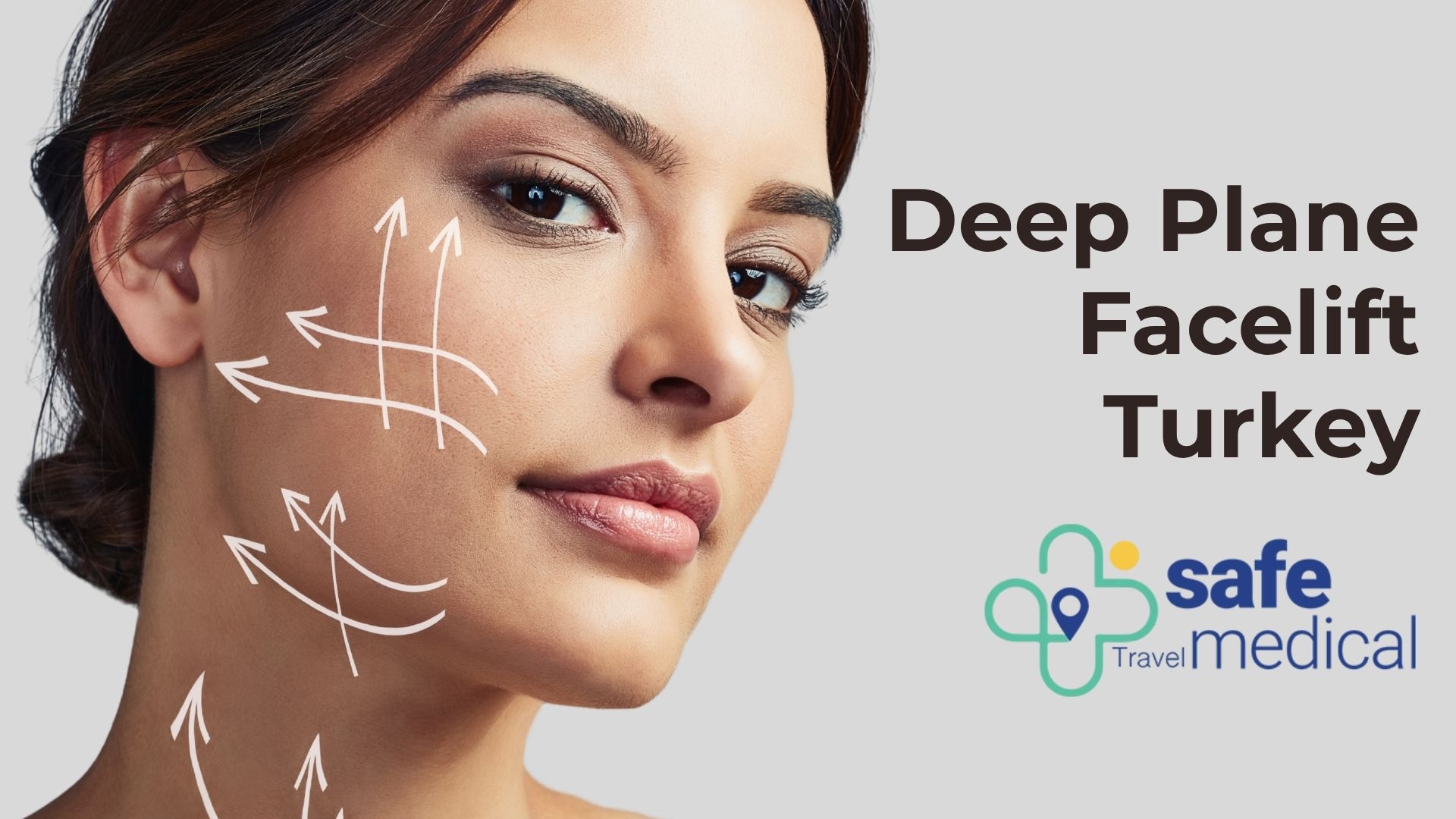
Deep plane facelift in Turkey is a popular facial rejuvenation procedure designed to lift the deeper facial tissues rather than simply tightening the skin. Unlike traditional facelift techniques, it targets the SMAS layer and facial ligaments for more natural-looking and long-lasting results. Many international patients choose Turkey for deep plane facelift surgery because of experienced surgeons, modern clinics, shorter waiting times and more affordable prices compared to the UK, Europe, and the US.
What is a deep plane facelift in Turkey?
A deep plane facelift is a surgery that lifts the tissues of the midface and lower face. This procedure lifts the skin, the deep fascial layer of the face (SMAS), and the fat tissues that go with it all at once and repositions them to a more youthful anatomical position. The goal is not just to tighten the skin, but also to restore the face's natural forms and proportions. In recent years, many people from other countries have chosen Turkey, especially Antalya, for deep-plane facelift surgeries. The major reasons for this are that there are qualified surgeons, modern accredited clinics, all-inclusive patient packages, and prices that are far lower than in European and American countries.
Deep plane facelift cost in Turkey
The price of a deep plane facelift depends on the method utilised, the surgeon's level of skill, the clinic's facilities, the type of anesthesia used, the length of the hospital stay, and any other services that may be needed, such as a place to stay. The cost of this treatment in Turkey usually falls between €8,000 and €14,000. Most of the time, these fees include the following services:
- Cost of surgery
- Anaesthesia and operating room costs,
- Hospital or clinic accommodation (typically one to two nights),
- Follow-up appointments after surgery,
- Consultations before and after surgery,
- VIP shuttle service between the airport and the clinic (at select clinics),
- Packages for lodging (optional; some clinics may include a 5-star hotel).
Please contact Safe Medical Travel for up-to-date pricing information and to arrange a personalized treatment plan.
Deep plane facelift recovery
The recovery procedure after a deep-plane facelift is more comfortable and natural than you might think because the surgery focuses on deeper tissue layers rather than placing tension on the skin.
Right after surgery, the first 24 to 48 hours
After the surgery, you'll have a light compression bandage on your face and small drainage tubes in your neck to get rid of any extra fluid that has built up.
- Day 1: In the hospital or under the care of a doctor. These dressings and drains are usually removed the following morning.
- Appearance: It's normal for your face to swell and for some spots to bruise. But because the deep plane approach works in a layer with fewer blood vessels, it usually causes less bruising than other procedures.
The first week:
This is the time when the body heals the fastest.
- Cleaning and care: Surgical cuts are routinely washed with hydrogen peroxide and then put on antibiotic ointment three times a day.
- Stitches are taken out: Some stitches, usually those in front of the ear and beneath the chin, are taken out on the fourth day, while most of the rest are taken out on the seventh day. Some stitches in the hairline may stay there for a few more days.
- Comfort: Because the nerves are protected throughout the operation, acute pain is not expected. Instead, a feeling of "tightness" or "fullness" is frequently felt.
Week 2:
- Social life: Most patients will be well enough to go back to their social lives by the 14th day after surgery. This means they will look well enough to go to a restaurant or meet up with coworkers.
- Less swelling: Bruises will mostly go away, and swelling will keep going down quickly. Your face will start to look more defined.
Long-term recuperation and feeling
- Loss of feeling: It's normal to feel numb or lose feeling in the areas that were operated on for a short time. In most cases, this goes away on its own within a year.
- Taking care of scars: The places where you had surgery may look a little pink at first, but they will fade to match your skin tone and become practically unnoticeable with time. During this time, your doctor may suggest specific creams for scars.
What can you do to help your recuperation go faster?
To make sure the procedure goes well and the recovery is quick, the following things should be done:
- Keep your head up: For the first two weeks, keep your head above your heart level while you sleep. This helps the swelling go down faster.
- Limitations on activity: For the first two weeks, you shouldn't do any heavy lifting, intense exercise, or activities that raise blood pressure.
- No smoking: Smoking makes it much harder for tissues to repair and raises the risk of losing skin. You must not smoke at all for at least two to three weeks before and after the surgery.
- Controlling blood pressure: Keeping blood pressure steady, especially in the first 24 hours, lowers the chance of a "haematoma," which is a buildup of blood.
Deep plane face lift scars
The answer to the question "Where will the surgical scars be and how visible will they be?", which is the biggest worry for those thinking about getting a deep-plane facelift, is one of the best things about this method. Because this procedure doesn't put stress on the skin, the scars heal considerably better than with other methods.
Where do the cuts go?
Surgeons carefully place incisions to conceal scars in the natural lines of the face and scalp.
- Temporal region: Cuts are usually made in the scalp at the temple or just at the hairline's edge. Incisions made in the hair are entirely hidden, but those made along the hairline may be better to keep the hairline from moving.
- In front of the ear: This is where scars are least visible. They are frequently put on the inner edge of the cartilage protrusion (tragus) in front of the ear or right in front of it. In women, incisions are often hidden behind the tragus (retrotragal), while in men, they may be put directly in front of the ear (pretragal) to keep the beard line.
- Behind the ear and hairline: The incision, which bends backward from under the earlobe, is hidden in the groove behind the ear and extends toward the nape of the neck in a graceful "S" shape, blending in with the scalp.
What makes deep-plane cuts heal faster?
With typical facelift techniques, the skin is stretched and tightened. Over time, this can make the suture lines wider or give the face a "pulled" look. But with the deep plane method:
- The tension stays deep: All lifting and tightening happens in the deep tissues under the skin, in the SMAS and platysma layers.
- The skin is just draped: The skin is moved to its new place without any tension and sewn into place. This "tension-free closure" keeps the form of the earlobe the same, stops scars from getting bigger, and lowers the chance of hair loss (alopecia).
The process of healing and the look of incision scars
- The first few days: At first, the cuts seem like thin red lines. Very fine suture materials are employed to keep scars to a minimum.
- Taking out the stitches: Some of the stitches are normally taken out on the fourth day, depending on how quickly the wound heals. The rest are taken out on the seventh day.
- Change in color: These lines may stay a little pink for the first several months, but they will slowly fade to match your skin tone over time.
- Final result: These scars usually become nearly undetectable (indistinct) to the naked eye as they heal (about 6–12 months) and are placed in natural facial contours and free of strain.
What should you do to minimize scarring?
- Protect scars from the sun: Sunlight can cause scars to darken permanently during the healing process. It is important to use a high-SPF sunscreen for the first year.
- Correcting old scars: If you have unsightly scars from a previous operation (such as widened or displaced incisions), the deep plane technique is an excellent way to correct them by releasing tension in the old scars.
How long does a deep plane facelift last?
The results achieved with deep plane facelifts are significantly longer-lasting than those of traditional facelift methods. Thanks to the restoration of subcutaneous tissues to their anatomical positions, the effects can last for an average of 10 to 15 years.
Deep plane facelift vs endoscopic facelift
These two procedures are very different.
| Feature | Deep Plane Facelift | Endoscopic Facelift |
|---|---|---|
| Incisions | Longer (around the ear, into the hairline) | Small (1–2 cm, hidden in the scalp) |
| Scope | Midface, lower face, jowls, neck | Usually brows and upper face |
| Depth | Deep, below the SMAS layer | Above the SMAS, less invasive |
| Downtime | Longer (2–4 weeks) | Shorter (7–10 days) |
| Results | Dramatic, long-lasting | Subtle, for younger patients |
Choose deep plane if you have significant ageing changes like deep nasolabial folds, jowls, and loose neck skin. Choose endoscopic for early signs of ageing or for brow lifting.
Deep plane vs Smas facelift
The primary distinction between a deep-plane facelift and SMAS (Superficial Musculo-Aponeurotic System) operations lies in the depth of the surgical incision and the liberation of the facial restraining ligaments. Both operations try to make the face look younger, but they achieve so in quite different ways.
Tissue dissection and manipulation.
- SMAS Facelift: Most of the time, traditional SMAS treatments like SMAS plication or SMASectomy involve removing the skin from the SMAS layer below it. After that, the SMAS is made tighter by either folding it (plication) or cutting out a strip and sewing the edges back together (SMASectomy). The skin is not attached to the deeper tissue; therefore, it often pulls on its own, which can be too much for the skin.
- Deep plane facelift: This technique keeps the skin and the SMAS layer together as one thick "composite" unit. The surgeon proceeds deeper into the embryologic cleavage plane that is below the SMAS/platysma complex. This lets the entire anatomical unit to move together, which keeps the natural connections between the skin and the fat below.
Letting go of the ligaments that hold things together.
A deep plane facelift involves releasing the deep retaining ligaments, like the zygomatic and masseteric ligaments.
- SMAS Limitations: Most SMAS treatments don't let go of these ligaments, which are like "tethers" that hold the middle of the face in place. Without this release, you can't elevate the nasolabial area and the middle of the cheek as much.
- Deep plane advantage: By removing these ligaments, the surgeon can move the malar fat pad and midface more freely, which lets them move the tissues more vertically and in a bigger way.
How long and how well the findings are.
- Aesthetics: The deep plane technique is great at restoring the youthful "ogee" shape of the cheek and smoothing out the nasolabial folds since it moves deeper structures and frees tethers. On the other hand, SMAS procedures could not perform as well on the middle of the face, and if too much tension is imposed on the skin, it can look "wind-swept" or pulled.
- Longevity: People commonly think that deep plane results last longer because the lifting is done on the SMAS and platysma, which don't stretch, instead of on the skin, which does. Lifts that only function on the skin or that depend on skin tension are more likely to stretch back out quickly.
Safety and problems
- Risk to the facial nerve: People used to think that the deep plane facelift was riskier because the dissection was done closer to the facial nerve. But current surgical research shows that the deep plane is highly safe if you know a lot about how the body works. The nerve branches go deep into the fascia that is used as a guide during dissection.
- Vascularity: The deep plane composite flap has better blood flow since it is thicker and its internal blood supply stays intact. This makes it a better alternative for people who are "marginal," like smokers, who are more likely to develop skin necrosis (tissue death) with previous procedures.
- Recovery: People who have deep-plane facelifts usually have less bruising because the operation is done in a plane that doesn't have a lot of blood vessels.
What is a mini deep plane facelift?
A mini deep-plane facelift is a form of deep-plane facelift that makes the face look younger by using shorter cuts and less dissection.
The major way:
The "mini" version works in the sub-SMAS plane (Superficial Musculo-Aponeurotic System), exactly like a full deep-plane facelift does. This means that the surgeon doesn't cut the skin away from the fat and muscle that are underneath it. Instead, they move the SMAS, skin, and fat all at once as a thick "composite" unit. This makes a more natural appearance because it doesn't have the "wind-swept" look that arises when you merely pull the skin.
Shorter cuts and easier to get to.
The key difference between the mini or modified version and the regular version is that the cuts in the mini or modified version are smaller.
- Location: The cuts are normally performed a few millimetres inside the temporal hair tuft and the hairline behind the ear to disguise them well.
- Limited extension: The "short scar" method, which is utilised instead of a full facelift, usually doesn't produce scars that stretch deep into the hairline behind the ear.
- Help from an endoscope: Some surgeons utilise high-definition endoscopes to see and safely release deep structures through these smaller openings. This can help patients get better faster and have less swelling.
Partial vs. complete ligament relaxation.
The face-retaining ligaments are a very important part of the "mini" or "modified" technique:
- Modified deep plane: A surgeon executes a deep plane dissection but doesn't fully release the zygomatic cutaneous ligaments (which hold the midface in place). This is called a "modified" deep plane lift. This makes it harder to shift the fat pads on the mid-cheek and malar.
- Limited dissection: In a little version, the surgeon might merely undertake a limited dissection along with the smaller cuts. This is usually enough for people who don't have very sagging skin.
The best prospects and results.
- Neck laxity: This method is generally employed when the skin on the neck is only somewhat loose. A modest technique may not be enough to fix a patient with big "turkey gobbler" bands or heavy neck skin.
- Midface and jowls: It works very well for younger patients (usually in their 40s or 50s) who wish to treat early jowling and loss of volume in the cheeks without having to take time off work for a major surgery.
- Recovery: Patients usually heal faster after this treatment than after a complete, protracted deep-plane procedure since the dissection is more targeted and the cuts are smaller.
What is an extended deep plane facelift?
The extended deep-plane facelift is a more advanced surgical treatment that adds the jawline and the full neck area to the original deep-plane technique. It also works on the midline of the face. This therapy is different from others since it works on all the tissues of the face and neck at once.
What does it mean to "extend"?
The basic deep plane treatment normally only works on the cheeks and jawline. The "extended" version extends deeper into the neck. The surgeon slices the platysma muscle, which is the muscle in the neck, 5 to 12 cm below the jawline. Because of this, the rejuvenation effect goes beyond the face to embrace the area from the jaw to the collarbone.
How does the technique work? (Monoblock)
The main distinction with this approach is that the skin stays attached to the deeper tissues (SMAS and platysma). The surgeon elevates these layers as a single composite flap.
- Release of the ligaments: The ligaments that keep the face and neck in place are cut during the surgery. When these "anchors" are let go, all of the sagging tissue can be pulled up without any problems.
- Vertical suspension: This big block of tissue is repositioned vertically against the effects of gravity.
What makes it look more natural?
In the extended deep plane technique, all the pressure is put on the deep tissues under the skin that are firm and don't stretch.
- Closure without tension: The skin just covers the deep tissues like a blanket; there is no stress on the skin itself.
- Not getting the "wind-blown" look: This procedure doesn't make the skin look "wind-blown" (pulled) like classic ways do.
Benefits
- Defined jawline: This is the best way to fix jowls, which are drooping skin along the jawline.
- Full neck rejuvenation: The sagging and bands in the neck are fixed all the way down to the collarbone.
- Results that endure longer: Because the support system is built deep within the tissue and this tissue is much stronger than the skin, the results last for years.
- Less bruising: The surgery is done in a certain part of the body where there are fewer blood vessels, which makes the recovery process easier.
Why is it the best choice for revision surgery?
Patients who have already had "skin tightening" or normal SMAS surgery but are unhappy with the outcomes (for example, those with drooping earlobes or a flat look) should choose this alternative. This method relieves the skin tension that was caused by the first surgery and brings the face's volume back to its proper deep plane.
Deep plane face lift before and after
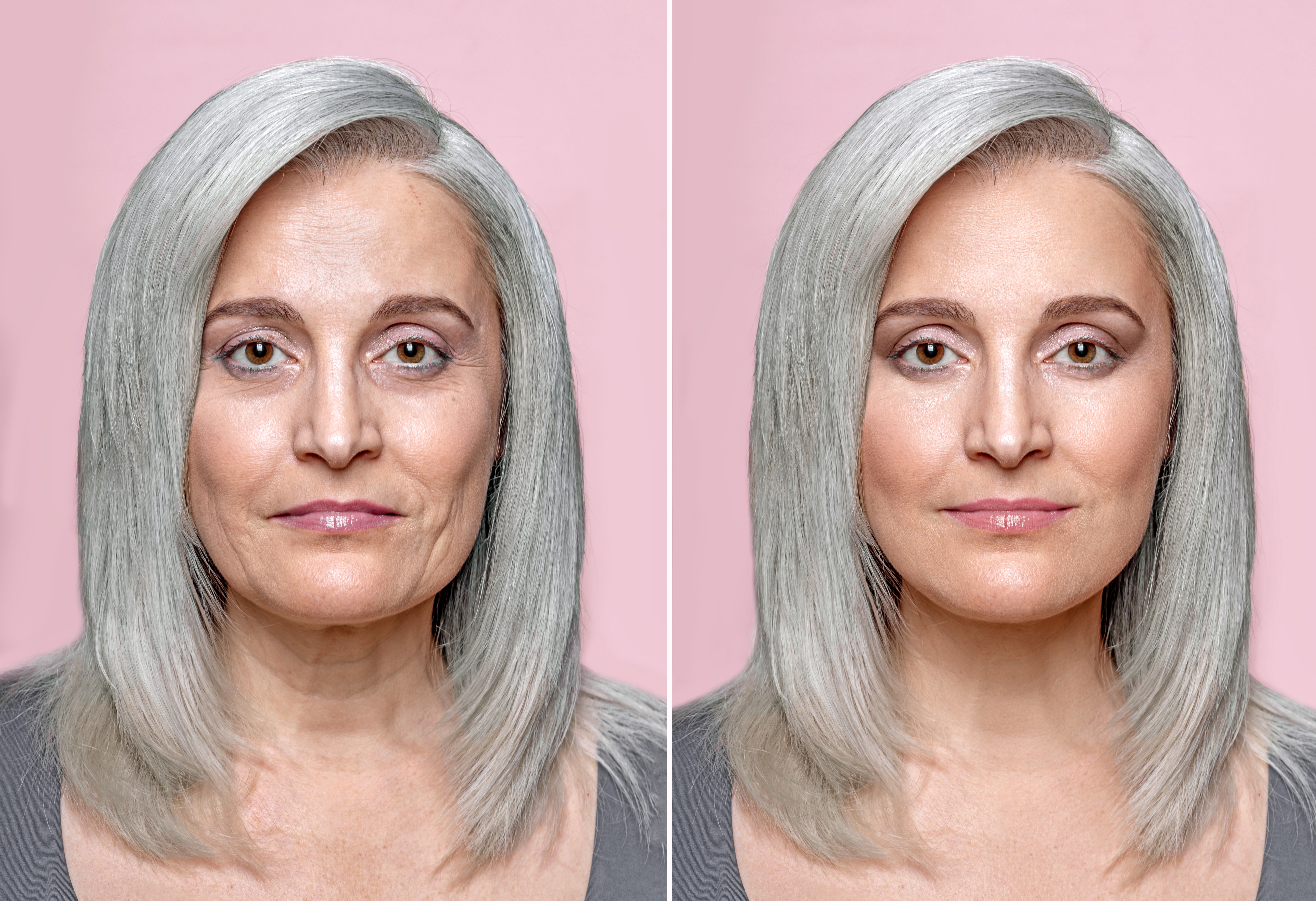
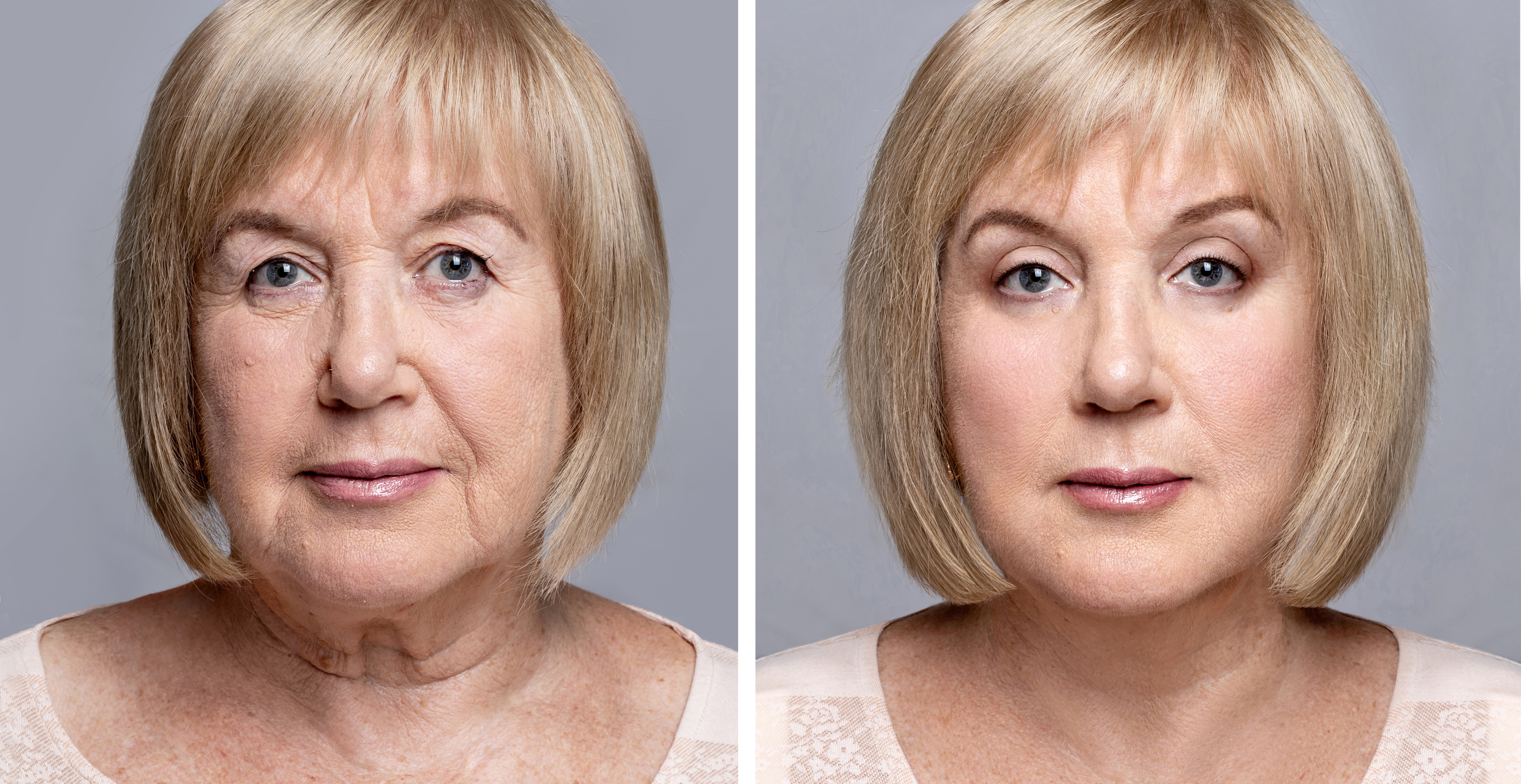
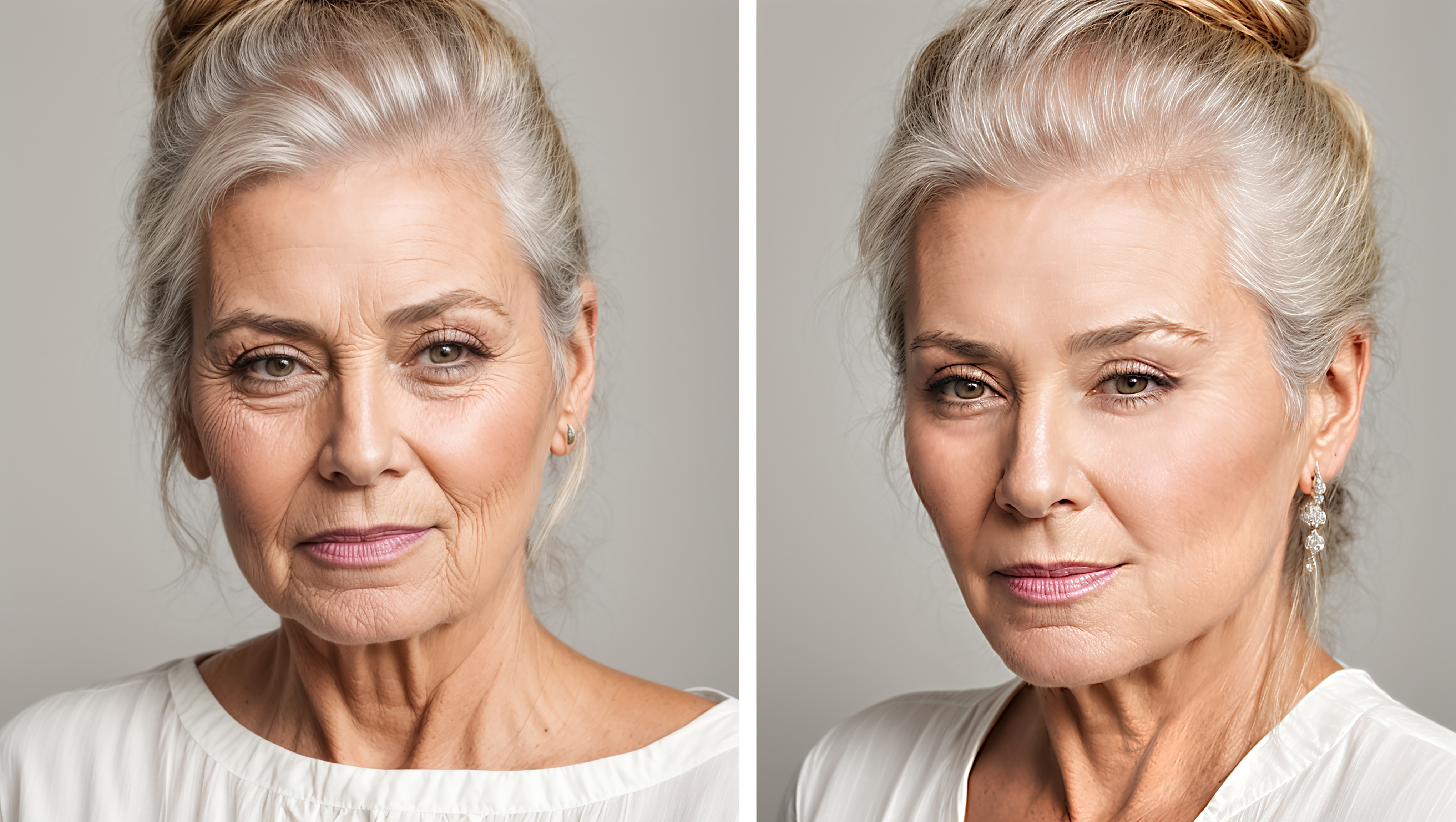
Cheekbones and the middle of the face:
- Before: As we become older, the fat in our cheeks moves down and toward the middle because of gravity. This makes the cheekbones flatter, the area beneath the eyes look sunken, and the lines on the sides of the nose (nasolabial folds) look deeper.
- After: The deep plane procedure frees the "malar fat pad," which is the fat pad in the cheeks, from its place and lifts it up vertically. The result is not an artificial swelling like what you get with fillers from the outside. Instead, it is the famed "Ogee curve," which is the beautiful S-shaped curve of the cheek's side profile that is typical of youth. The middle of the face gets fuller, and the area between the eyes and the cheeks becomes smoother.
Jawline:
- Before: When the ligaments on the jawbone weaken, the cheek tissue sags down, making those annoying "jowls" that make the jawline look uneven. The face may gradually lose its youthful oval contour.
- After: These "tethering" ligaments along the jawline, which pull the tissue down, are entirely let go after the surgery. The jawline gets sharper as the tissues are raised up. The sagging visible in the before photographs has now disappeared in the after photograph, which shows a distinct and well-defined bone structure.
The area around the neck:
- Before: The platysma muscle in the neck relaxes, making bands, and the little angle between the jaw and neck goes away. The skin on the neck starts to seem like a curtain that is drooping down.
- After: In the "extended deep plane" variant, the neck muscle is tightened as a whole from the chin to the collarbone and held up at the mastoid area. The outcome is a pleasing look with no sagging, no neck bands, and a clear separation between the chin and neck in profile view.
Texture of the skin:
- Before: When the skin is stretched too tightly during a typical facelift, it can cause the corners of the mouth to pull back and give the person a "wind-swept" expression that doesn't look natural.
- After: The deep plane puts all the pressure on the firm tissues under the skin. Then, without any strain, the skin is softly placed over this new structure. In the "after" photos, the person doesn't look like they've had surgery; instead, they look natural and renewed, like they just got back from a vacation ten years ago.
Frequently Asked Questions
Who are deep plane facelift celebrities?
Names such as Jane Fonda, Christie Brinkley, and Helen Mirren are cited by experienced surgeons as examples of a natural and high-quality appearance following a facelift. However, this information has not been verified and is based solely on media reports and expert opinions.
Can a deep plane facelift go wrong?
Yes, there are risks and complications that could happen with any surgery. There are some things that could go wrong, such as:
- Permanent or temporary nerve damage, especially to the marginal mandibular nerve, which could change the way you smile.
- Haematoma and seroma (accumulation of blood or fluid)
- Infection of the wound
- Skin necrosis (loss of tissue, which is rare)
- A prominent or hypertrophic scar (the scar gets thicker)
- Uneven healing on both sides of the face (asymmetry)
Who is not a good candidate for a deep plane facelift?
- Active smoking (seriously impairs healing)
- Uncontrolled systemic conditions (diabetes, hypertension, thyroid disorders)
- Bleeding diathesis or use of anticoagulant (blood-thinning) medication
- Active infection or systemic inflammatory diseases
- Unrealistic expectations
- Young patients with minimal sagging (under 40 – less invasive methods are recommended for them)
Is deep plane facelift expensive in Turkey?
Compared to global standards, Turkey offers very affordable prices for deep-plane facelifts. The average price range of €8,000–€14,000 is significantly lower than prices in the US (approximately €32,000–€50,000) or Western Europe (on average €25,000–€40,000).
Are deep plane facelifts worth it?
When performed on suitable candidates by a skilled surgeon trained to international standards, a deep plane facelift is a procedure that delivers long-lasting, natural-looking results and achieves high patient satisfaction rates. Clinical studies and retrospective patient evaluations show that the vast majority of patients (over 90%) are satisfied with the results.
Does a deep plane facelift look natural?
Yes, the fundamental philosophy and surgical principle of this technique is natural rejuvenation. When performed correctly, the patient becomes a younger, more vibrant, and healthier version of themselves. The result is not an obvious, ‘tightened’ or ‘mask-like’ appearance that gives away the fact that a facelift has been performed; rather, it produces a more vibrant expression, accompanied by improved sleep and quality of life. The results do not appear obviously surgical; instead, the only comments received are that ‘you look absolutely brilliant.'