
What is a Bone Graft?
A bone graft (also known as bone powder or bone transplant) is a surgical procedure used to repair or rebuild damaged or missing bone. In dentistry, it is performed when your jawbone is not strong or thick enough to support treatments such as dental implants. The material placed as a graft acts as a ‘scaffold’ or support, to help your body form its own new, healthy bone.
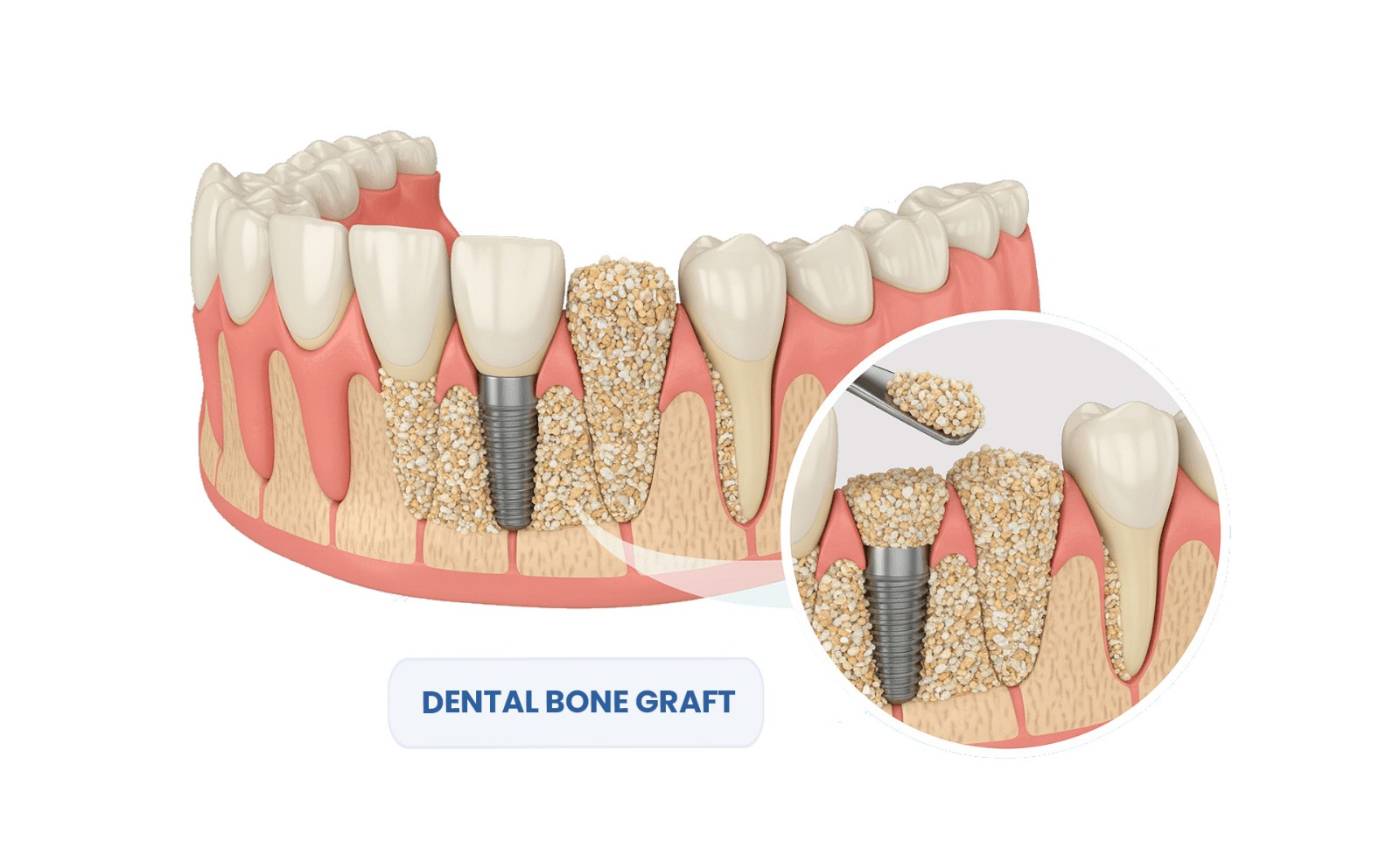
Types of Bone Grafting (Minor Bone Grafting, Major Bone Grafting)
Bone grafting is classified according to the extent of the need:
Minor Bone Graft:
This is generally used for a single tooth or a small bone defect. The procedure is relatively simple and quick, mostly involving only bone powder (graft material). The healing process is shorter.
Major Bone Graft:
May be necessary for more extensive bone loss, such as when multiple teeth are missing, when there is resorption of the entire jawbone, or in cases of large defects caused by accidents. This procedure is more complex and may sometimes involve the use of block bone pieces taken from another part of the body (usually the jaw, hip, or tibia). The healing process is longer and more detailed.
What Conditions Are Managed with a Dental Bone Graft?
Insufficient bone tissue is the source of many dental problems, and treatments performed without bone grafting may fail. The main situations in which dental bone grafting is commonly used are as follows:
Bone Resorption After Tooth Loss
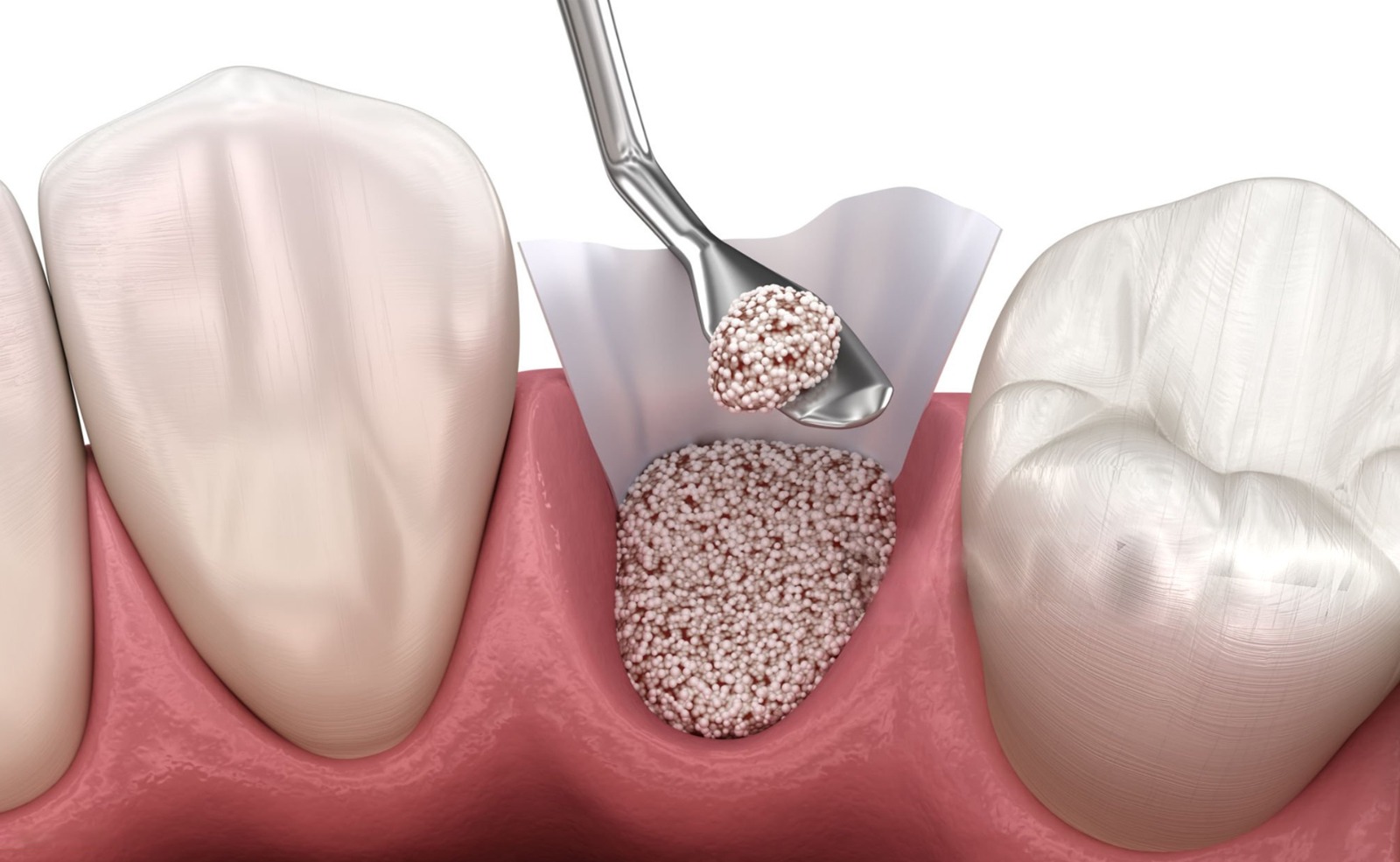
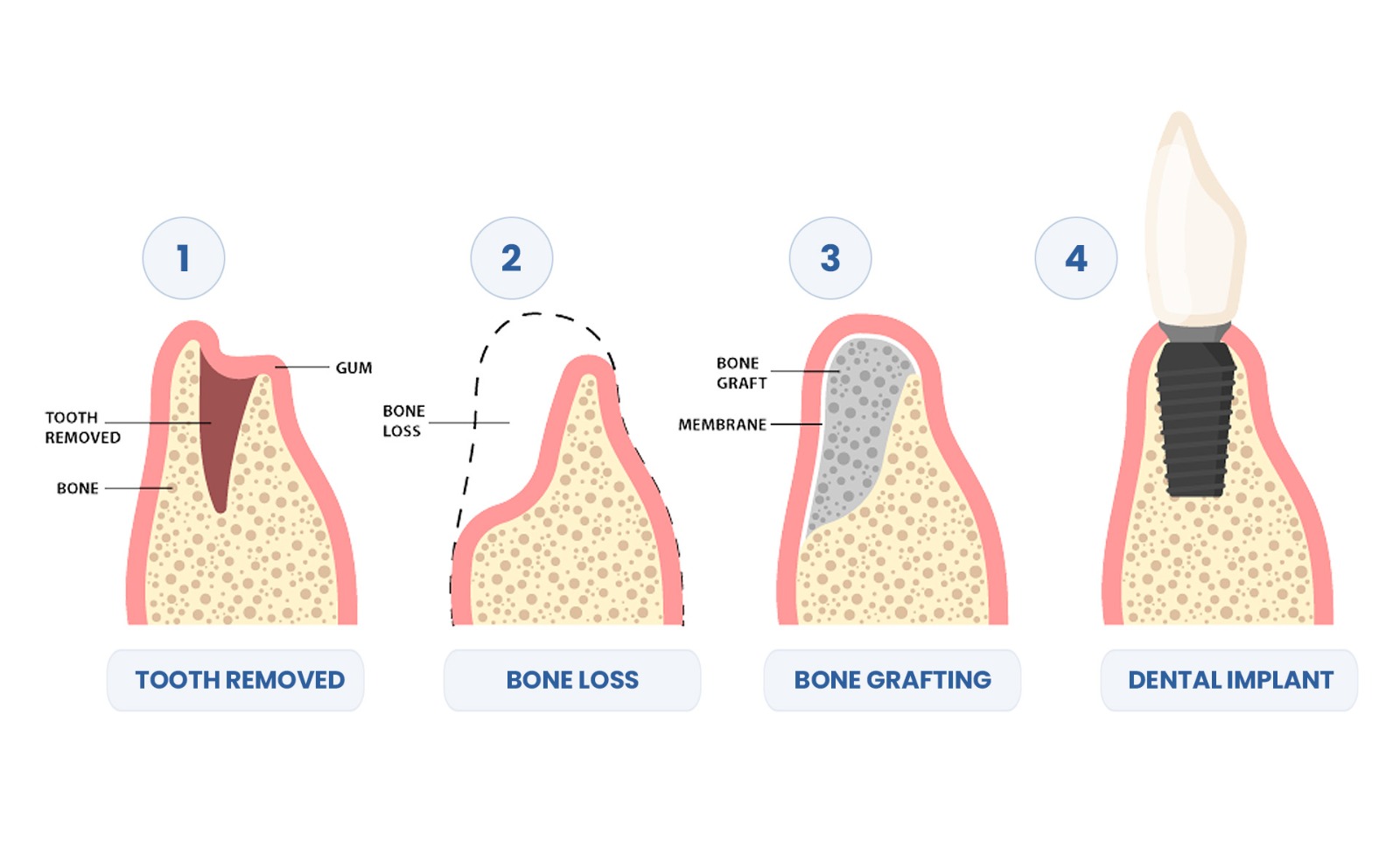
When a tooth is extracted, the stimulation provided by the tooth root is also lost. The jawbone remains healthy as long as it functions and receives force. Without this stimulation, the body marks the bone in that area as ‘unused’ and slowly absorbs the bone tissue. This process is called alveolar bone resorption (loss). Socket preservation is the most common and preventive type of bone graft. Immediately after a tooth is extracted, the empty extraction socket is filled with bone graft material. This procedure significantly limits bone resorption and preserves ideal conditions for a future implant in that area. It prevents the collapse of the bone structure during the healing process.
Insufficient Bone for Dental Implants
For an implant to be long-lasting and stable, it needs to be surrounded by a sufficient quantity and quality of bone in all directions. Without sufficient bone, the implant cannot anchor properly, may become loose, or even break through the fragile bone.
Bone grafting is used to strengthen and expand the implant bed. Before the implant is placed, the area with bone deficiency is filled with graft material to strengthen it. Once the graft has healed and matured, a solid foundation for the implant is formed. Sometimes, small grafts can be performed during the same session as the implant placement.
Periodontitis
Advanced gum disease not only affects the gums but also destroys the bone surrounding and supporting the teeth. Bacterial infection causes bone destruction, leading to loose teeth and eventually tooth loss. This process can create deep, crater-like defects (pockets) around the tooth roots.
In this case, bone grafting is used for two purposes:
- To Raise the Bone Level: It can be used to rebuild lost bone, support loose teeth, and save them. This procedure is called guided tissue regeneration.
- Post-implant: It is used to repair severe bone loss prior to implant placement in patients who have lost teeth due to periodontitis.
Trauma or Accident
A blow to the face can cause fractures or bone fragments to break off in the jawbone. Additionally, car accidents, falls, or sports injuries can also lead to extensive bone loss.
Following traumatic injuries, bone grafting is used to physically rebuild lost bone tissue and restore the jawbone's original shape and structure. This can be applied not only to restore function but also facial aesthetics.
Sinus Lift
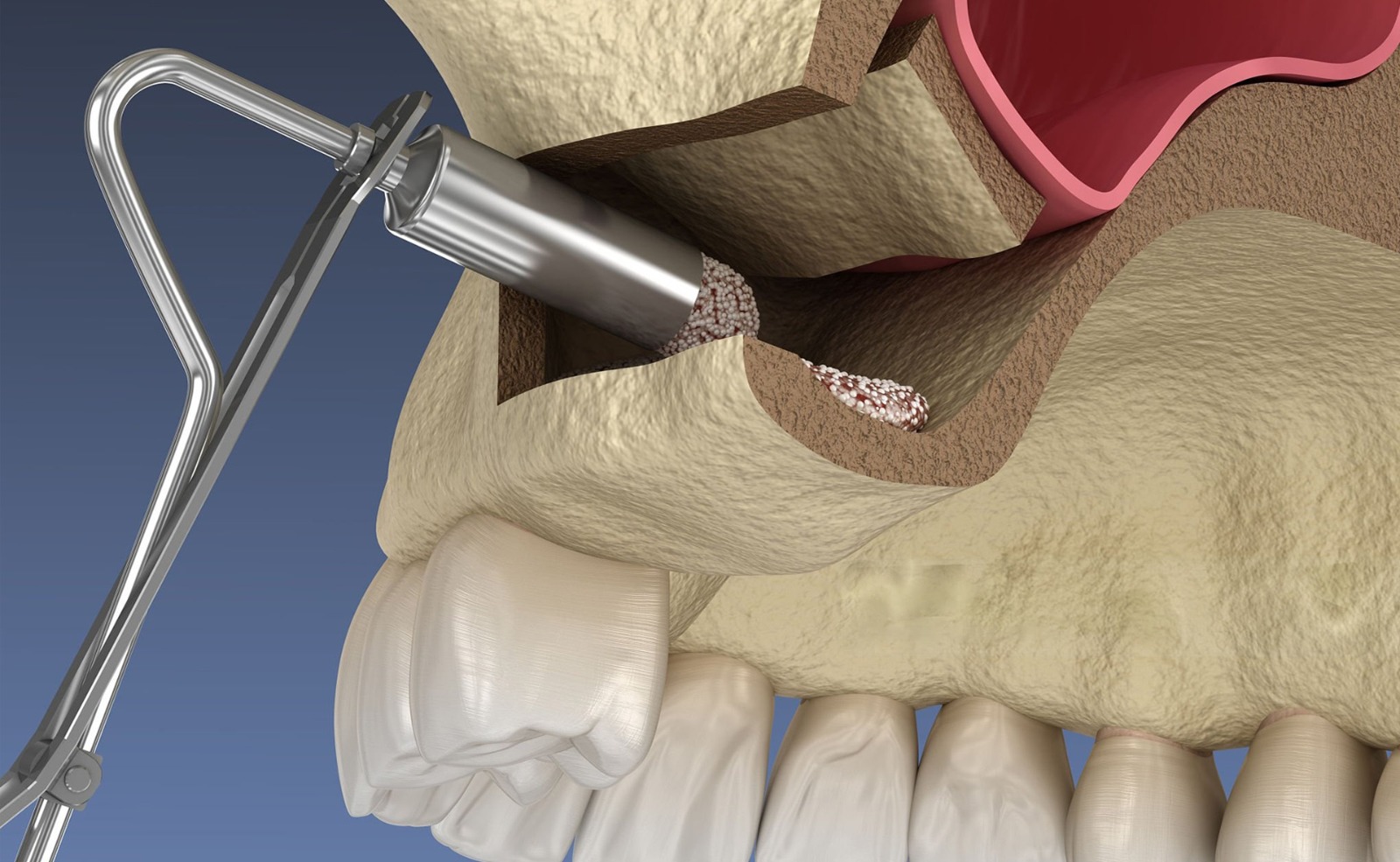
In the rear region of the upper jaw, just above the roots of the molars, there are air-filled cavities called the ‘maxillary sinuses’. When upper molars are extracted, bone resorption occurs, and, at the same time, the sinus cavity often expands downward. This leads to a reduction in the bone height required for implants in the rear of the upper jaw. A sinus lift is a special bone graft procedure performed on the upper jaw. The surgeon gently lifts the sinus membrane to create a space between the sinus cavity and the jawbone. This space is then filled with bone graft material. This increases the bone height, providing a safe and adequate foundation for upper jaw implants.
Other Situations
Tumour or cyst resection:
Removal of tumours or cysts from the jawbone can leave a large bone defect. Bone grafting is used to fill the space created after this surgery and restore the bone.
Aesthetic contour improvement:
Sometimes bone loss can cause an undesirable sunken appearance in the face (especially in the front tooth areas). Bone grafting can be used to support the lips and cheeks, providing a more youthful and healthy facial contour.
How Common are Dental Bone Grafts?
Dental bone grafts are a fairly common routine dental procedure, especially with the increasing popularity of dental implant treatments. A large proportion of patients scheduled for implants may require bone grafting to some extent.
How Successful are Dental Bone Grafts?

Dental bone grafts generally have very high success rates (over 95%). Factors affecting success include the patient's general health (such as smoking and diabetes), the area where the graft is performed, the quality of the graft material used, and the surgeon's experience.
What Are The Benefits of a Dental Bone Graft?
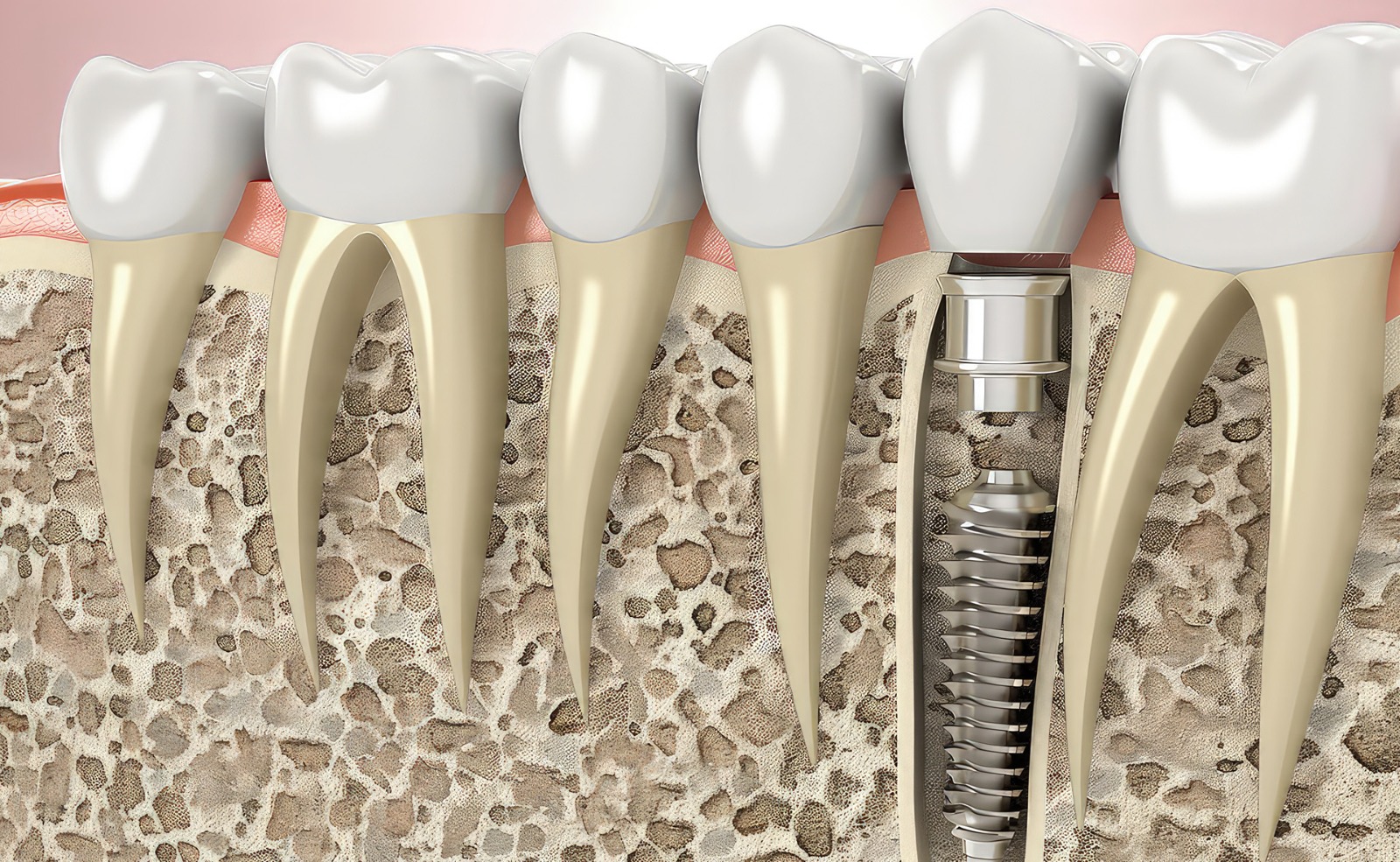
A dental bone graft is a treatment not only for tooth loss but also for bone loss. Therefore, its benefits go beyond oral health and directly affect your overall quality of life. In short, a bone graft is not just bone repair but also a long-term investment in a functional, aesthetic, and healthy smile. The general benefits of bone grafting are as follows:
Prepares the Ground for Implants:
It offers this opportunity to patients who cannot have implants due to insufficient bone. It creates a solid foundation for implants that can be used like fixed, natural teeth and maximises chewing performance.
Preserves and Rejuvenates Facial Aesthetics:
Bone loss causes facial sagging and an aged appearance. Bone grafting restores lost structure, providing support to the lips and cheeks, resulting in a more youthful and fuller facial contour.
Strengthens Chewing Function:
Strong bone extends the life of both your existing natural teeth and any prostheses/implants. It provides effective and efficient chewing ability, ensuring better grinding of food.
Ensures Long-Term Oral Health:
Bone is the foundation of dental and gum health. The grafting procedure prevents gum recession, facilitates oral hygiene, and reduces the risk of future infections.
Dental Bone Grafting Procedure
The dental bone grafting procedure is a planned and meticulous surgical procedure performed to strengthen and reconstruct the jawbone. The procedure progresses step by step as follows:
Pre-Operative Consultation and Planning
- Your surgeon will ask you for detailed information about your current medical conditions and any medications you are taking; if necessary, certain tests may be performed.
- Before the procedure, a detailed examination and a 3-dimensional (3D) dental tomography (CBCT) scan are performed. These images clearly show bone density, the size and shape of the missing area, and the location of important structures such as nerves and sinus cavities.
- Based on these images, your surgeon will plan the type of graft material most suitable for you (synthetic, animal-derived, or the patient's own tissue) and the details of the procedure.
Asepsis and Hygiene Preparation
- Before the procedure, the mouth is cleaned with a special antiseptic mouthwash (usually containing chlorhexidine). This mitigates the risk of infection by reducing the number of bacteria.
- The area around where the graft will be placed is isolated with sterile drapes.
Anaesthesia Administration
Local anaesthesia:
Most dental bone graft procedures are performed under local anaesthesia while the patient is awake. The area where the graft will be placed is completely numbed via injection. This ensures you will not feel any pain during the procedure, only a slight pressure and vibration.
Sedation or general anaesthesia:
Sedation (conscious sedation) or general anaesthesia options may also be used, particularly for large and complex grafts, if the patient is very anxious, or if multiple procedures are to be performed at the same time. In this case, you will not remember anything during the procedure and will have a completely pain-free experience.
Incision and Surgical Access
- The surgeon makes a very fine and controlled incision in the anaesthetised gum tissue.
- This incision allows the gum to be carefully lifted (like opening a lid), completely exposing the underlying bone tissue. This step ensures the surgeon has a clear view of the working area.
Bone Preparation
The exposed bone surface is lightly drilled or scored with a small burr or specialised instruments to promote better adhesion of the graft material. This helps to trigger bleeding, which is vital for healing, as blood delivers the growth factors and stem cells necessary for the graft.
Placement of The Graft Material
Use of bone powder:
This is the most common method. The powdered graft material is placed in a sterile container and mixed with the patient's own blood or a special solution to form a paste. This mixture is carefully filled in the area of bone deficiency and compressed to shape it.
Block bone grafting:
For larger bone defects, a block of bone taken from the patient's own body (usually the jaw or hip) is shaped to fit the deficient area and fixed in place with small screws. The spaces around the block graft are usually filled with bone powder.
Placement of a Barrier Membrane
After the graft material is placed, a resorbable (self-dissolving) barrier membrane is often placed over it. This membrane has several critical functions:
- It protects the graft and keeps it in place.
- It prevents the rapidly healing gum tissue from invading the graft area ahead of the slower-healing bone tissue.
- It promotes the concentration of bone cells in the graft area, thereby ‘directing’ healing.
Suturing and Closure
- The gum flap is returned to its original position, and the graft and membrane are completely covered.
- The area is tightly closed with fine, absorbable or non-absorbable sutures to promote healing and protect the graft.
Post-Operative Instructions:
Immediately after the procedure, your surgeon will provide you with detailed care instructions. These instructions include:
- Medication use: Painkillers and antibiotics to prevent infection.
- Swelling management: Applying cold compresses to the area for the first 48 hours.
- Nutrition: Eating liquids and soft foods for the first few days.
- Oral hygiene: Brushing other teeth without straining the graft area and using the recommended antiseptic mouthwash.
Procedure Duration:
The duration of the procedure varies depending on the size and complexity of the graft. A simple graft for a single tooth takes 45-60 minutes, while a more extensive graft or a procedure combined with a sinus lift can take 90 minutes or longer.
Are Bone Grafts Necessary for Dental Implants?
They are not necessary for every implant. However, if there is insufficient bone in the area where the implant will be placed, they are absolutely essential for the long-term success of the implant. If an implant is placed in insufficient bone, it will not integrate and the treatment will fail.
Are Bone Grafts Safe in Turkey?
Turkey has become a globally recognised centre, particularly for health tourism. Modern dental clinics in Turkey are equipped with advanced technology (3D tomography, digital planning) and are staffed by experienced surgeons. Hygiene protocols are implemented in accordance with international standards, and high-quality, approved graft materials are used. Therefore, when the right and reliable clinic is chosen, bone graft procedures in Turkey are quite safe. You can contact Safe Medical for information about clinics and facilities in Turkey and obtain details.
How Long does It Take to Recover from a Dental Bone Graft?
Initial healing (gum healing and reduction of swelling) usually takes 1-2 weeks. However, the graft ‘maturing’ and your body forming its own bone takes longer. This process can vary between 3 and 9 months. This period is allowed to elapse before the implant is placed.
Dental Bone Graft Healing Stages
Dental bone graft healing is a wonderful example of your body's natural repair mechanisms. It is a dynamic process involving several stages that requires patience. Understanding how the graft successfully transforms into your living bone will reassure you during the healing period and help you manage your expectations appropriately. The healing process is as follows:
1. Stage: Blood Clot Formation (first 24-48 hours)
- Immediately after the procedure, the area where the graft was placed is like a fresh wound. Blood seeping from the small blood vessels here fills the space, forming a blood clot. This clot acts as a natural wound dressing.
- This clot is the cornerstone of healing. It stabilises the grafting material and acts as a temporary scaffold for inflammatory cells, growth factors critical for bone formation, and stem cells. It is important that this clot forms and remains in place.
- It is normal to see a small amount of bloody saliva.
- You must absolutely avoid movements that put pressure on the area (vigorous shaking, using a pipette); otherwise, the clot may dislodge and a ‘dry socket’ situation may occur.
2. Stage: Inflammation and Swelling (first 3-4 days)
- Your body sends a large number of immune cells to the area to initiate the repair process. These cells fight off potential infections and clear away dead tissue and bacteria. This process causes increased blood flow to the area, which manifests as swelling, redness, increased heat, and mild to moderate pain/discomfort.
- Inflammation is a natural and necessary part of healing. It cleans the area and signals the next stage. Swelling usually peaks on the 2nd or 3rd day.
- There may be noticeable swelling and bruising on the face.
- Prescribed painkillers are effective during this period.
- Applying a cold compress to the area helps control swelling and pain.
3. Stage: Soft Tissue Healing (first 2 weeks)
- As inflammation subsides, the body begins to form new blood vessels and connective tissue. This is the stage where the gum tissue covering the graft heals rapidly. Stitches are usually removed during this period (between 7 and 14 days), or dissolvable stitches disappear on their own.
- The rapid and secure closure of the gum tissue creates a barrier that protects the underlying graft from external factors and bacteria.
- Swelling and pain are significantly reduced.
- The gum tissue takes on a more normal appearance.
- The patient continues to eat soft foods, but with much less discomfort.
4. Stage: Bone Formation and Remodelling (3-6 months)
- Your body's bone-forming cells, called osteoblasts, migrate into and around the graft material. As the graft material (especially synthetic or animal-derived ones) is gradually absorbed, osteoblasts build new, living bone matrix (tissue) in its place. This process is called ‘bone remodelling’.
- The implanted graft transforms from a passive material into living bone that becomes part of your body. This new bone provides the strength and density required for the implant.
- This stage is not visible or noticeable from the outside.
- The patient has fully returned to their normal life.
- X-rays taken during follow-up appointments may show an increase in density in the graft area.
5. Stage: Bone Maturation and Mineralisation (6-9 months)
- The newly formed bone tissue continues to mature and densify. Bone cells harden the bone by regularly accumulating minerals such as calcium and phosphate, making it dense enough for the implant screws to grip firmly.
- Immature, soft bone cannot support an implant. This stage is necessary for the graft site to become ready to bear mechanical loads (chewing forces). Your surgeon will typically take a new 3D tomography scan after 4-6 months to assess bone volume and density and determine the exact date for the implant.
How to Speed up Bone Graft Healing
- Follow the surgeon's instructions strictly.
- Do not smoke or drink alcohol.
- Apply cold compresses to the area during the first few days.
- Eat a sufficient and balanced diet, including plenty of protein.
- Avoid strenuous physical activity.
- Pay close attention to your oral hygiene, but do not forcefully brush the graft area.
- Take prescribed antibiotics and painkillers regularly.
How Long does a Dental Bone Graft Last?
A bone graft that heals successfully and has an implant placed on it can last a lifetime with the implant. The graft integrates with your body's natural bone to form a permanent structure.
What are The Potential Risks of a Dental Bone Graft?
As with all surgical procedures, there are minor risks. These risks can be minimised with an experienced surgeon and patient compliance. Common risks include:
- Infection
- Swelling, pain or bruising.
- Bleeding
- Suture opening
- Partial resorption of the graft (small pieces may be expelled from the mouth; this is usually not a cause for concern)
- Rarely, complete rejection of the graft (failure)
What to Eat After a Dental Bone Graft?
- First 3-4 days: Cold or lukewarm, soft, and pureed foods (yoghurt, pureed soup, mashed banana, milk, milkshake, eggs).
- First week: Soft foods (well-cooked pasta, mashed potatoes, fish, pudding).
- First 2 weeks: Chewing should be done away from the graft area. Avoid hot, hard, spicy, acidic, and small-grained foods (such as rice and sesame seeds).
Dental Bone Graft Cost in Turkey
Turkey offers very affordable prices for bone grafts compared to Europe and North America. The price varies depending on the size of the graft, the type of material used (synthetic, animal-derived, etc.), and any additional procedures performed (such as a sinus lift). Generally, a minor graft is expected to cost less, while major grafts and sinus lift procedures can be more expensive. You can contact Safe Medical Travel for the current prices at clinics in Turkey.
Bone Graft Before and After
- Before: The 3D tomography shows bone structure that is unsuitable for dental implants, it is thin or collapsed.
- After: The tomography taken of the same area after grafting and healing shows a marked increase in bone volume and a solid bone structure that is now suitable for implants. Additionally, improvement in facial aesthetics may be noticeable.
Sinus Lift and Bone Graft
A sinus lift is a special type of bone grafting performed primarily in the posterior region of the upper jaw. Above the roots of the upper molars are cavities called the ‘maxillary sinuses’. When teeth are extracted, these sinuses can expand and the bone can thin. In a sinus lift procedure, the sinus membrane is gently lifted, and bone graft material is placed underneath to increase bone height. This is important for placing implants in the upper jaw.
What is The Best Bone Graft Material for Dental Implants?
There is no single ‘best’ material; the most suitable material is selected depending on the situation. Your surgeon will recommend the material most appropriate for your situation.
Autogenous graft: Bone taken from the patient's own body (usually the jaw or hip). It is considered the ‘gold standard’ because it contains living cells and provides the best healing. However, it requires a second surgical site.
Xenograft: Animal-derived (usually bovine). It is slowly absorbed by the body and serves as an excellent scaffold for new bone formation. It is a very common and safe option.
Allograft: Bone taken from a human cadaver and specially processed. It is safe and does not require taking bone from the patient's own body.
Alloplastic graft: Synthetic materials (such as calcium phosphate). Completely hygienic, it is absorbed by the body and replaced with new bone.
Dental Bone Graft Specialist in Turkey
In Turkey, bone grafting and dental implant surgery are generally performed by periodontists (specialists in gum and jawbone diseases) and oral and maxillofacial surgeons. These specialists are dentists who have received special training and have extensive experience in this field. When selecting a reliable clinic, it is important to review the surgeon's credentials and background.
Frequently Asked Questions
How long do bone grafts take to heal?
The gum heals in 1-2 weeks, but bone maturation takes 3-9 months.
When can I exercise after a dental bone graft?
Heavy exercise should be avoided for the first 48-72 hours. Activities that raise your blood pressure may cause bleeding. Gentle walks are acceptable. You can usually resume strenuous exercise after 1 week to 10 days, with your surgeon's approval.
How long does dental bone graft swelling last?
Swelling usually peaks on the 2nd or 3rd day after the procedure and then begins to subside rapidly. Most swelling subsides significantly by the end of the first week. It may take 10-14 days to disappear completely.
Do bone grafts fail?
Yes, bone grafts can fail, albeit rarely. The most common reasons are uncontrolled infection, the patient smoking, insufficient blood supply to the graft site, or the patient not following the healing instructions. In case of failure, the graft is removed, the area is cleaned, and the procedure can be repeated after allowing time for healing.
When can I eat solid food after a bone graft?
You will need to eat soft foods for approximately 2 weeks. After the 2nd week, you can gradually transition to more solid foods, provided chewing is done away from the graft site. A full return to normal, hard foods usually takes about 1 month, depending on the healing of the graft.
Are you awake for the dental bone graft?
Yes, most dental bone graft procedures are performed under local anaesthesia, and your mouth is completely numbed while you are awake. You will feel no pain, only a slight pressure and vibration. Sedation is also an option for patients with high anxiety.
Can a bone graft save a tooth?
Yes. If the bone around a loose tooth has been destroyed due to advanced gum disease (periodontitis), a bone graft can be performed to save that tooth. This procedure is called ‘guided tissue regeneration’.
Can I get an implant without a bone graft?
If you have sufficient existing bone for the implant, yes, it can be placed directly without the need for a graft. However, if there is insufficient bone, a graft is essential for the success and longevity of the implant.
Do dental implants require bone grafts?
Not always, but very often, yes. Especially in areas where the tooth was not replaced immediately after extraction or where tooth loss occurred a long time ago, bone resorption occurs, necessitating a graft.