
When it comes to restoring damaged or missing teeth, dental implants and dental crowns are two of the most common treatment options. Although they are often mentioned together, they serve different purposes and are used in different clinical situations. Understanding the key differences between dental implants and dental crowns can help you make a more informed decision about your oral health and long-term smile results.
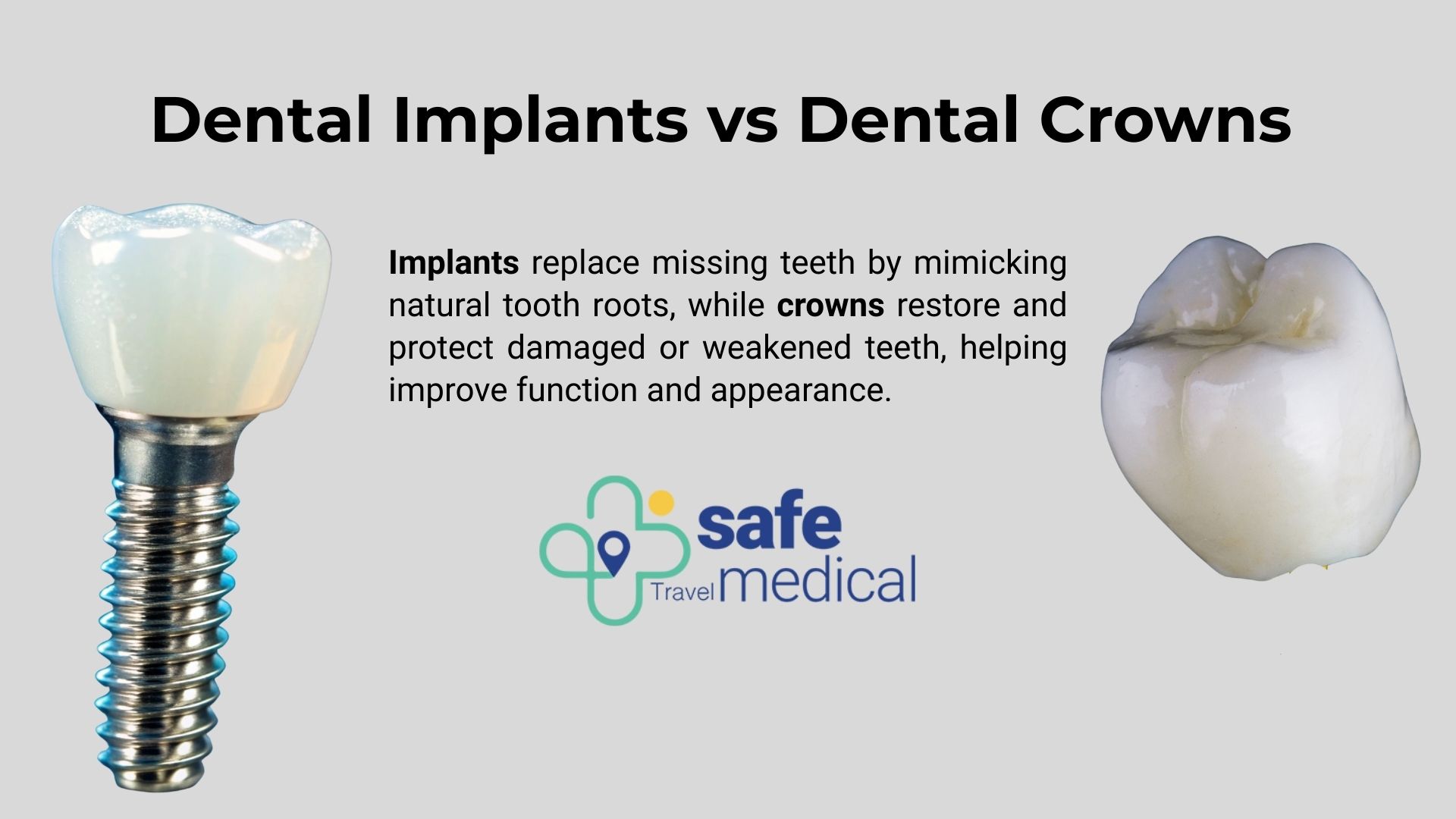
What is a Dental Crown?
A dental crown is basically a tooth, shaped artificial implant that is placed on top of a damaged tooth in order to regain the tooth's original shape, size, hardness, and even look. The crowns are tailored individually and can be made from a wide range of materials including porcelain, ceramic, resin, gold alloys, or porcelain, fused, to, metal. Besides, they may be employed for the following purposes: to guard decayed teeth; to fix cracked teeth; to support teeth after a root canal procedure, and to hold dental bridges in place. A crown is a part of the tooth that is visible and, therefore, unlike implants, it does not go under the gum or into the bone of the jaw.
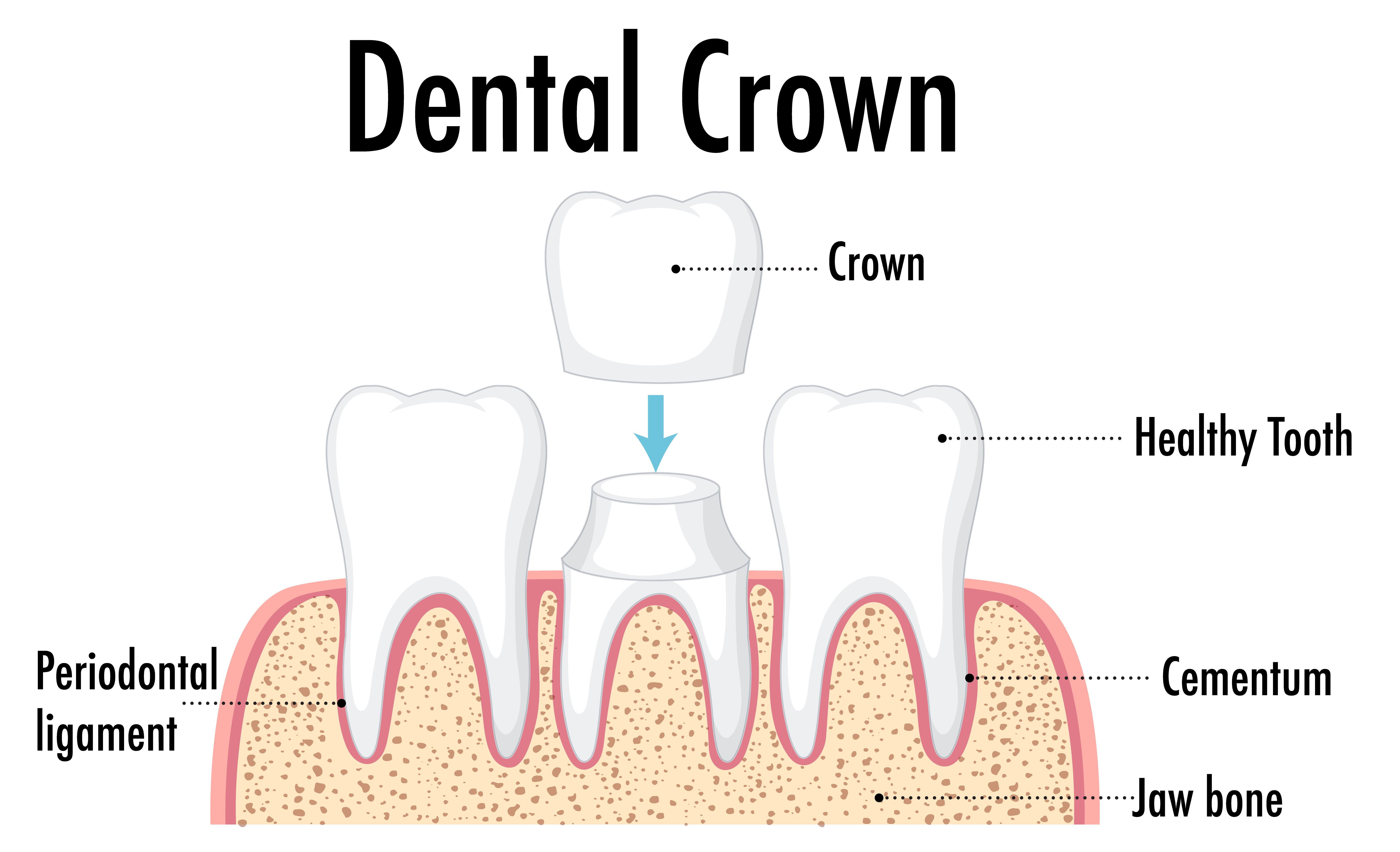
How are crowns applied?
The process of putting on a crown is usually a stage that can be done in one or two visits and lasts for a few weeks. It basically consists of the following steps:
Preparation and anesthesia:
Firstly, the tooth and the gum around it are numbed with the help of local anesthesia. The dentist, then, trims the outer surface of the tooth to a small support (peg) so that the crown fits absolutely over it.
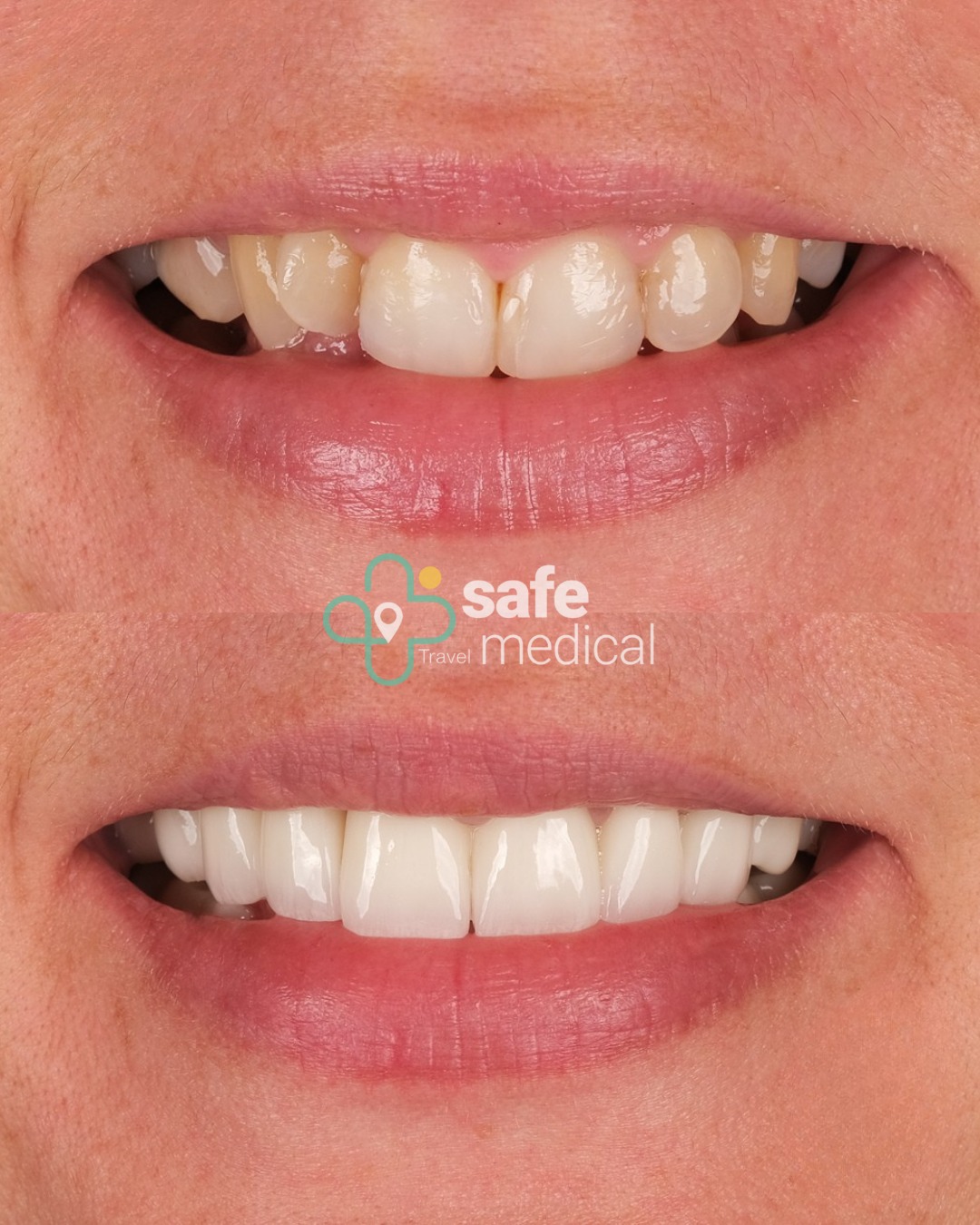
Taking measurements:
A very accurate measurement or a digital scan of the prepared tooth as well as the teeth of the opposite jaw is taken. Such an impression is sent to the dental laboratory to make a crown that fits well with the rest of the teeth.
Temporary crown:
A provisional crown is placed on the tooth after it has been prepared for the permanent one in the lab and to keep the mastication working.
Permanent crown:
As soon as the permanent crown is available, the temporary one is taken off, the color and the fit of the new crown being checked, and then, it is fixed there for good by means of a special dental cement.
How do dental implants work?
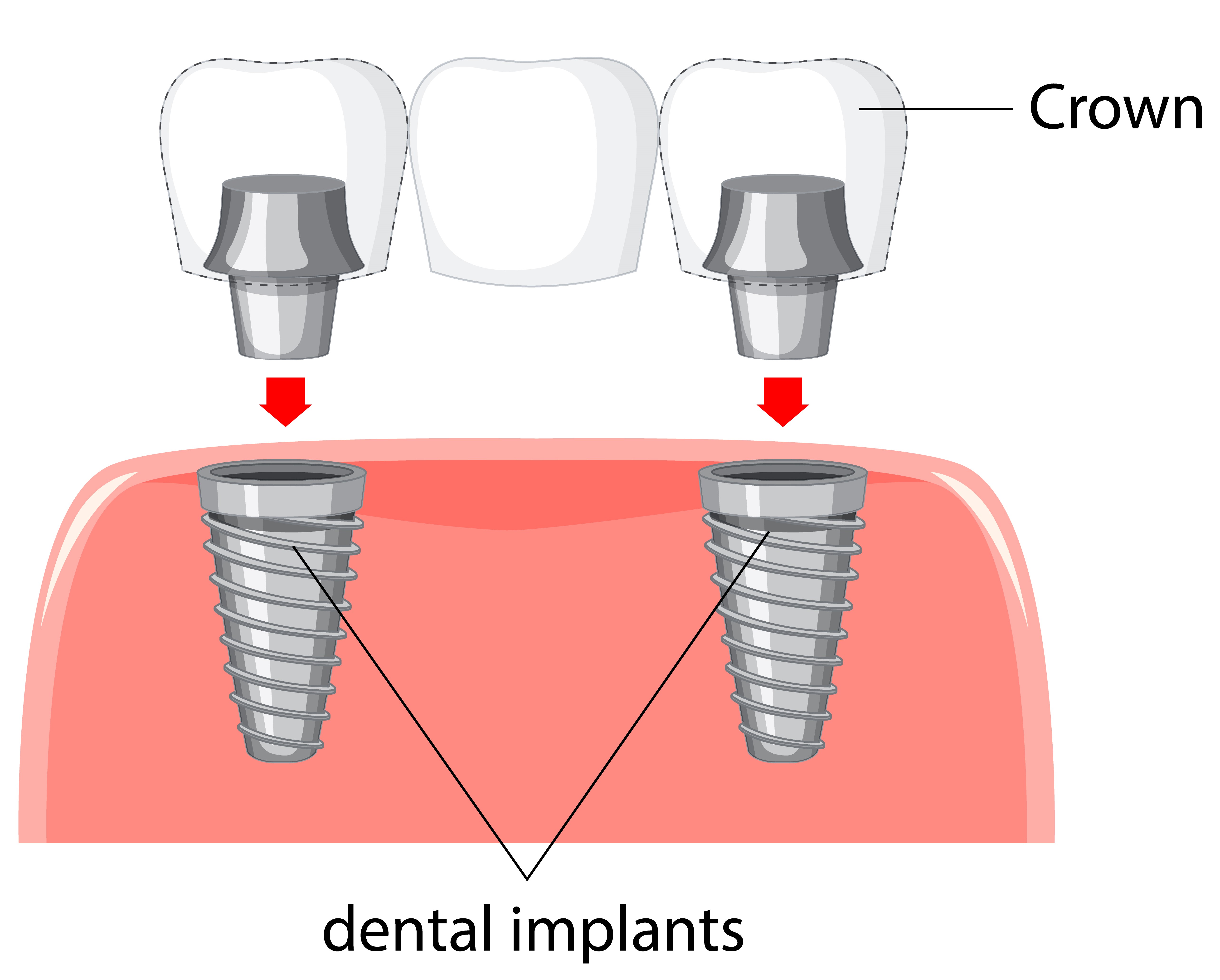
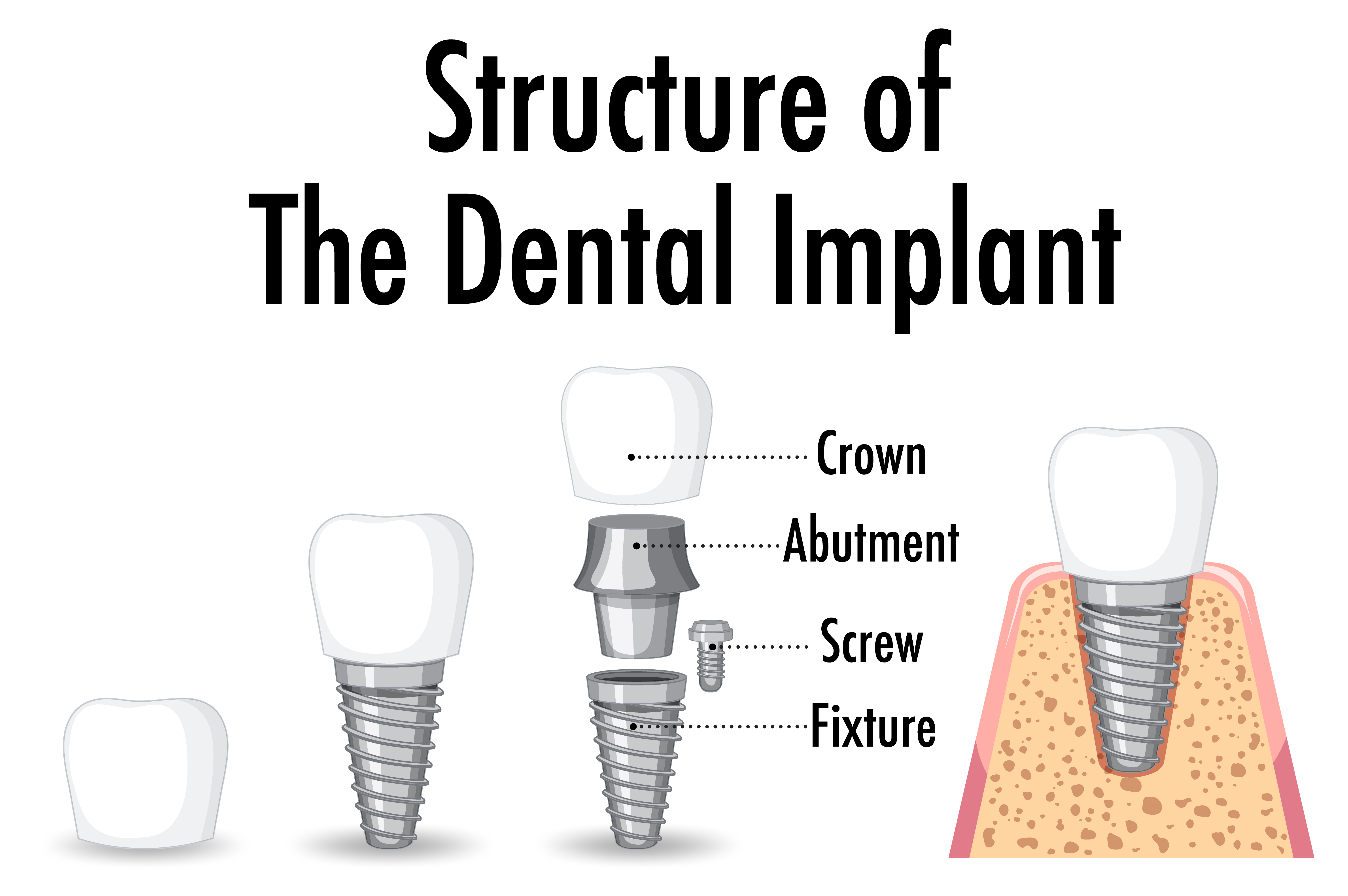
Dental implants refer to the titanium screws that are implanted surgically in the jawbone with the aim of replacing lost teeth. The most salient point about implants is the osseointegration process whereby the titanium is merged directly with the live bone tissue. Because of this biological connection, the implant operates as a natural tooth root, thus enabling it to be a firm base for a dental crown. Implants are made up of three main segments: the portion in the bone, the abutment which is the part that shows from the gum, and the crown which is the top.
Implants are the very best means of stopping bone loss that is the natural process after tooth loss as it happens by sending chewing forces to the bone. In addition, as compared to bridge treatments, there is no need for the cutting of the neighboring healthy teeth.
The Implant Procedure
Implant treatment is a multi-stage process that can take between 3 and 9 months, depending on the bone's healing rate and additional procedures (such as bone grafting).
Assessment and planning:
This is the point where a detailed examination of the mouth is done along with a 3D (CBCT) scan to assess the amount of bone available. These scans are there to confirm that the implant is at a safe distance from the nerves and sinuses.
Implant placement:
After the gum is numbed with local anesthesia, it is lifted, a hole is accurately made in the bone for the implant and the titanium screw is inserted. If it is a single, stage surgery, the implant's end is left showing, however, in a two, stage operation, the implant is fully covered with the gum and stitched.
Healing (osseointegration) process:
The implant is expected to fuse with the bone through several months. A temporary prosthesis is usually worn by the patient during this period.
Attachment of the abutment and crown:
The abutment is connected to the implant with a small intervention and the impression is taken once osseointegration is confirmed. At last, the permanent crown made in the lab is fastened with a screw or cemented on the abutment.
What are the key differences between implant and crown?
|
Dental Implant |
Dental Crown |
|
Components/ Material: Typically consists of a titanium screw (artificial root), an abutment, and a porcelain crown. |
A "cap" made of porcelain, ceramic, resin, gold alloys, or porcelain-fused-to-metal. |
|
Purpose: To replace a missing tooth entirely, including the root, or to support dentures. |
To protect, restore, and strengthen an existing but damaged, decayed, or root-canaled tooth. |
|
Durability: With proper care, can last 15-25 years or a lifetime. |
Usually lasts 5 to 15 years, depending on the material used and oral hygiene. |
|
Cost: Higher initial cost due to the surgical procedure and technology used. |
More cost-effective initially, but may require replacement over time. |
|
Aesthetic and Functional Use: Closely mimics a natural tooth, transmits chewing force to the jawbone, and helps prevent bone loss. |
Restores the appearance and function of a damaged tooth but depends on the health of the underlying natural root. |
|
Treatment Time: Can take 3 to 9 months due to the required bone fusion (osseointegration). |
Typically completed within 1 to 2 weeks over two appointments. |
|
Strength: As strong as a natural tooth, allowing consumption of all food types. |
Quite durable, but there is a risk of chipping or coming loose with very hard or sticky foods. |
|
Invasiveness: A surgical procedure requiring the placement of a screw into the jawbone. |
Non-surgical; requires the existing tooth to be filed down (prepared). |
|
Recovery: Total healing and integration process takes months. |
Recovery is very quick, usually taking a few days. |
|
Aftercare/ Maintenance: Requires brushing, flossing, and regular dental check-ups like natural teeth. |
Meticulous hygiene and regular check-ups are essential to protect the underlying tooth from decay. |
What are Pros and Cons of Implant and Crown?
In the case of dental restoration, implants or crowns are usually the two methods that come first to the patient's mind to be chosen according to their needs, money, and time of the treatment. To each method correspond its own benefits and drawbacks.
Pros of dental implants:
Durability and lifelong use:
Dental implants are built to be the longest, lasting dental restoration and can be used for a lifetime if they are kept in good condition.
Natural look and use:
As a minimum, in both visual and functional aspects, implants are the closest to natural dentitions.
Support of the jawbone:
Implants become tooth roots, thus they are the only structures that can transfer the chewing force from the crown to the bone, which in return stops the bone loss that always follows tooth loss and keeps the face from changing.
Nondestructive to neighboring teeth:
No healthy teeth next to the future implant need to be ground down or cut during the operation.
No decay possibility:
Since dental implants are made of artificial materials (titanium), they cannot get tooth decay as natural teeth do.
Cons of dental implants:
High initial cost:
Their being more expensive than crowns at the start is mainly due to the surgical procedure and materials used.
Need for surgical intervention:
Their placement necessitates an invasive surgical operation.
Long treatment process:
The implant (osseointegration) may take 3 to 9 months for the bone to fuse during which a healing period will be required.
Limited surgical risks:
Even though they are very few, the risks that surgical complications may include infection or nerve damage.
Pros of crowns:
Quick solution:
Most of the time, they can be done in two appointments within a short period of 1 to 2 weeks.
Cost, effective:
Initial costs are much more affordable compared to implants.
Less invasive:
They do not require surgery; normally a local anesthetic is given and the tooth is shaped.
Saving the natural teeth:
They help the development of broken, heavily decayed, or root canal, treated teeth, thus the natural tooth is preserved.
Cons of crowns:
Limited lifespan:
Depending on the material and care, they generally last between 5 and 15 years and should be changed.
Reduction of the healthy tooth part:
Some of the natural teeth are permanently filed down for the crown to fit, and this process cannot be reversed.
Possibility of decay of the underlying tooth:
Even though the crown itself is not going to decay, the natural tooth structure underneath can decay, which may lead to the failure of the treatment.
Does not stop bone loss:
Since crowns only cover the visible part of the tooth, they are not able to stop bone loss in the jaw when the tooth root is missing.
Dental Implants vs Crowns: Which is right for me?
The Fundamental Difference
- You need a crown if: It is a crown requirement to have a damaged tooth that can still be saved (for example, a tooth severely decayed, a large crack, or after a root canal). The crown is a "cap" that goes over your existing tooth.
- You need an implant if: There is a need for an implant in a situation where a tooth ıs missing (or a tooth that ıs so severely damaged that ıt has to be removed). The implant replaces the entire tooth, including the root.
Pre-decision:
Your dentist will perform a thorough examination, which will also include X, rays or 3D scanning (CBCT), to check out:
The quality and quantity of your jawbone (for implants):The health of the tooth root and the bone around it (for crowns). Your overall oral health. The correct intervention is the one that accurately solves your unique clinical problem, is in harmony with your health intentions, and is compatible with your money/time. Your dentist will go through all the possible choices with you and assist you in making the best decision for your health in the long run.
Key Questions to Ask Yourself And Your Dentist
What is the condition of your tooth?
If the tooth is missing:
An implant is the primary and most comprehensive solution.
If the tooth is severely damaged, decayed or broken:
The dentist will assess the following:
- Is the tooth root healthy and strong enough to support a crown? If yes, a crown is a possible option.
- Is the root broken or too decayed to be repaired, or is the bone support weak? If yes, the tooth should be extracted, and then an implant should be placed.
What are my long-term health goals?
Preventing bone loss: Only an implant stimulates the jawbone like a natural root, preventing bone resorption after tooth loss.
Preserving natural structure: Where possible, saving your natural tooth root with a crown is usually the first priority in dentistry. Impact on neighboring teeth: A crown only affects the prepared tooth. A traditional bridge (implant alternative) requires the reduction of adjacent healthy teeth. An implant, however, stands alone and does not affect other teeth.
What are my practical considerations?
Duration: A crown is much quicker (typically 2 weeks). An implant is a lengthy process that takes 3, 9 months.
Initial cost: A crown has a lower initial cost compared to an implant.
Long-term investment: An implant has a higher success rate over several decades and can last a lifetime. A crown, however, may need to be replaced every 10, 15 years and is dependent on the condition of the tooth underneath.
Surgical procedure: Are you a good candidate for a minor surgical procedure (implant), or would you rather have a non, surgical treatment (crown)?
Can we combine dental implant and crown?
Yes, dental implants and crowns are one of the best combinations that can be used in dentistry, and as a matter of fact, this combination is the mainstay of most restorations. A dental implant by itself is only an artificial root, whereas the crown is the artificial tooth that is placed on this root and is the visible part of the tooth in the mouth.
The combined use of these two components:
Principle working together: The implant is a stable basis (artificial root) that is put into the jawbone. To complete the restoration to the visible and functional part, the crown is placed on top of this basis. By the union of these two parts, the aesthetics as well as the chewing power of a natural tooth are brought to a very high level.
Interaction (Abutment): There is no direct contact between the implant and the crown; a small connector called an abutment is between them. This piece is screwed in after the implant has fused with the bone, and the crown is either glued or screwed onto this abutment.
Advantages of the combination:
Permanent and durable: Such a mix will be permanently durable for a long time due to the titanium part of the implant which is the structure.
Natural look: Porcelain or ceramic crowns will give you absolutely the same look as your natural teeth.
Support of bone and teeth: The implant root becomes the generator of the jawbone through which the bone loss is prevented, at the same time, the crown connected to it stops the thinning of the teeth by the neighbors filling the gap.
Treatment is typically done step by step. First, the implant is placed surgically and then left for several months to allow the fusion with the bone (osseointegration). A temporary crown may sometimes be placed during this time of healing. After osseointegration, a permanent crown made in the laboratory specifically for the patient is attached to the implant.
Cost of Tooth Implant and Crown: What to Expect?
Prices for dental implants along with crowns vary widely from one individual to another. It depends on the patients' oral health, the materials chosen, and how difficult the treatment is.
Additional procedures affecting the cost: Some additional procedures that may be required for you, which are not included in the price of an implant and crown, can raise your total cost significantly.
Bone grafting and sinus surgery: In case the bone volume is not enough to install the implant, bone grafting or a sinus lifting procedure will be charged separately.
Tooth extraction and hygiene treatment: The removal of teeth to be done before implant placement, as well as gum cleaning (hygiene treatment), are some of the extra cost items.
Temporary restorations: The temporary crown or prosthesis that is installed during the healing period to keep the aesthetics will be invoiced separately.
Cost, effectiveness: Crowns may seem to be a cheaper alternative to implants at first, but the reality is different in the long run. Generally, the lifespan of dental crowns is from 5 to 15 years, so they have to be changed from time to time. On the other hand, implants can remain functional for 25 years or even a lifetime if they are taken care of properly. Thus, implants are regarded as a more cost, efficient option, as they do not require as much maintenance and replacement in the course of time.
Crowns or implants for front teeth?
Front teeth are critically important for both smile aesthetics and biting function. The choice of method depends primarily on the health of the tooth root. If the tooth root is sound, a crown should be used to preserve the existing tooth; if the tooth is completely lost or the root cannot be saved, an implant should be preferred for the most natural aesthetics.
Dental implants:
Implants are the most suitable solution when one or more front teeth are missing completely. Since implants are connected directly to the bone, they resemble and behave like real teeth, thus allowing the individual to smile and talk without any hesitation. In case of the aesthetic zone (front teeth) mainly, zirconium abutments and crowns (being white) are advised for the purpose of not having metal reflecting from under the gums. Besides that, implants stop bone loss after the loss of a tooth, thus they keep the facial structure and the lip support intact.
Dental crowns:
If the root of the front tooth is still strong, but the tooth is broken, its color has changed drastically, or it has been weakened after a root canal, then a crown is the first choice. The crown is the one that only covers the visible part of the tooth, thus making the tooth return to its original shape and color. It is a quicker way as it does not necessitate implant surgery.
Alternatives to Implants and Crowns
The primary alternatives to implants and crowns for the restoration of lost teeth or the repair of damaged teeth are:
Traditional tooth, supported bridges:
This technique consumes the healthy teeth neighboring the missing one, thus providing support. Although they are finished faster than implants and are at first more economical, they harm neighboring teeth and cannot stop bone loss.
Removable partial dentures:
These are the dentures that are connected to the existing teeth with metal clasps and can be taken off. They do not necessitate the grinding down of neighboring teeth, but they are not as firmly fixed as implants; thus, they may move during eating or speaking.
Full dentures:
These are dentures that are placed on the gums when there are no teeth left. They are a low, cost alternative; however, they may diminish the sense of taste, cause slips while talking, and accelerate jawbone resorption with time.
Porcelain laminates (veneers):
These are extremely thin layers that are used to hide the aesthetic defects (cracks, discoloration) of the front teeth' visible surface, thus requiring less grinding than crowns.
Etch-bridge:
This method is a replacement with metal wings attached to the back of the supporting teeth; it is a less invasive temporary or semi, permanent solution.
Frequently Asked Questions
Which is better, an implant or a crown?
Which option would be considered better is a question that can only be answered based on the condition of your tooth and your requirements.
Dental Crown: In case the root of your tooth is healthy but the upper part is stained or broken due to decay, cracks, or fractures, a crown is generally the most appropriate solution. A crown is a less invasive method that supports the preservation of your natural tooth structure.
Dental Implant: When the tooth is missing entirely or the root is overly damaged beyond rescue, the implant is the one to be chosen. Implants, on the other hand, have the benefit of keeping the jawbone healthy, not harming the neighboring teeth, and being the closest to natural tooth function.
Can a tooth rot under a crown?
Absolutely, a tooth can decay beneath a crown. The crown is made of an artificial material (porcelain, ceramic, or metal) and thus it does not decay; but the natural tooth that is covered by the crown is still able to decay. So, careful oral hygiene and regular visits to the dentist are necessary not only to keep the crown but also to protect the tooth that is under it.
On the other hand, dental implants are composed of only artificial materials, hence, they cannot get tooth decay.
Which lasts longer, crowns or dental implants?
Dental implants are far more durable than dental crowns.
Dental Implants: If they are well taken care of, they are basically made to last 15, 25 years or even a lifetime. Their success rate is more than 95% and they are referred to as a permanent solution.
Dental Crowns: Their lifespan is typically between 5 and 15 years, which is largely influenced by the type of material used and the condition of oral hygiene. They may have to be replaced eventually due to their wear and tear, the decay of the tooth that is underneath, or the breaking of the material.
Do I need to care for crowns and implants differently?
The maintenance of both restorations is mostly the same as that of natural teeth, however, there are a few slight differences:
Basic care: Both crowned teeth as well as an implant need brushing at least twice daily, flossing, and a professional cleaning from time to time.
Extra care for implants: It may sometimes be difficult to clean the area around implants. Your dentist may suggest that you use some additional dental care appliances such as an interdental brush, special floss or an oral irrigator in order to keep the gum tissue around the implant healthy. The ultimate success of implants is dependent on the protection of the tissues surrounding (gums and bone) from being infected.