
What are dental veneers?
Dental veneers are thin, tooth-coloured coatings that are bonded to the labial (front) surfaces of the teeth, particularly the front teeth, with the aim of improving their cosmetic appearance. Dental veneers are a lot more conservative than crowns, which need the reduction of the whole tooth.
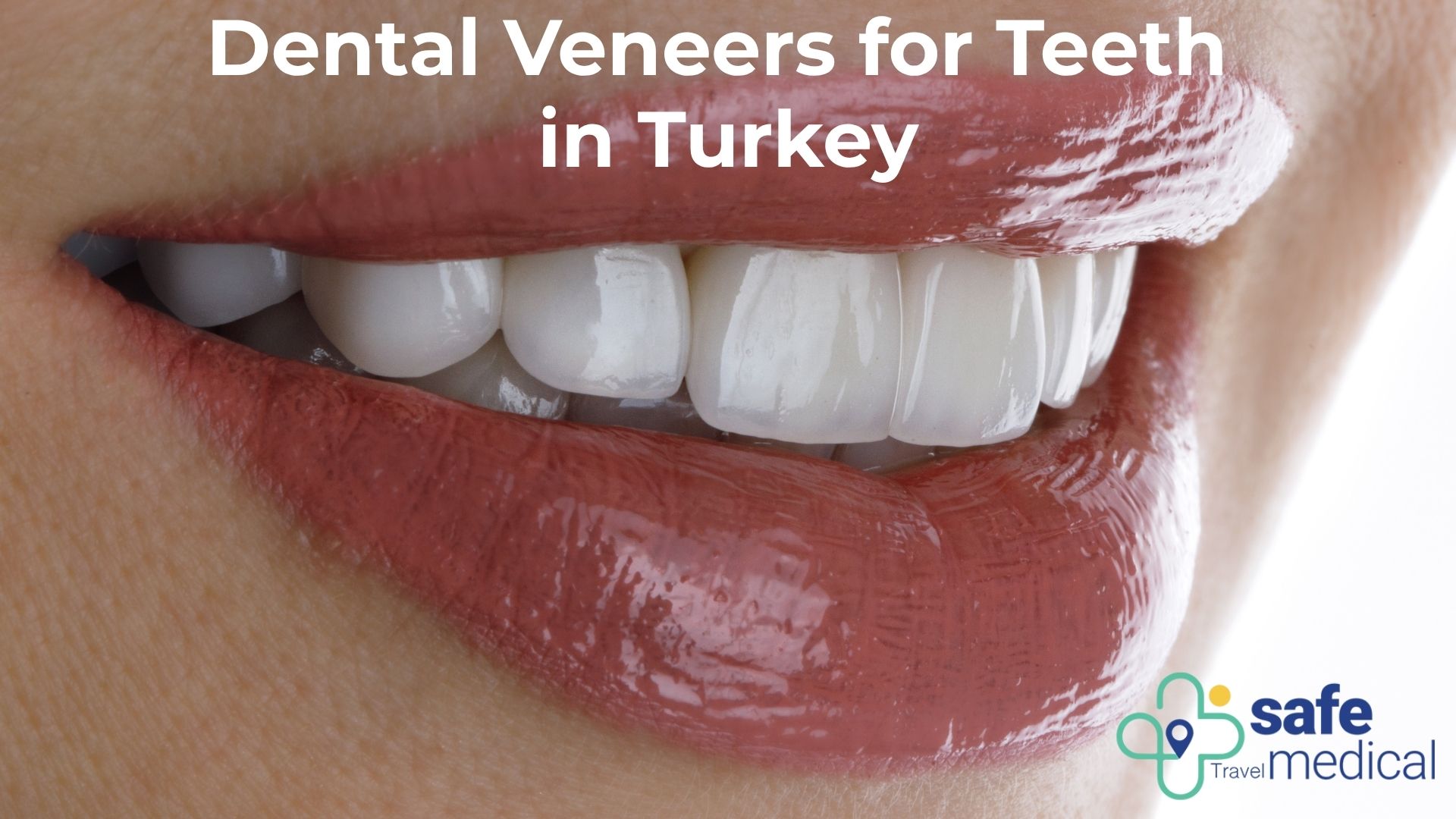
These restorations are mainly intended to hide permanent discolourations, correct structural imperfections and cover small misalignments or gaps (diastema) in the dental arch for aesthetic reasons.
Veneers are considered one of the most natural-looking smile design solutions because they imitate the light-reflecting and absorbing qualities of natural teeth to perfection.
Why dental veneers in Turkey?
The main reasons for choosing dental veneers in Turkey are as follows:
- Cost advantage: Turkey is significantly more economical than Europe and the United States. Average-quality treatments are 50% - 70% less expensive than in Europe and the United States.
- High quality of care: Many clinics employ expert dentists who have obtained international certification. Modern digital technologies (CAD/CAM, 3D design) are frequently used.
- All-in-one packages: Clinics provide ‘dental tourism’ packages that include treatment and services such as accommodation, transport and tourist assistance.
- Fast process: Veneer treatments generally take 3-7 days. Impressions are made, temporary veneers are placed and permanent porcelain veneers are cemented in no time.
- Quality and material assurance: Attractive and durable materials like zirconium and lithium disilicate (e.g., E-max). Warranty periods are usually in the 5-to-10 year range.
- Aesthetics and smile design: Turkish dentists are globally recognised for their veneers, which are natural, gum-friendly and long-lasting.
Types of dental veneer
Dental veneers are classified according to the material used, the method of production and the extent of preparation required:
Porcelain (Ceramic) Veneers:
This is the most common and aesthetically pleasing type.
Feldspathic porcelain: A traditional method involving powder and liquid layers, which best mimics the translucency of natural teeth.
Glass ceramics (Emax/lithium disilicate): These are materials produced using modern digital systems that offer significantly higher durability.
Composite veneers:
These are resin-based veneers that are either shaped directly on the tooth by the dentist (direct) or prepared in the laboratory (indirect). They are a more economical alternative to porcelain and can usually be completed in a single session.
Ultra-thin veneers (dental contact lenses):
These veneers, which can be manufactured with a thickness of just 0.3 mm or less, can be applied with no or minimal tooth preparation.
Depending on the preparation design:
Depending on the shape of the tooth’s cutting edge, different types of preparation techniques are available, such as ‘window’, ‘feathered’ or ‘overlap’.
E-max Dental Veneers
Emax is a lithium disilicate-based glass-ceramic system. The greatest advantage of this material is its flexural strength, which is significantly higher than that of traditional porcelain. Emax delivers excellent results both in anterior teeth, where aesthetic expectations are high, and in situations requiring high strength.
The key features of Emax veneers are as follows:
- High translucency: By mimicking the light transmission of natural enamel, it prevents the tooth from appearing ‘lifeless’.
- CAD/CAM compatibility: It can be produced by milling from blocks or press-forming at high temperatures using computer-aided systems (CAD/CAM), ensuring a precise and rapid production process.
- Strong bonding: Due to its structure being highly responsive to acid etching, it bonds firmly to the tooth enamel using adhesive systems.
- Thin structure: Thanks to its durable structure, it can be produced very thinly (approximately 0.3 mm – 0.5 mm), allowing for the removal of less tooth structure.
Composite Dental Veneers
Dental composite veneers are resin-based restorations prepared either directly in the mouth (direct) or in a laboratory setting (indirect) by a dentist to correct aesthetic imperfections in the teeth.
- This method is considered a highly practical procedure, particularly for patients seeking quick results in a single session. The composite material consists of an organic matrix, glass fillers for strength, and pigments that ensure aesthetic harmony.
- This type of veneer is frequently chosen to mask slight discolouration of the teeth, close gaps between teeth (diastema), repair broken or worn teeth, and correct dental malformations.
- The main advantage of the direct technique is that it is far more conservative than porcelain applications and can usually be completed in a single appointment. However, composite veneers may not be as durable as porcelain; they are at a higher risk of wear, chipping at the edges, and discolouration over time due to smoking or pigmented foods.
Porcelain Dental Veneers
Porcelain veneers are very thin porcelain shells bonded to the front surface of the tooth. These restorations offer an extremely natural appearance by perfectly mimicking the light-reflecting and light-transmitting properties of natural tooth enamel. They are usually made from glass-ceramics such as feldspathic porcelain or lithium disilicate (Emax), which offers greater durability. Today, this process is often performed using CAD/CAM technology, allowing for more precise and faster production.
- Porcelain veneers are the most permanent solution for severe discolouration (such as tetracycline stains) where teeth whitening is insufficient, as well as for dental shape and size anomalies or mild misalignments.
- With a lifespan of up to 20 years and a stain-resistant structure, this method is one of the most predictable aesthetic treatments. Although they may appear delicate on their own, they achieve surprising strength when bonded to the tooth enamel using adhesive systems.
Dental Veneers for Missing Teeth
Veneers do not actually function like a bridge or an implant, which directly replaces a missing tooth; however, they play a strategic role in addressing the aesthetic gaps and misalignments caused by missing teeth. Particularly in cases of congenital (present from birth) missing teeth, such as the absence of upper lateral incisors, they are used to alter the shape of adjacent teeth (for example, the canines) following the closure of the gap achieved through orthodontic treatment. This gives the canine tooth the appearance of a lateral incisor, thereby ensuring a harmonious smile.
Furthermore, veneers are used to close wide gaps (diastemas) between teeth by widening the shape of the teeth to camouflage the gap. In such cases, veneers create an optical illusion that eliminates the appearance of a ‘missing tooth’ by correcting imbalances in tooth size.
Dental Veneers Pros And Cons
As with any cosmetic procedure, porcelain and composite veneers have their advantages and disadvantages, which vary depending on the patient’s individual circumstances:
Advantages (Pros):
- Minimal invasiveness: Compared to traditional crowns, much more of the tooth structure is preserved; in some cases, they can be applied without any grinding (no-prep).
- Aesthetic superiority: Thanks to their translucency, they are indistinguishable from natural teeth and are highly resistant to staining.
- Biocompatibility: They provide excellent compatibility with gum tissue and do not adversely affect gum health.
- Psychological impact: They directly enhance the patient’s self-confidence and social success.
Disadvantages (Cons):
- Irreversibility: If enamel has been removed, this procedure cannot be reversed, and the tooth will require a restoration for the rest of its life.
- Risk of fracture: They are very brittle before bonding, and the risk of failure is high in patients with habits such as teeth grinding (bruxism).
- Cost: Porcelain veneers, in particular, are expensive treatments, as they require advanced technology and laboratory expertise.
- Technical precision: The outcome depends heavily on the dentist’s and technician’s expertise; incorrect planning can lead to gum problems or aesthetic failure.
Dental Veneers Before and After in Turkey
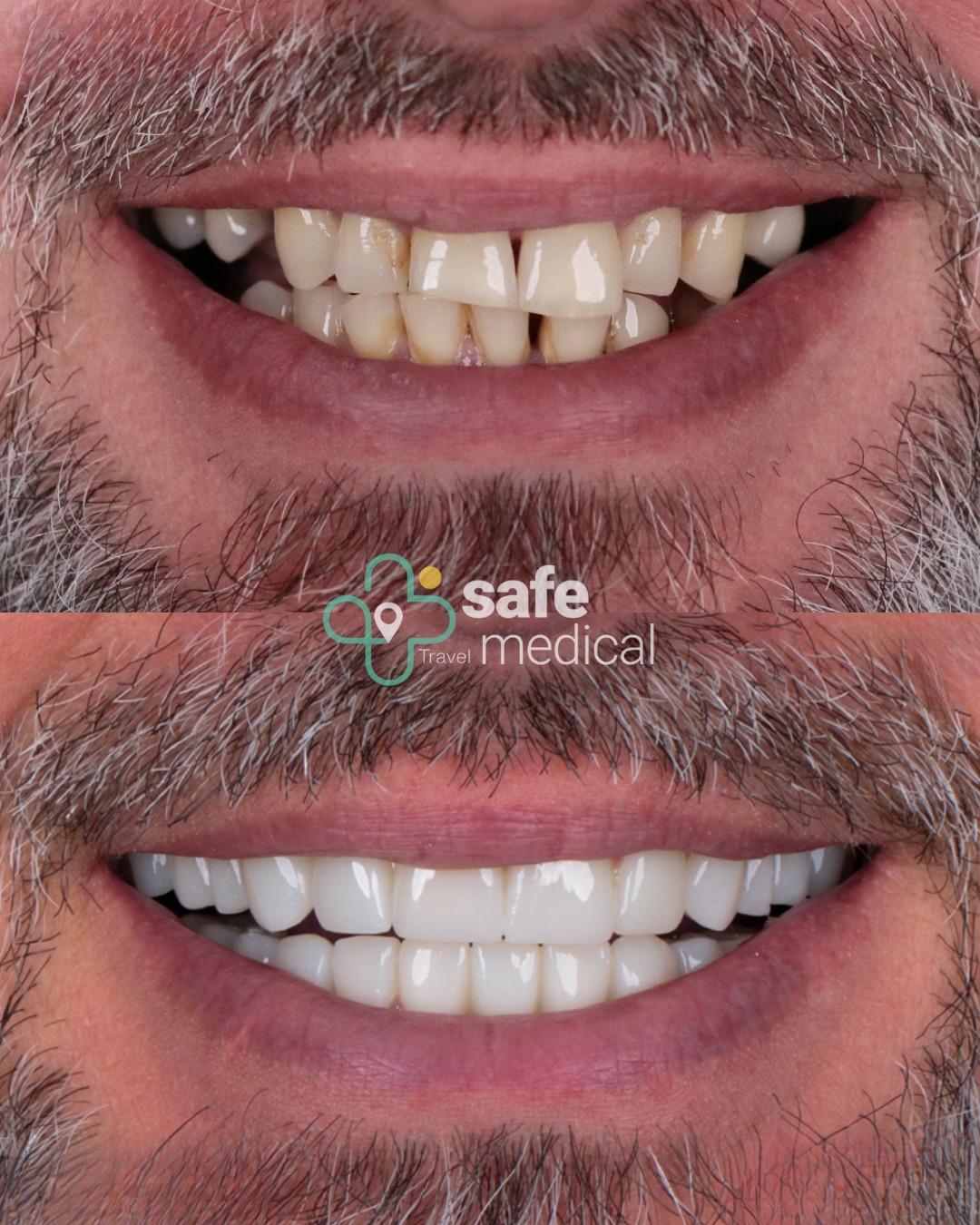
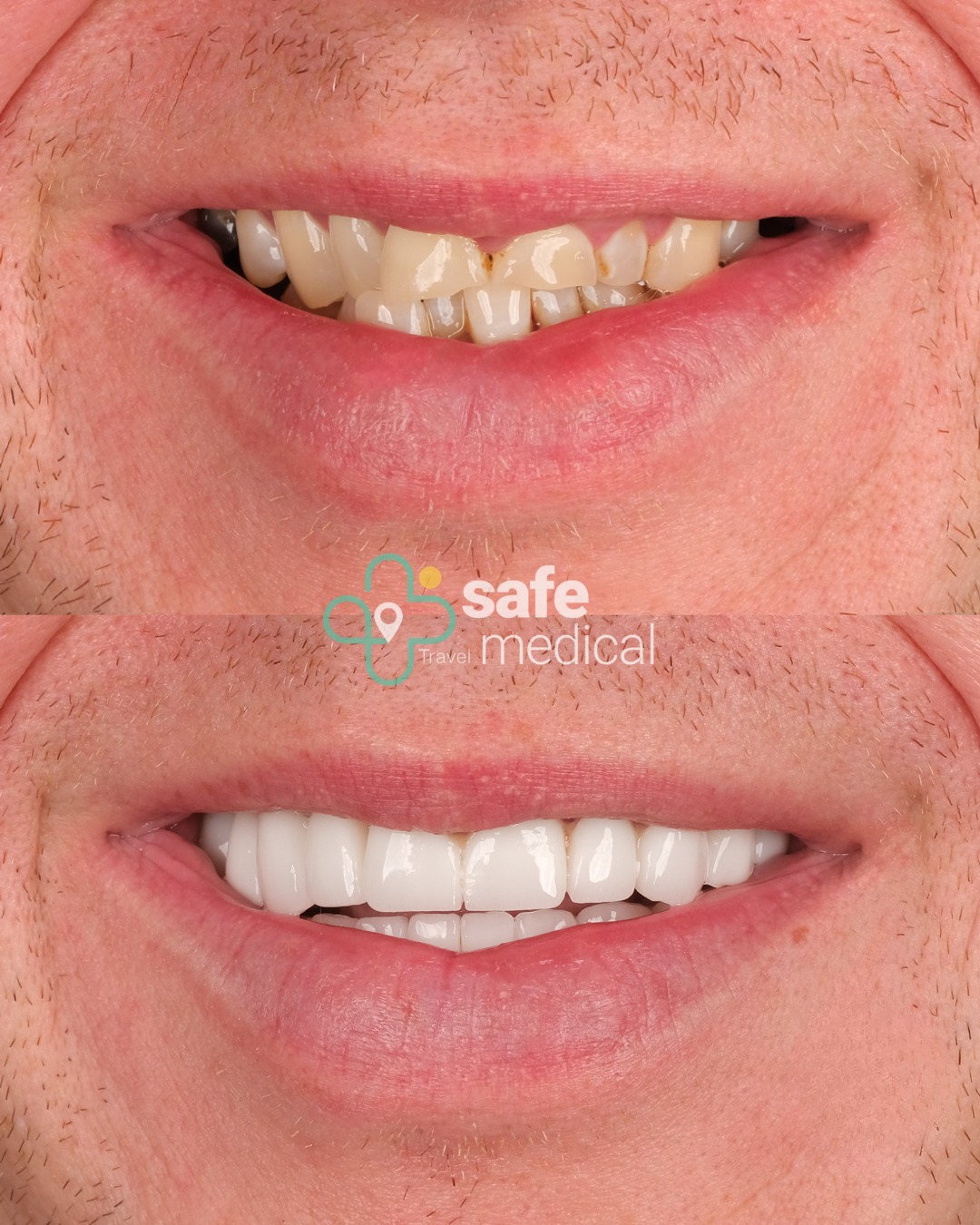
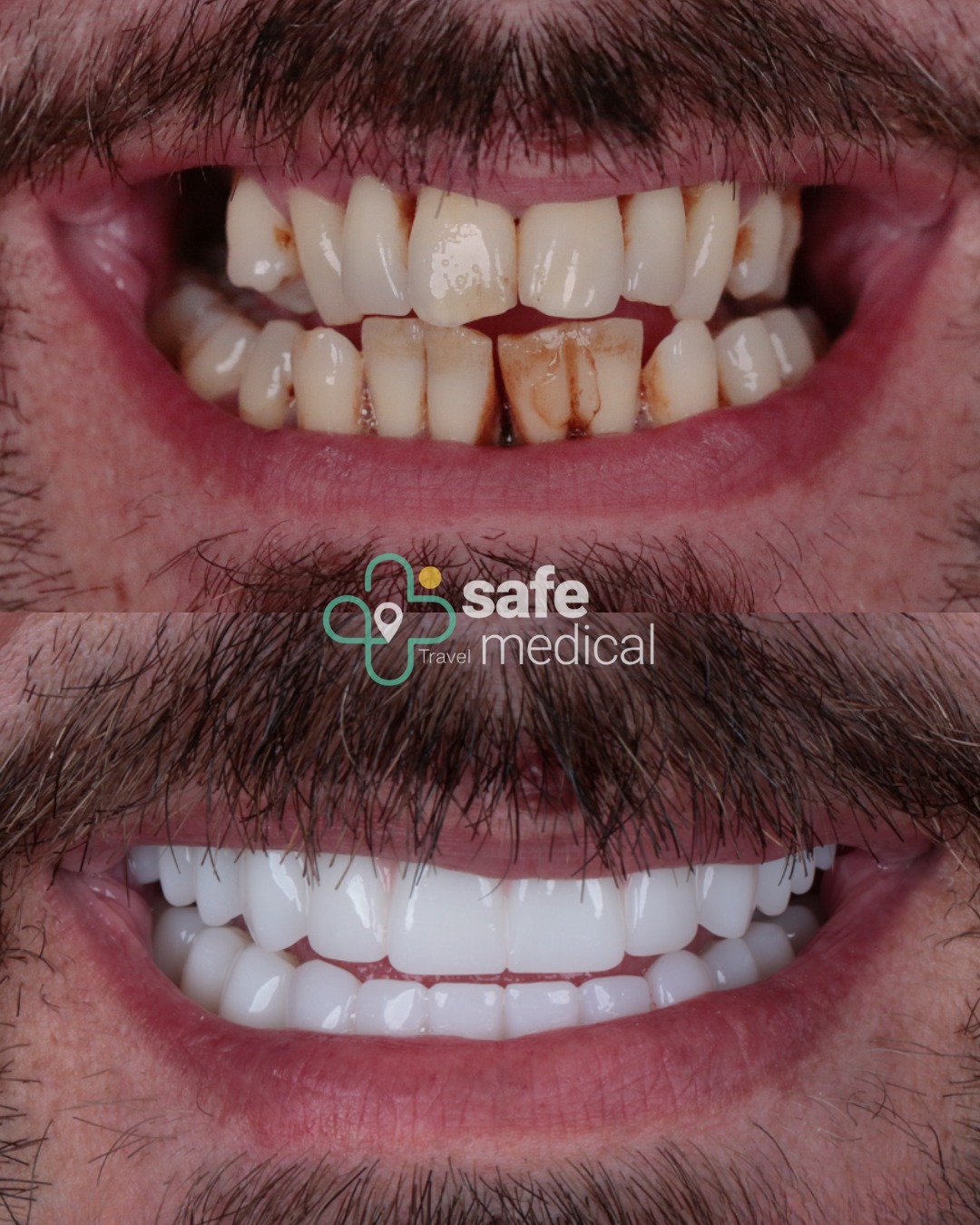
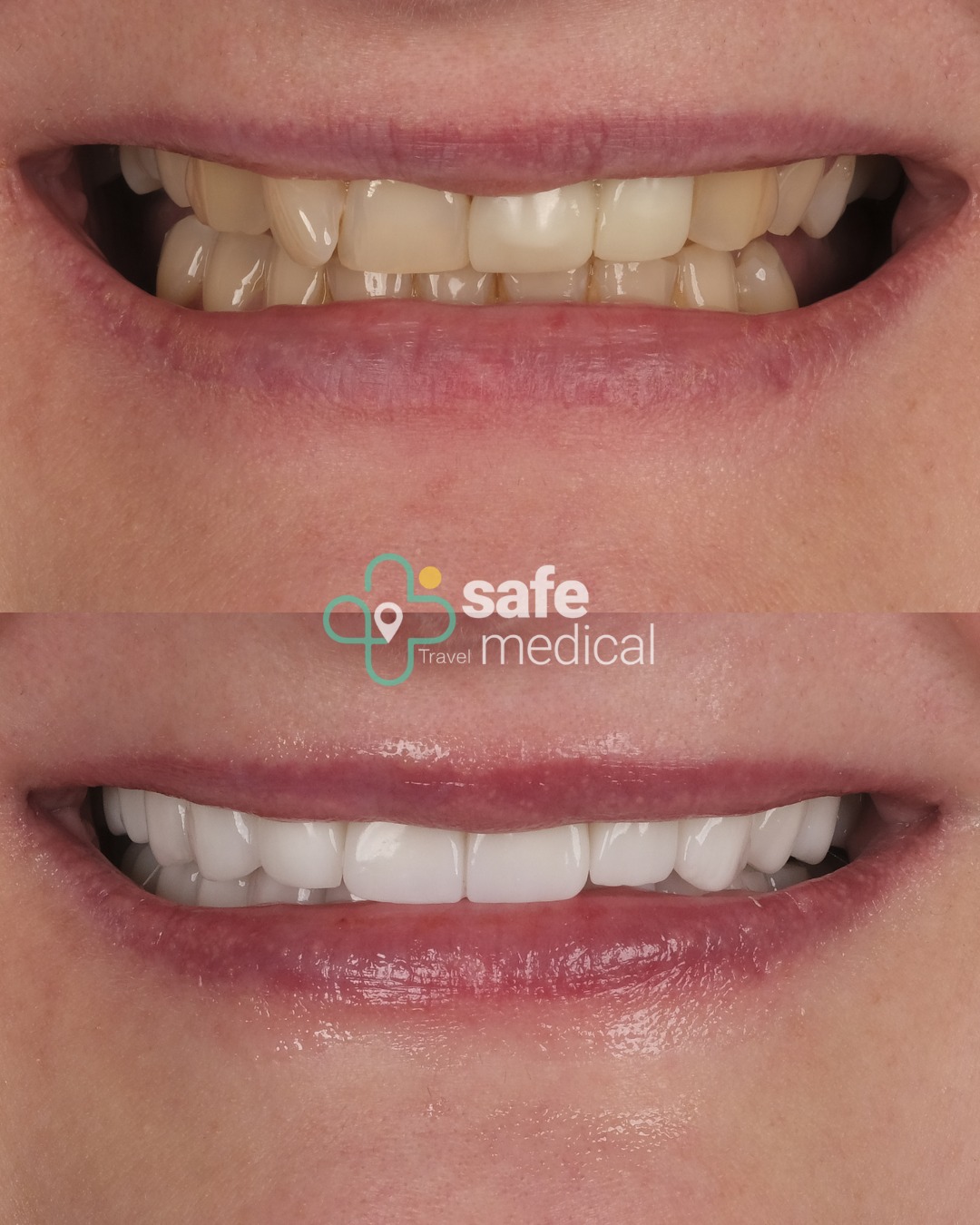
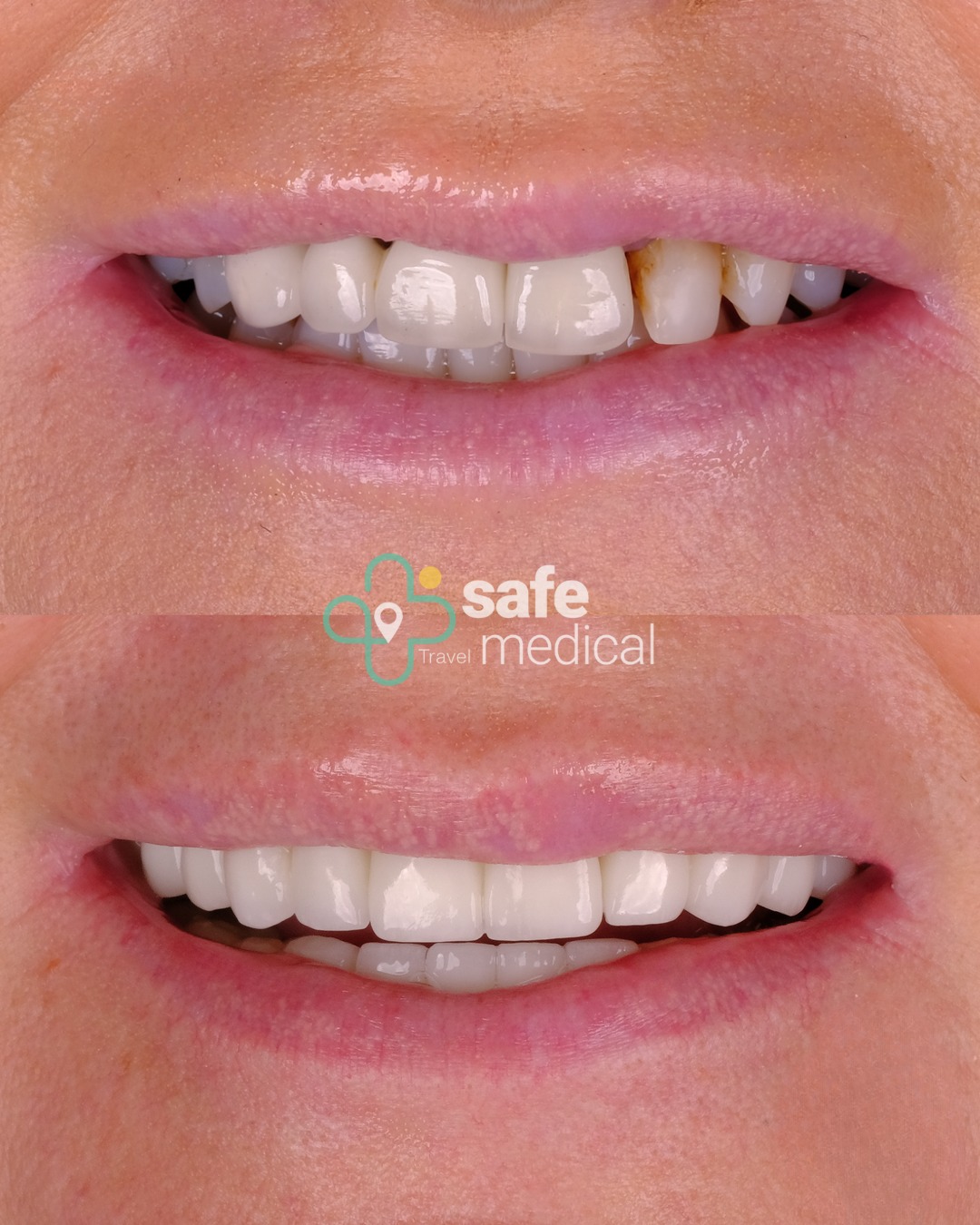
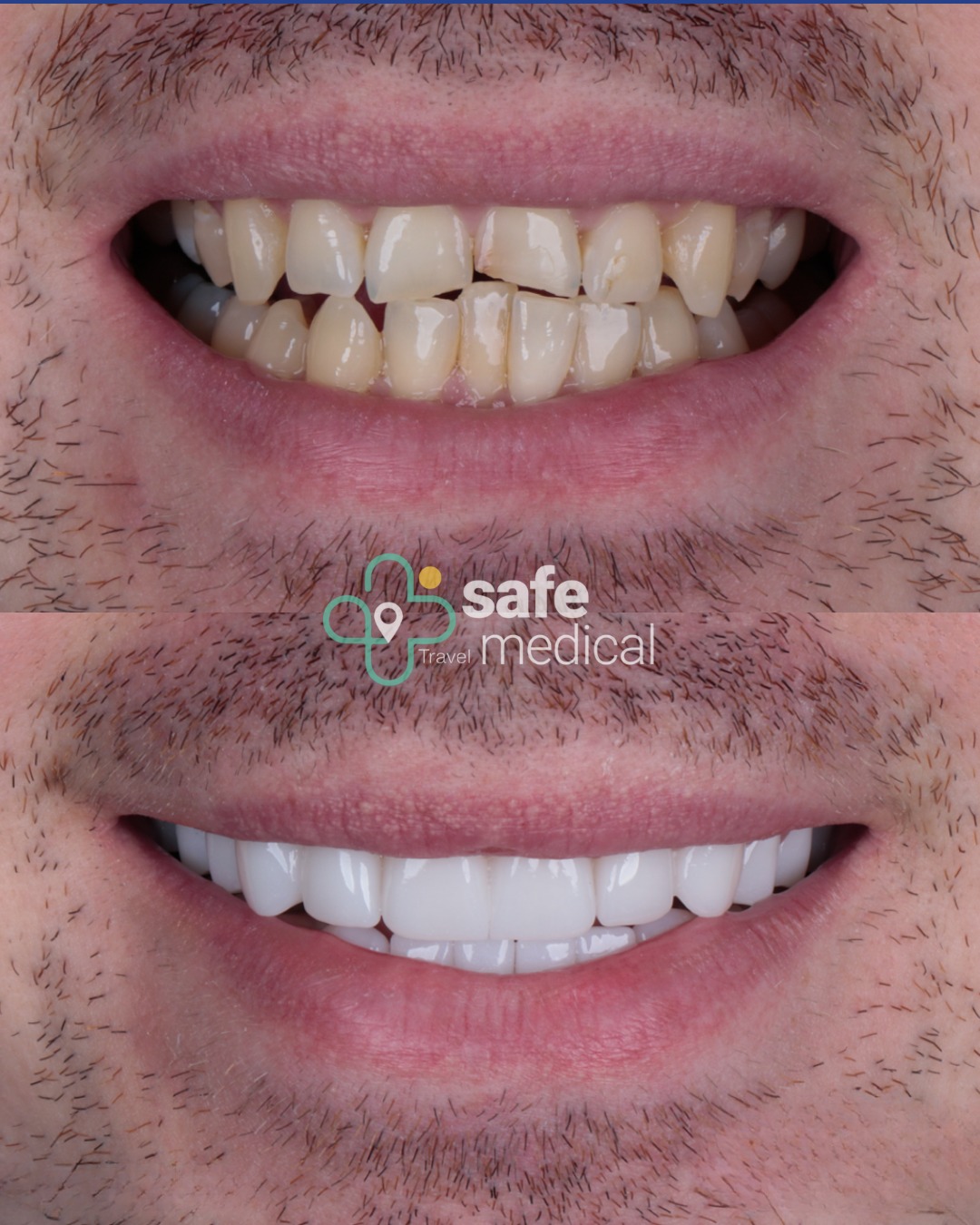
Dental Veneers Cost in Turkey
Average Cost Per Tooth
| Veneer Type | Turkey Price (€) | Lifespan |
|---|---|---|
| Composite Veneer | €120 - €200 | 5-7 years |
| Porcelain Veneer | €200 - €300 | 10-15 years |
| E-Max Veneer | €250 - €500 | 12-15 years |
| Zirconium Veneer | €250 - €500 | 15-20 years |
| Lumineers | €250 - €300 | 10-15 years |
Package Prices (Full Smile Makeover)
| Treatment | 16 Teeth | 20 Teeth |
|---|---|---|
| Composite Veneer | €2,000 | €2,500 |
| E-Max / Laminate Veneer | €3,500 | €4,000 - €4,500 |
| Zirconium Veneer | €4,000 | €4,500 |
| Hollywood Smile (20 E-Max) | €2,800 - €3,600 | €3,200 - €4,500 |
International Price Comparison
| Country | Porcelain / E-Max (Per Tooth) | 16 Teeth (Total Estimated) |
|---|---|---|
| Turkey | €200 – €400 | €3,200 – €6,400 |
| United Kingdom | €800 – €1,200 | €12,800 – €19,200+ |
| USA | $1,000 – $2,500 | $16,000 – $40,000 |
| Germany | €800 – €1,500 | €12,800 – €24,000 |
| Australia | AUD 1,000 – 2,500 | AUD 16,000 – 40,000 |
Dental Veneer Replacement
Although porcelain veneers are highly durable and long-lasting restorations, they do not generally last a lifetime and may need to be replaced over time. Clinical studies show that the 10-year success rate for veneers is around 91% to 94% and they can even last up to 20 years. However, certain fundamental reasons may arise over time that necessitate the restoration’s renewal:
- Marginal discolouration: A clinical study found that the most common complication, observed in approximately 39.2% of veneers, is ‘marginal discolouration’.
- Mechanical failure: Replacement is required in cases of porcelain fracture or the veneer detaching due to the adhesive losing its properties (de-adhesion).
- Gum recession: As gums recede with age, the margin of the veneer may become exposed; this creates an aesthetic gap and leaves the root surface of the tooth vulnerable.
- Health issues: Biological problems such as the development of secondary caries at the edges of the veneer or the loss of vitality in the tooth (devitalisation) may necessitate the replacement of the restoration.
- Fit issues: In ‘no-prep’ (preparation-free) teeth, an overly contoured (rough) appearance may sometimes occur; if this leads to gum problems, the veneer may need to be removed and the tooth prepared for a new restoration.
Dental Veneer Colours
Achieving the perfect tooth colour is one of the most complex steps in cosmetic dentistry. This is because the result depends not only on the colour of the porcelain, but also on the colour of the underlying tooth (substrate), the shade of the bonding cement used, and the translucency of the porcelain.
-
Shade selection tools: Dentists typically use professional shade guides, such as the VITA shade guide (A, B, C, and D groups) or the more modern V3DM (5 different value groups), to ensure the restoration matches the patient’s natural teeth. -
Masking capacity: The amount of enamel removed directly affects the shade. For example, a 0.9 mm reduction may change a dark A4 shade to A1, whilst a 0.3 mm reduction may not allow for any colour change. In cases of severe discolouration, such as tetracycline stains, thicker porcelain or opaque cements may be required to mask the colour. -
Try-in pastes: Water-based try-in pastes are used to assess how the cement shade will affect the final smile before the porcelain is permanently bonded. This allows the patient to approve the final result in advance.
Dental Caps vs Veneers
The key difference between dental caps and veneers lies in how much of the tooth is preserved and how invasive the procedure is:
- Conservative approach: Whilst veneers are applied only to the front surface of the tooth, crowns encase the tooth from all sides (360 degrees). Veneers are considered a far more conservative option than crowns and preserve as much tooth structure as possible.
- Durability: Porcelain veneers are quite brittle before bonding, but they gain surprising strength once bonded to the tooth enamel. Crowns, however, act like a ‘helmet’ that completely covers the tooth, making them more suitable for protecting teeth with large fractures or significant loss of tooth structure.
- Reasons for choice: Veneers are the first choice for aesthetic improvements, closing gaps or correcting minor misalignments. However, for those with parafunctional habits such as teeth grinding (bruxism) or where a significant portion of the tooth has been lost, crowns may be a safer option.
What is veneer teeth shaving?
This procedure, known as tooth preparation or abrasion, is a delicate process carried out to ensure the porcelain sits naturally on the tooth and does not create a bulky appearance.
Amount of abrasion:
For standard veneers, a layer of between 0.3 mm and 0.7 mm (roughly the thickness of an eggshell) is typically removed from the tooth enamel. With ultra-thin (contact lens) veneers, this amount may be as little as 0.1 mm, or in some cases, no abrasion is required at all.
Critical areas:
A slight ‘chamfer’ (bevelled edge) is created at the gum line (cervical margin) to ensure a natural transition of the porcelain. This is critical for maintaining gum health and preventing plaque build-up along the edges of the restoration.
Cutting-edge designs:
Three different ‘shaving’ methods can be applied to the tip of the tooth:
- Window: Only the anterior surface is abraded; the cutting edge is preserved.
- Bevel: 0.5–1 mm bevel is applied to the cutting edge.
- Overlap: To ensure the porcelain grips the tooth, the cutting edge is shortened by 2–4 mm, creating a step towards the palatal (posterior) surface.
Control tools:
Dentists use depth-cutting burs or laboratory-prepared silicone guides (indexes) to control the amount of abrasion down to the millimetre, ensuring that no more tooth structure is removed than necessary.
What is Clip-On Dental Veneers?
Clip-on dental veneers (also known as "snap-on veneers" or "click-on smiles") are a type of removable dental appliance that fits directly over your teeth without the need for adhesive or dentist intervention.
| Feature | Description |
|---|---|
| Application | No dentist required; you can put them on and take them off at home by yourself. |
| Adhesion | No glue or cement is used; they simply "clip" onto your teeth. |
| Material | Usually thin but durable resin or acrylic polymer. |
| Coverage | Typically covers the upper and lower front teeth (the smile line). |
| Price | Very affordable (€100 – €500 for a full set). |
Dental Bonding vs Veneers
Differences between dental bonding (direct composite veneers) and porcelain veneers:
- Treatment method: Bonding is shaped directly on the tooth by the dentist in a single session, whereas porcelain veneers are prepared in a laboratory or using CAD/CAM equipment.
- Durability and aesthetics: Porcelain is closer to natural teeth in terms of light reflection and transmission properties and is highly resistant to staining. Composite bonding, however, is more susceptible to wear, breakage and discolouration (from smoking, food colourings, etc.) compared to porcelain.
- Conservative approach: As bonding procedures can usually be performed without any enamel removal or with only minimal etching, it is one of the most conservative methods.
- Cost and speed: Bonding is more economical and provides quick results. Porcelain veneers, however, are more expensive, as they require higher technology and laboratory expertise.
Dental Crown vs Veneer
The key difference between dental crowns and veneers lies in how much tooth structure is removed and how much of the tooth is covered:
- Preservation of tooth structure: As veneers are a thin layer that covers only the front surface of the tooth, they are a minimally invasive (least intrusive) method. Crowns, on the other hand, require the removal of significantly more tooth structure from all sides as they encircle the tooth 360 degrees.
- Purpose: Veneers are primarily used to correct aesthetic imperfections, discolouration and minor irregularities in shape. Crowns, on the other hand, are preferred to protect the tooth in cases where a significant portion of the tooth has been lost or where there are extensive cavities or fractures.
- Biological advantage: Veneers cause less damage to the gums and pulp (tooth nerve) health compared to crowns. They may be a more suitable option than crowns, particularly for patients with deep overbites or limited space in their lower front teeth.
- Strength: Porcelain veneers are brittle on their own, but when bonded to the tooth enamel using adhesive systems, they bond strongly with the tooth structure to achieve high strength. Crowns, on the other hand, provide mechanical support by completely covering the tooth.
Frequently Asked Questions
Are veneers permanent?
Veneer treatment is considered an irreversible procedure, particularly when enamel is removed (preparation), which requires ongoing restorative care throughout the patient’s life. As tooth structure is removed from the front surface of the tooth, it is no longer possible to use these teeth without a veneer. However, in ‘no-prep’ techniques where no tooth structure is removed, the procedure may, in theory, be reversible.
How long do dental veneers last?
Porcelain veneers are highly durable and predictable restorations; clinical studies report high survival rates ranging from 91% to 94% over a 10-year period. Some studies estimate a success rate of 94% over 12 years and 93.5% over 20 years. However, by the end of this period, they may need to be replaced due to reasons such as gum recession, porcelain fractures or discolouration at the margins.
Can you eat with veneer teeth?
Although veneers bond with the tooth and become highly durable once bonded, they must be protected from excessive mechanical stress and strain. Materials such as feldspathic porcelain, in particular, may be susceptible to fracture under hard impacts due to their delicate structure. For this reason, it is advisable to avoid biting on hard objects, and those with habits such as bruxism (teeth grinding) are advised to use a protective night guard.
Do dental veneers stain?
Porcelain veneers are highly resistant to staining and discolouration thanks to their glass-like, smooth surfaces. Whilst composite veneers may become stained over time due to food colourings and smoking, permanent staining is rare on porcelain surfaces. However, in cases of poor oral hygiene or due to smoking, discolouration may occur over time at the margins of the veneers.
How to whiten veneer teeth?
It is not possible to whiten existing porcelain veneers using traditional whitening (bleaching) methods. Therefore, if the patient’s other teeth are to be whitened, this procedure must be completed before the veneer treatment, and the colour of the veneer must be selected to match that shade. If the patient is dissatisfied with the colour of the existing veneer, the only solution is to replace the restoration with one of a different colour.
Note
- Before and after images were taken in the same clinical environment and under the same technical conditions.
- Written and explicit patient consent has been obtained.
- This content is shared for informational purposes only.
- Results may vary from person to person.