
Structure of a dental implant
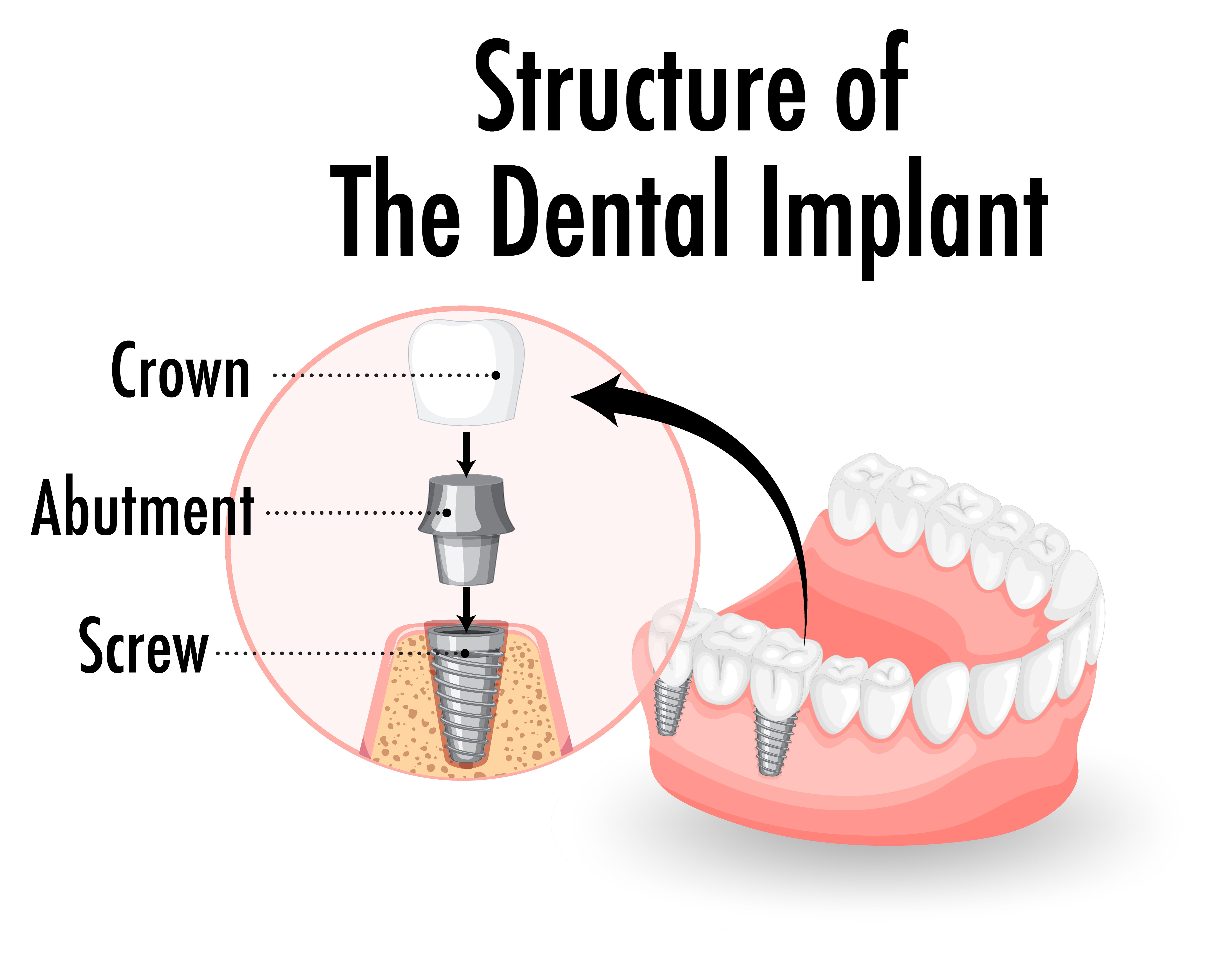
A dental implant is essentially designed to mimic the structure of a natural tooth and consists of three main components:
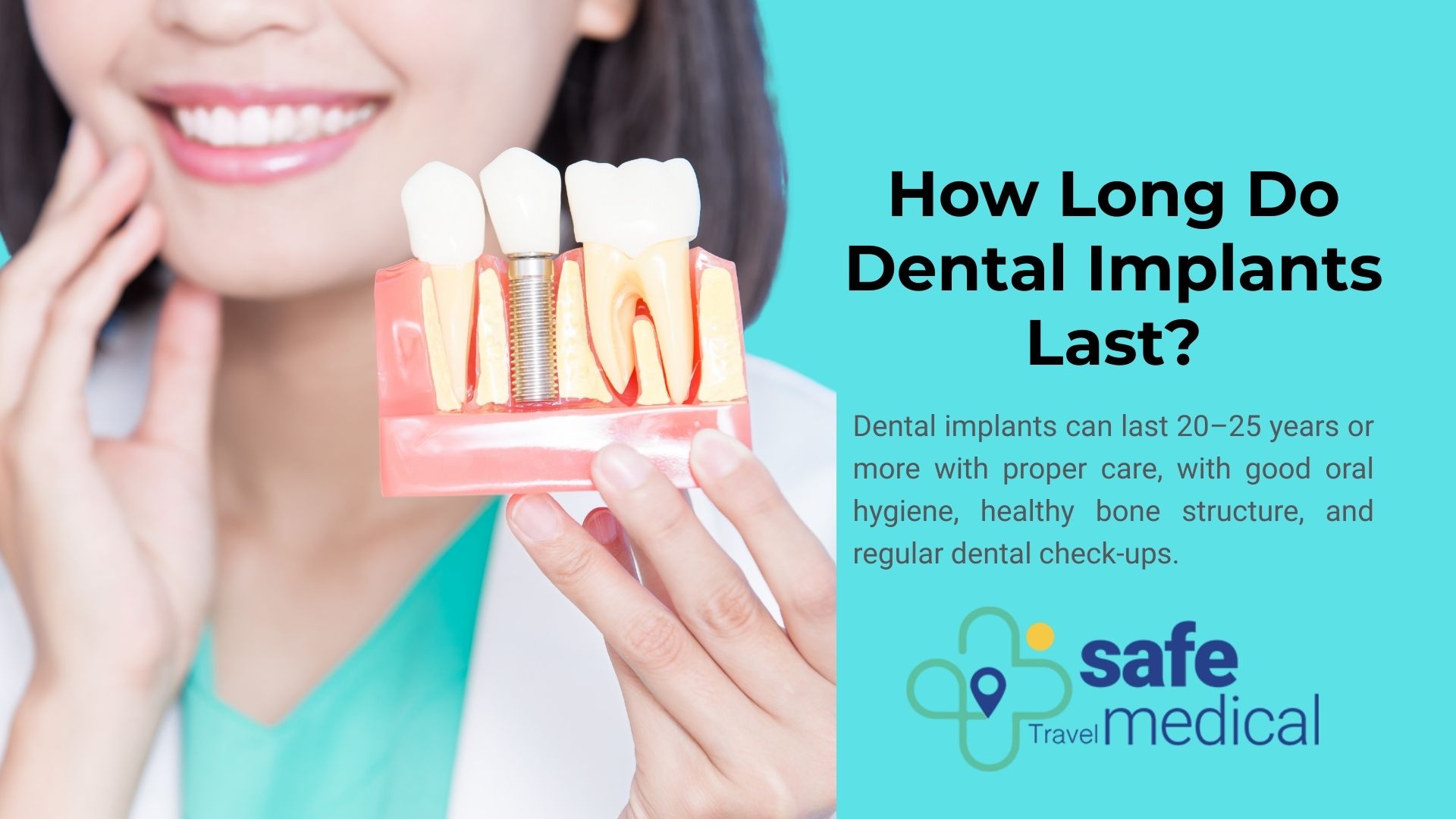
Implant body (fixture or post):
A small screw, usually made of titanium or a titanium alloy, is surgically put into the jawbone. This part acts as the root of the lost natural tooth. It usually has grooves or a rough surface to help it adhere better to the bone and, over time, fuses with the bone (osseointegration) to form a secure foundation. Some implants have a hollow screw design to allow other parts to be attached.
Abutment:
Once the implant has fully integrated with the bone, this is a small connecting piece that attaches the artificial tooth to the screw. It remains above the gum line and forms a support base for the crown that will be placed on top. Abutments can be ready-made (standard) or custom-made from gold or ceramic.
Crown (Restoration):
This is the visible part of the implant, located at the top. This piece is made from aesthetic materials such as porcelain or zirconium to mimic the shape, colour, and size of a natural tooth. A single crown is placed if one tooth is missing, while implants can also be used to support bridges or removable dentures in cases of multiple tooth loss.
How do dental implants work?
A dental implant is an artificial ‘tooth root’ that replaces a missing tooth root and is usually made of titanium or titanium alloy. These titanium screws are surgically placed into the jawbone and are biocompatible materials that are well tolerated by the body. The principle behind how implants work is based on osseointegration, the process whereby titanium forms a direct and strong bond with the surrounding bone tissue. Over time, bone cells attach to the implant surface, making it part of the bone and creating a stable, fixed foundation for the artificial tooth that will be placed on top.
Implants stimulate the jawbone by directly transmitting the functional forces generated during chewing, smiling, and speaking to it, thereby halting the bone resorption that normally occurs after tooth loss and preserving facial structure. The treatment process generally consists of the placement of the implant, a healing period of several months (usually 2-6 or up to 9 months) to allow for integration with the bone, and then the fitting of the permanent crown.
Types of implants
Dental implants are classified according to the material used, the placement method, and the type of prosthesis that will be placed on top. Commonly used implant types and varieties are as follows:
Implants according to materials
Titanium and titanium alloys:
This is the most common material used. Pure titanium or titanium alloys are preferred because they are biologically compatible and form a strong bond (osseointegration) with the bone.
Zirconium (Ceramic) Implants:
Zirconium oxide implants, which are ivory-coloured, are available for patients seeking a metal-free alternative. They offer aesthetic advantages, particularly in cases where the gum tissue is thin.
Roxolid:
This special material, composed of a titanium and zirconium alloy, is stronger than pure titanium and possesses excellent osseointegration properties.
Implants according to restoration and support types
Single tooth implants:
Used to replace a single missing tooth and its root, a crown is placed on top.
Bridge-supported implants:
When there are multiple missing teeth, two or more implants are used to support a bridge.
Implant-supported removable dentures (overdentures):
In completely edentulous mouths, these are ‘snap-on’ systems that allow the denture to remain more stable in the mouth and can be removed by the patient.
Fixed full-arch bridges:
In cases where all teeth are missing, these are prostheses fixed onto four or more implants and can only be removed by a dentist.
Design and size differences
Wide-body implants:
They are generally used in place of back teeth where chewing force is high.
Short implants:
They are used in cases where bone quantity is insufficient and additional surgeries such as sinus lifting are not preferred.
Angled implants:
These are implants placed at an angle in areas where the bone is suitable to avoid anatomical structures such as the sinus membrane.
Methods based on surgical and loading timing
One-stage:
A healing cap is placed on the implant during placement, and this part remains visible above the gum; a second surgery is not required.
Two-stage:
After the implant is put in, stitches are used to close the gum tissue. A small second treatment is needed after the healing period to show the implant.
Immediate implant:
This is an implant that is put in the socket where the tooth was taken out during the same visit.
Immediate loading:
This procedure is when a temporary or permanent tooth is attached to the implant on the same day it is placed or very soon after.
Transitional implants:
These are little implants that are used to hold up interim prostheses while permanent implants recover.
Do dental implants last forever?
Dental implants are meant to be a long-lasting, practically permanent way to replace missing teeth. Implants that are put in enough bone and are carefully cared for can usually endure for decades or even a lifetime, but it is not possible to promise that they will stay "forever". Clinical investigations have recorded successful instances in which implants have maintained functionality for over 50 years.
The following elements mostly decide how long a dental implant will last:
- Oral hygiene and care: The most important thing that affects how long an implant will last is how well the patient takes care of their teeth and how often they go to the dentist.
- Biological integration: The implant works when the titanium post integrates with the bone around it to make a strong base.
- Restoration and implant: It's crucial to know the difference between the titanium implant screw (artificial root), which can last a lifetime, and the prosthetic crown or bridge that goes with it. The crown part gets regular wear and tear and usually needs to be changed every 10 to 15 years.
- Risk factors: Smoking, poor dental hygiene, and uncontrolled diabetes are all systemic disorders that can cause infections or bone loss around the implant, which can contribute to its failure over time.
What to expect when getting dental implants?
Getting dental implants is a long process that can take anywhere from three to nine months, depending on how healthy you are and how good your bones are. Knowing what happens at each stage might help you be ready for the process, which includes an initial assessment and the final placement of the teeth.
Planning treatment and assessment
The first step is to have a long conversation to see if you are a good fit.
- Diagnostic tools: Your dentist will use X-rays and 3D scans (cone beam CT scans) to check the size and density of your jawbone and the location of adjacent structures like nerves and sinuses.
- Medical history: You will have to answer a lot of questions regarding your health. Most adults are good candidates, although people with uncontrolled diabetes or who smoke a lot may not do as well.
- Stabilisation: Before implant surgery can begin, any existing gum disease or decay must be treated to make sure the area is healthy.
The surgery
The implant placement process is usually a little surgery that takes place in a dental office.
- Anaesthesia: Most of the time, the procedure is done using local anaesthesia, which means you will be awake, but the area will be completely numb. If you're nervous, you can also get sedated.
- Time: It takes less than an hour to put in one root piece, but it can take 2 to 3 hours to put in more than one.
- Procedure: The surgeon cuts a small hole in the gum to see the bone, drills a precise hole, and carefully screws in the titanium post.
Healing and joining with the bone
This is the most important step, when the titanium implant joins your jawbone through a process called bone integration.
- Timeline: The implant usually takes 2 to 6 months to fully settle into the jawbone.
- Food and sleep: For the first several days, you should only eat soft or liquid foods and get a lot of sleep.
- Temporary teeth: Your dentist will usually give you temporary bridges, dentures, or crowns to keep your appearance and function while you wait for your permanent teeth to come in.
The phase of restoration
The last tooth replacement is attached when the implant has become part of the body.
- Putting in the abutment: A little connector called an abutment is put on the post to serve as the base for your new tooth. If the implant was buried while healing, you may need to come back for a small follow-up appointment to find it.
- Impressions: Impressions are made to make a porcelain or ceramic crown that fits the colour, shape, and size of your natural teeth.
- Fitting: The last crown is either screwed or glued onto the abutment, which finishes the restoration.
What to expect after surgery?
- Pain: Most people say that the pain is not too bad and feels like having a tooth pulled. Most of the time, over-the-counter medications like ibuprofen are enough to ease any pain.
- Swelling and bruising: It's common to have some swelling or bruising, and it usually gets worse 24 to 48 hours after surgery before going away.
- Going back to work: Most people can go back to work and do their normal activities within a day or two after getting a single implant.
Care and success over the long term
- Success rates: Dental implants have a very high success rate, with reports saying they are over 95% successful.
- Durability: The prosthetic crown may need to be replaced every 10 to 15 years since it wears out, but the titanium implant is meant to last a lifetime with good care.
- Care: You need to take care of implants the same way you do natural teeth by brushing and flossing every day and getting expert check-ups at least twice a year.
How long do dental implants last?
Dental implants are meant to be a long-term fix, and with the right care, they can last a lifetime. The titanium implant post integrates with the jawbone and is quite strong, lasting for many years. But the visible crown that goes on top of the implant usually needs to be replaced after 20 to 25 years since it gets worn out. The patient's oral hygiene, regular dental check-ups, and overall health have a big impact on how long the whole restoration lasts. For example, gum disease or tooth grinding might make it last a lot less time.
How long do mini dental implants last?
The longevity of mini dental implants is contingent upon the specific jawbone (upper or lower) in which the implant is situated, the intended function of the implant, and the maintenance of oral hygiene; still, scientific research has evidenced enduring successful results.
Scientific research yields significant information regarding the longevity of mini dental implants:
- 15-year success rate: The overall survival percentage for mini implants with a diameter of 2.4 to 3 mm has been reported to be 86.3%.
- 10-year success rate: Single-piece mini implants with a diameter of 1.8 mm have a 100% survival rate.
- 12-year overall survival: A comprehensive study of 5,640 implants indicated that the overall survival percentage was 92.1%.
- 7-year results for the upper jaw: 71% of mini implants implanted in the upper jaw of patients with not enough bone volume were effective, and the other implants had healthy surrounding tissue.
How long do all on 4 and all on 6 dental implants last?
Based on extensive long-term clinical research, both All-on-4 and All-on-6 dental implants are highly successful, predictable solutions for full-arch rehabilitation. With proper planning and maintenance, patients can expect these implant-supported prostheses to last for 15 to 20 years or longer.
How long does a full mouth of implants last?
A whole mouth of dental implants is a long-lasting, very strong investment in your oral health. The titanium posts that are put in the jawbone are meant to be permanent, much like a single implant. They can last a lifetime. But the prosthetic teeth they hold up, like a fixed bridge or an overdenture, can wear out over time and usually need to be replaced or repaired after 10 to 15 years. In the end, the same things that affect the lifespan of individual implants also affect the lifespan of a full-mouth restoration: good oral hygiene, regular professional check-ups, and avoiding behaviours like smoking or grinding teeth that can damage the bone and the restoration.
What affects the lifespan of dental implants?
The quality of a person's oral hygiene and their willingness to get regular professional maintenance are the most important factors that affect how long dental implants last. The titanium implant post is meant to be a permanent fix that lasts a lifetime. However, the visible prosthetic restoration (crown, bridge, or denture) usually needs to be replaced every 10 to 12 years since it gets worn out.
These things are very important in figuring out how long an implant will last:
- Taking care of your teeth: You need to brush and floss your implants every day to keep plaque and calculus from building up. If you don't, you could get gum infections like peri-mucositis or lose bone, which is called peri-implantitis. Regular dental checkups, scheduled every 4 to 12 months, are crucial for monitoring bone levels and tissue health.
- Smoking and drinking: Smoking greatly raises the chance of an implant failing; failure rates are said to be 20% greater than in people who don't smoke. Smoking and drinking too much might slow down the healing process and cause inflammation and bone loss surrounding the implant for a long time.
- Amount and quality of bone: For an implant to work, it needs enough bone volume and density to give it a secure base. If there isn't enough bone, operations like bone grafting may be needed to make sure the implant lasts.
- Mechanical forces: Habits like grinding your teeth (bruxism) or clenching your teeth might put too much stress on the implant, which could cause it or the porcelain restoration to break. To lessen these dangers, dentists may suggest a bite guard to wear at night.
- Systemic health conditions: Uncontrolled diabetes, a history of radiation therapy to the head and neck, and certain drugs like bisphosphonates can make it harder for the body to keep the link between the bone and the implant.
- Surgical success (osseointegration): The implant's lifespan depends on effective osseointegration, which is when the bone attaches directly to the titanium surface. If this doesn't happen during the first healing phase, the implant may be lost early.
How can I make my dental implant last longer?
You need to be committed to a mix of good personal oral hygiene, frequent professional care, and healthy lifestyle choices if you want your dental implant to last as long as possible, maybe even a lifetime.
Here are the exact things you can do to make your implant last as long as possible:
- Brush and floss every day: Just like you would with real teeth, you should clean your implant-supported teeth at least twice a day.
- Use special equipment: Your dental hygienist may suggest interdental brushes (Proxi-Brushes), special floss, or other cleaning instruments for regions that are hard to reach.
- Spend more time: Daily hygiene for implants may be a little more complicated and take longer than for natural teeth. You should anticipate spending more time keeping your implants healthy.
- Regular check-ups: Depending on your unique treatment needs, you should go to "recall" appointments every 4 to 12 months.
- Professional cleanings: A dentist or hygienist should clean your implants to get rid of plaque and calculus that can cause gum infection (peri-mucositis) or bone loss (peri-implantitis).
- Yearly appointments to a specialist: It is frequently suggested that you see the surgeon who put in the implant at least once a year for a full check-up.
- Deal with teeth grinding (bruxism): If you often grind or clench your teeth, you could put too much stress on the implant. Talk to your dentist about getting a nighttime bite guard to safeguard your new teeth.
- Don't eat hard foods: Don't bite into things that are really hard, such as ice, hard sweets, or nuts, because they can chip the porcelain crown.
- Stop smoking: Smoking is a big risk factor for implant failure, with a failure rate that is 20% greater than in people who don't smoke. It raises the chance of inflammation and bone loss surrounding the implant.
- Limit how much alcohol you drink: Drinking too much can impair your initial healing and long-term bone health.
- Take care of your overall health: Keep disorders like diabetes under control, because poorly managed systemic diseases can weaken the bone around the implant.
How is a failed implant treated?
If a dental implant doesn't work (doesn't connect with the bone or is lost over time), the treatment option depends on what caused the failure and how healthy the patient's mouth is generally. The following steps may be part of the treatment for a failed implant:
Taking out the implant (explantation)
If an implant doesn't fit well with the bone or gets loose over time, it usually needs to be taken out.
- Process: The patient gets local anaesthesia before the procedure.
- Method: The dentist uses a special drill that fits perfectly over the implant to take it out of the bone.
Putting it back in
You can generally get a new implant to replace a faulty one.
- Healing process: The area normally needs around three months to heal once the implant is taken out.
- New placement: A new implant can be put in once the area has healed (or in some cases, at the same time as the removal process).
How to treat infections and illnesses around implants
This problem needs to be treated if the implant has been lost because of things like gum inflammation (peri-mucositis) or bone loss (peri-implantitis).
- Surgery: If bone loss is seen in the inflammatory area, surgery (such as bone grafting) may be needed to bring things back to normal.
- Hygiene control: Poor oral hygiene is a common cause of infections; thus, expert cleaning and hygiene education help with the treatment process.
Other options and changing the prosthetic
You might not need to replace every implant that doesn't work:
- Not necessary: Treatment can go on without replacing the lost implant as long as there are enough additional implants in the mouth.
- Renewal of the restoration: If the superstructure (crown or bridge) is the only thing that is broken, it may be enough to replace just that section of the restoration while keeping the implant itself.
- Traditional methods: If the implant has fully failed and a new one isn't put in, the dentist will look into other choices, including bridges, partial dentures, or full dentures.
Frequently Asked Questions
What happens to dental implants after 20 years?
After 20 years, it's very likely that your implant will still be in your mouth and working well. The crown, or visible tooth, on top of it may be the biggest alteration. But if you don't skip regular check-ups, implants can last for the rest of your life.
The most crucial thing that implants do is keep the jawbone safe. Radiographic exams conducted over 20 years have revealed virtually little bone loss surrounding the implant. The visible tooth (crown) on top of the implant may wear down or break within 20 years, even if the implant itself stays in good shape. So, over time, the tooth on top of the implant may need to be replaced.
In patients receiving regular supportive implant therapy (SIT), 60% of implants exhibited no indications of peri-implantitis after a 25-year duration.
Will a dental implant last a lifetime?
A dental implant can last a lifetime, but that doesn't mean it will. Think of it like acquiring a high-quality, long-lasting car. If you take good care of it and are lucky, it can last for decades, but it still needs regular maintenance, and some parts will ultimately need to be replaced.
How many times can a dental implant be replaced?
Yes, you can replace a dental implant, but it is harder and less likely to work with each try. It's not like changing a part on an automobile, which can stay in "like-new" condition for a long time. Your body's tissues remember things, and every surgery leaves behind scar tissue and changes the biology of the area.
How do I know if my implant is failing?
To tell if a dental implant is failing, you need to check for certain clinical indications. It's also crucial to remember that a failing implant doesn't always hurt.
The most prevalent signs and symptoms that a dental implant has failed are:
- Looseness or movement: If the implant becomes loose or moves, it is a clear symptom of failure. This means that it has not fully integrated with the bone or has lost its attachment.
- Gum Inflammation (Peri-implant mucositis): Check for redness, swelling, or inflammation of the soft tissue just around the implant.
- Infection and bleeding: If you see bleeding, discomfort, or plaque or calculus building up around the location, it could be a sign of poor health and an infection.
- Peri-implantitis: This occurs when inflammation is accompanied by the loss of bone that supports the implant. You might not feel this, but a dentist can find it during regular check-ups.
- Changes in appearance: Sometimes, the implant body may be seen or felt through the gum line.
- Pain or swelling that doesn't go away: It's typical to feel some pain right after surgery, but you should tell your dentist right away if you have any unusual or long-lasting pain or swelling.
- Issues with the restoration: The associated prosthetic work can also fail, like when the porcelain crown chips, the bridge comes loose, or the clips on an overdenture wear out.
Are dental implants right for you?
Who would be a good fit for the job?
Most adults in good health who have lost one or more teeth because of an accident, decay, or disease could be good candidates.
- Age: Age is not usually a problem; implants have been successfully given to people in their 90s. But they aren't good for teens or younger individuals whose facial bones haven't finished growing yet.
- Bone density: The implant needs enough bone volume to stay in place. If you have lost bone, you may need to have other procedures done, including bone grafting, before you can get the implant.
- Oral health: You can't have any active infections in your mouth. Before you can have implant therapy, you need to treat and control your gum condition (periodontitis).
The good things of dental implants
- Bone preservation: Implants keep your jawbone healthy by stimulating it with chewing forces. This keeps your natural facial structure and stops bone loss.
- Protecting nearby teeth: Unlike traditional bridgework, implants don't need to grind down or drill into healthy teeth next to them.
- Long-lasting and durable:The titanium implant post can last a lifetime if it is taken care of properly. They have a success rate of more than 95–98% on record.
- Function and confidence: They appear, feel, and work like real teeth, so you can eat anything and grin without worrying about a prosthesis slipping or clicking.
Note
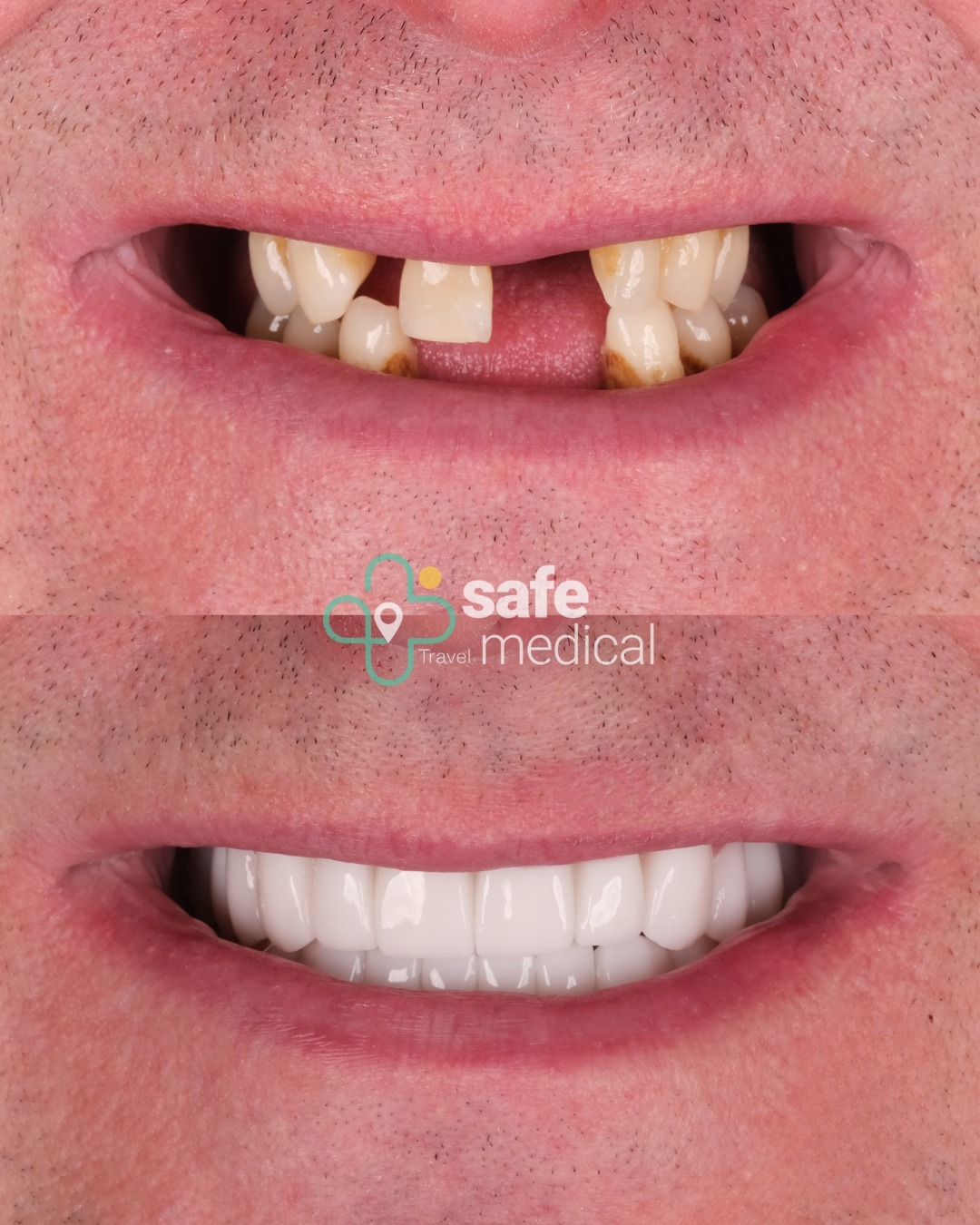
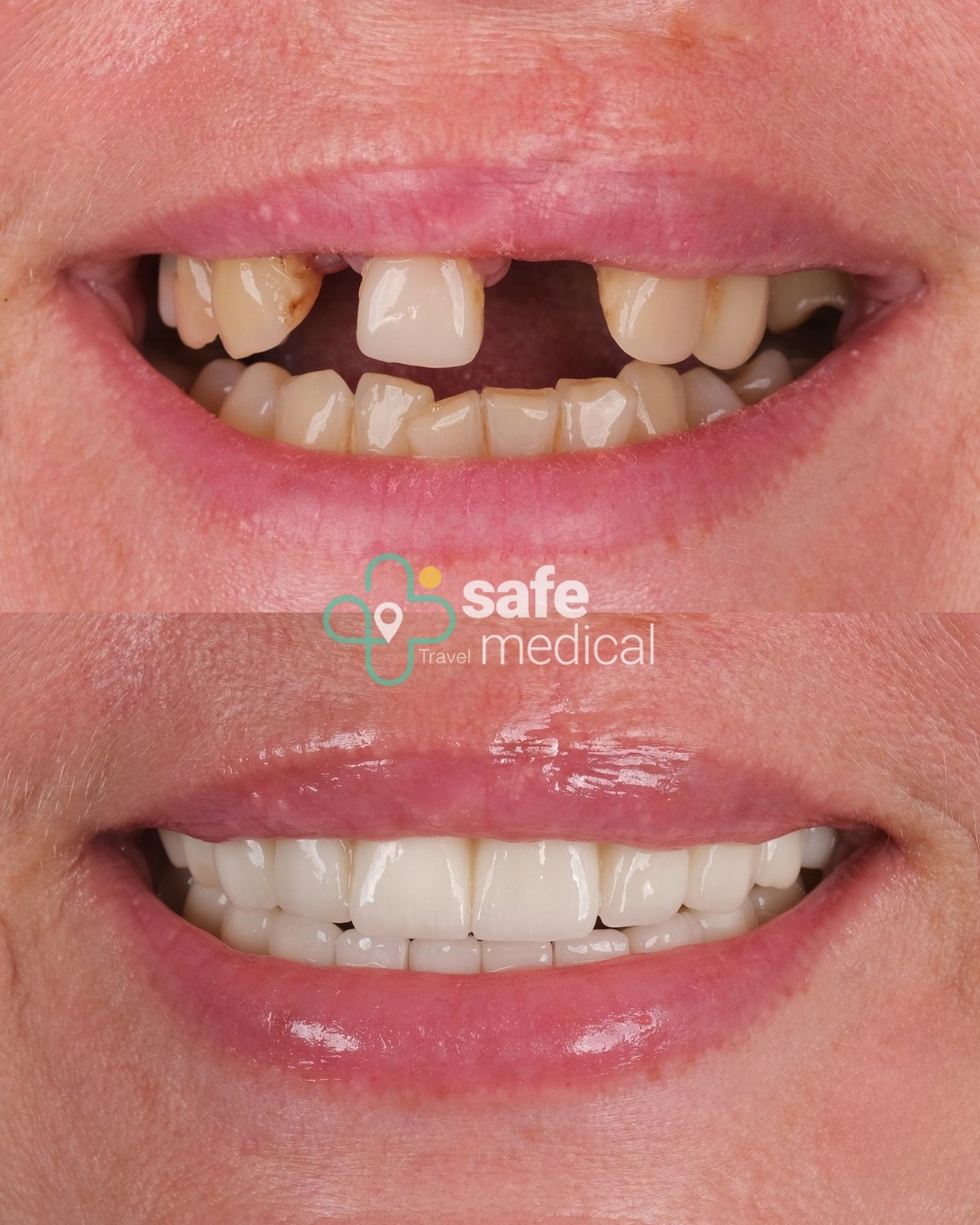
- Before and after images were taken in the same clinical environment and under the same technical conditions.
- Written and explicit patient consent has been obtained.
- This content is shared for informational purposes only.
- Results may vary from person to person.