
How Many Zirconia Crowns Do I Need?
Ask three clinics in Turkey for a quote on a "full set" of zirconia crowns and you could easily get three different answers. One says 16, another says 20, and the third tells you that you'd really be better off with 28. Same mouth, same teeth.
So how many do you actually need? Annoyingly, the answer is: it depends. It depends on how wide your smile is, what state your teeth are in now and what you're hoping to change. Below we go through what each number really means, how a dentist should arrive at it, and the questions that stop you paying for crowns you don't need. If you're new to the material itself, start with our guide to zirconia crowns: cost, procedure and lifespan.
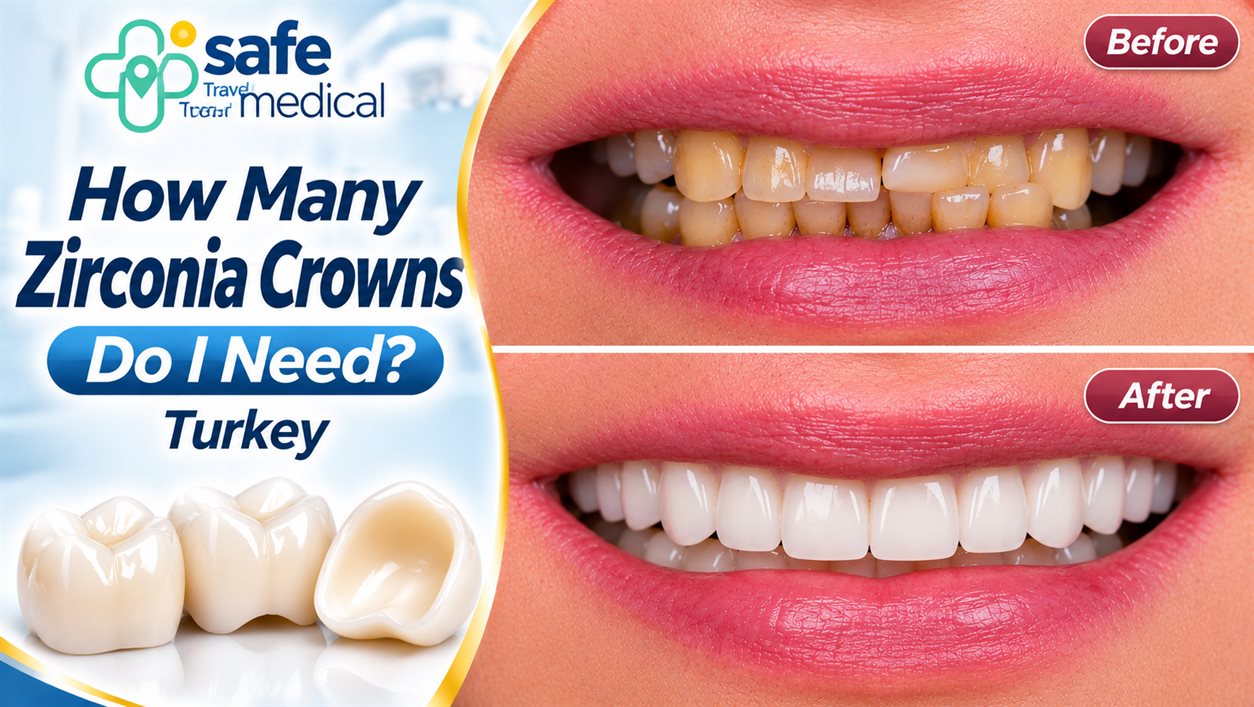
What Does a "Full Set" of Zirconia Crowns Mean?
Nothing official, as it turns out. "Full set" is a sales term, not a clinical one, and every clinic uses it slightly differently. Roughly speaking, packages tend to look like this:
- 8 crowns covers the upper front teeth, which are the ones people notice first.
- 16 crowns means 8 on top and 8 on the bottom, taking in the front teeth and the first premolars.
- 20 crowns is a common package for people looking for a "Hollywood Smile". It's 10 top, 10 bottom, and it usually covers the front teeth and premolars.
- 24 crowns means 12 on top and 12 on the bottom, usually extending to the first molars on each side.
- 28 crowns covers every tooth except your wisdom teeth, assuming you have all 28 natural teeth. At this point you're usually talking about extensive dental restoration, not just a cosmetic upgrade.
These numbers assume you have the corresponding natural teeth in place. If you're missing teeth or already have implants or bridges, the plan may look quite different. A crown on a natural tooth isn't the same as an implant-supported crown, and missing teeth can't simply be included in a standard crown package.
Before you compare two quotes, find out how many teeth each one includes. A price that looks much cheaper is often just for fewer crowns.
How Many Teeth Show When You Smile?
Many people show somewhere between 8 and 10 upper teeth in a natural smile. Some show 12 or more, and some show quite a lot of their bottom teeth as well. You don't need a dentist to get a rough idea here. A quick look in the mirror while you laugh will tell you more than any package list.
Why does it matter? If your smile is wide and only the front teeth are crowned, the older teeth at the corners can look noticeably darker next to the new ones. People often only spot this after they get home. Go the other way, though, and you end up paying for crowns on teeth nobody ever sees.
Of course, a tooth doesn't have to be visible to need treatment. Back teeth can need crowns for entirely different reasons.
A good clinic will take photos and short videos of you talking and smiling before suggesting a number.
How Dentists Decide on the Number of Crowns
It shouldn't come down to whichever package is on offer that month. There are a few things a dentist needs to weigh up first.
The Health of Each Tooth
Teeth with big old fillings, cracks, heavy wear or decay may benefit from a crown. A strong, healthy tooth usually doesn't need one.
Your Bite
Your top and bottom teeth have to meet properly. If several teeth are badly worn or damaged, your dentist may recommend restoring more of them to improve how your bite works. In some cases that means 24 or 28 crowns, but it depends on the condition of your teeth and how they fit together.
Colour Matching
Whitening gel doesn't work on crowns, so once they're in, their shade is fixed. Pick a very bright shade and any natural tooth sitting next to a crown can suddenly look yellow. That alone often decides where the treatment stops.
Whitening your natural teeth before choosing the final crown shade may help avoid that problem without adding more crowns.
Your Existing Dental Work
Old crowns, bridges or implants have to fit into the new plan somehow. Some can stay as they are. Others may need replacing if there's a clinical reason or a noticeable colour mismatch.
Your Goals and Budget
Some people want a completely new smile. Others just want to sort out two or three broken front teeth. Either is fine, as long as the plan makes clinical sense.
16 vs 20 vs 24 vs 28 Crowns: Which Is Right for You?
| Number of Crowns | Teeth Usually Covered | Often Suits |
|---|---|---|
| 16 crowns | 8 top, 8 bottom: front teeth and first premolars | A narrower smile, healthy back teeth, mainly cosmetic goals |
| 20 crowns | 10 top, 10 bottom: front teeth and premolars | A full cosmetic change with a wider smile |
| 24 crowns | 12 top, 12 bottom: up to the first molars | Worn, broken or heavily filled back teeth as well |
| 28 crowns | Every tooth except the wisdom teeth | Extensive restoration or a bite that needs rebuilding |
16 crowns tends to work for people with a narrower smile whose back teeth are in decent shape and who mainly want the front teeth to look better.
20 crowns is a common option for a full cosmetic change. Because it reaches further back, there's less chance of an older tooth showing at the corner of your mouth.
24 or 28 crowns usually comes up when the back teeth are worn, broken or heavily filled too, or when the bite needs more extensive restoration. It's more about how your teeth work than how they look.
These aren't fixed rules, though. Someone with 16 damaged teeth may need 16 crowns, while someone with 28 healthy teeth may not need any.
If you've been told you need 28 crowns and nobody can explain what's wrong with your back teeth, get a second opinion.
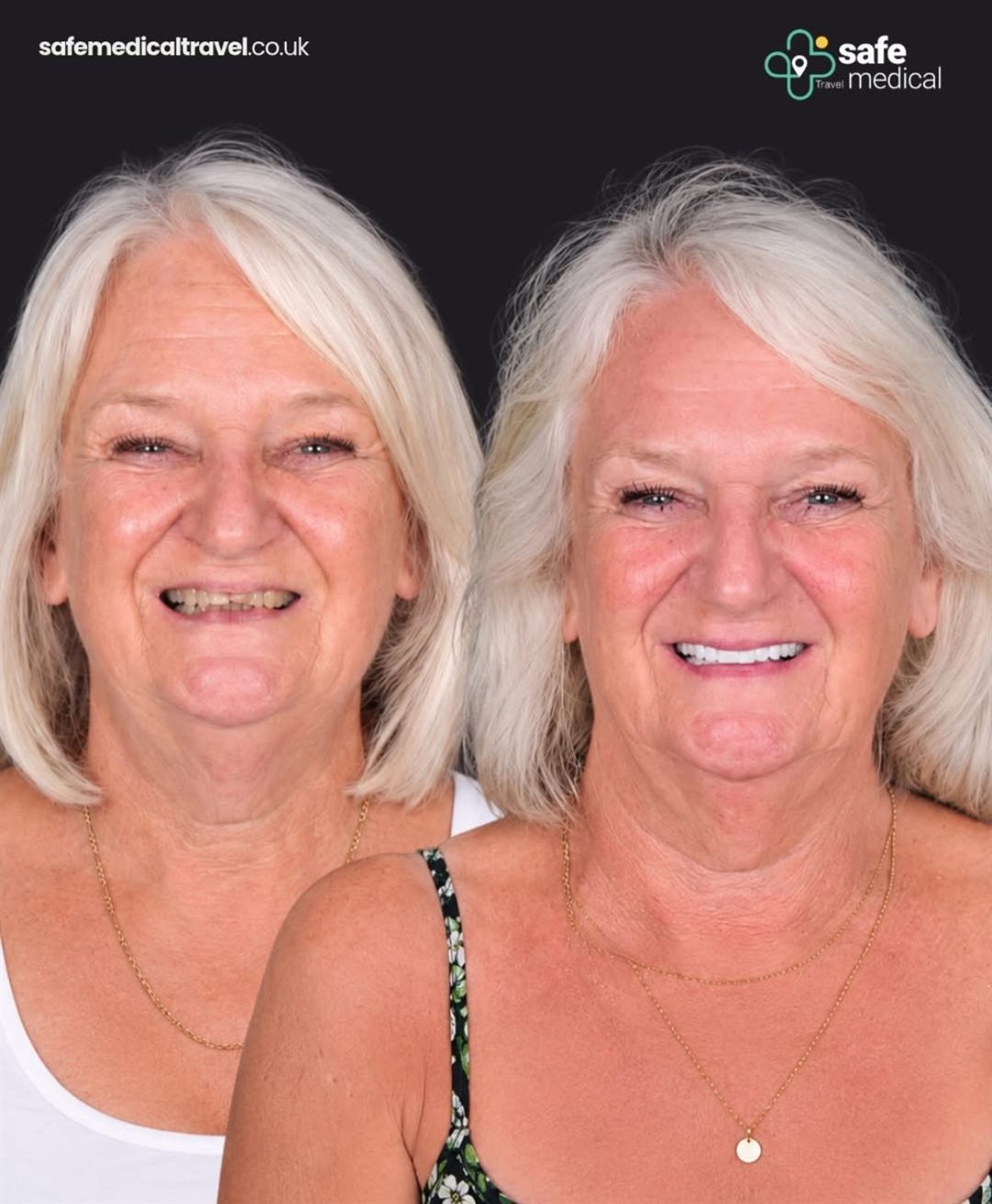
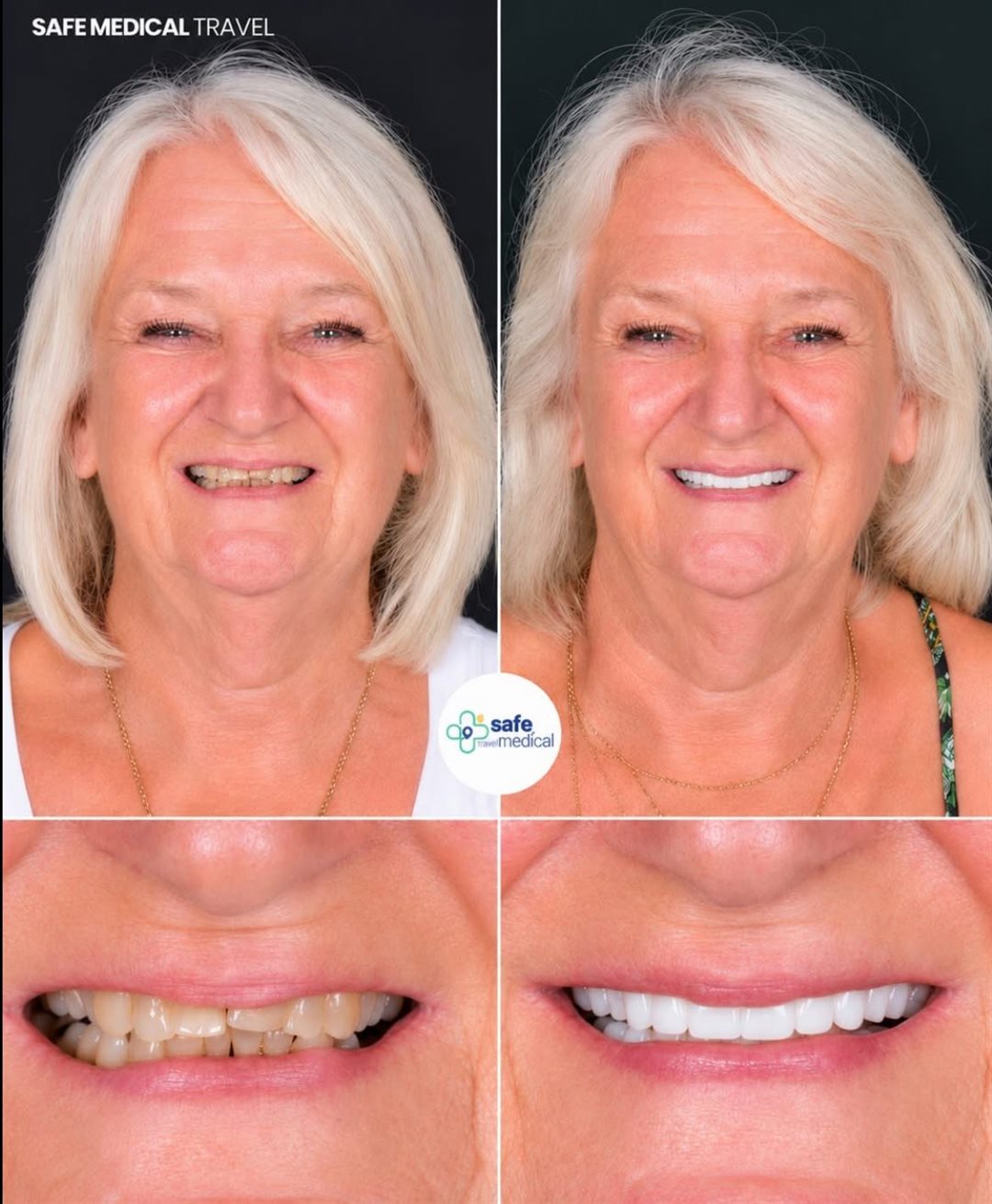
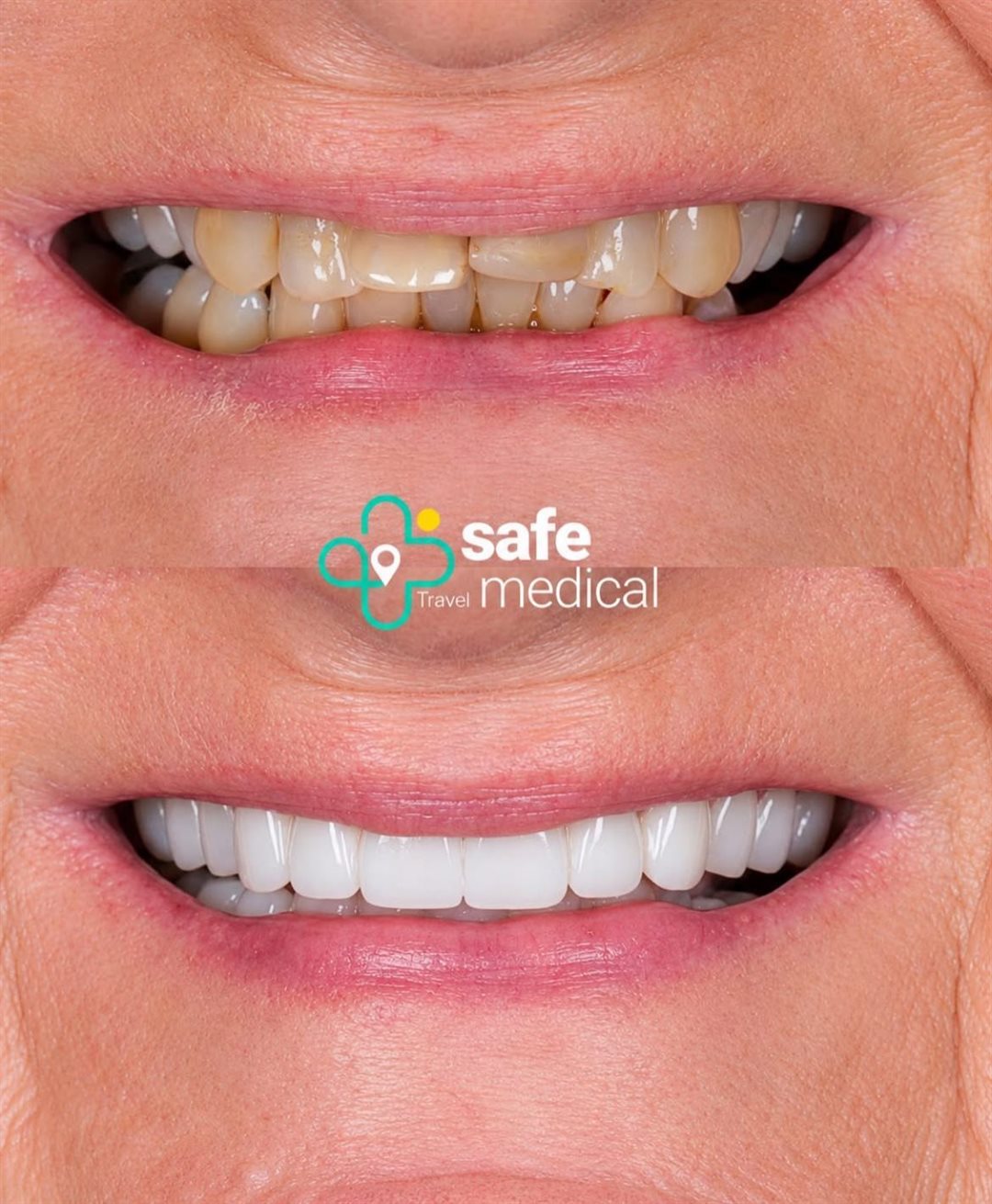
A beautiful smile is the result of the right decisions, careful planning, and the right support along the way.
Jeanni travelled for her zirconium crown treatment, taking an important step towards achieving a smile she feels happy and confident with.
Zirconium crown treatment requires individual assessment, thoughtful planning, and skilled dental professionals to achieve results that complement each patient's needs. At Safe Medical Travel, we help patients navigate their dental treatment journey by connecting them with carefully selected clinics and experienced professionals, while coordinating the process from the first enquiry to their return home.
Seeing patients like Jeanni happy with their experience reminds us why guidance, trust, and personalised support matter throughout every step of medical travel.
Do You Really Need Crowns on Every Tooth?
We'd put this at the top of your list of questions.
To fit a zirconia crown, the dentist has to reshape the tooth underneath, removing some of the natural tooth structure to make room for the crown. How much is removed depends on the tooth and the type of zirconia being used. That can't be undone.
Once a tooth has been prepared for a crown, it will generally need to stay covered by a crown or another suitable restoration. The crown itself may need replacing over time.
There's also a small risk to the nerve. Filing down a tooth can irritate it, and some teeth end up needing root canal treatment later on. None of that is a reason to panic, but it is a reason not to crown healthy teeth just because they happen to be part of a package.
Some of the "Turkey teeth" stories in the UK press involve healthy teeth being filed down far more than patients expected. Poor planning and rushed treatment can make things worse. In some cases, a more conservative approach might have avoided the problem altogether.
Alternatives to a Full Set of Crowns
Depending on your teeth, there may be a gentler way to get the result you want, or a mix of treatments that works better:
- Porcelain veneers, including E-max, can improve the appearance of your teeth while usually requiring less preparation than full crowns. Our guide to tooth crowns vs veneers explains the difference.
- Composite bonding is good for small chips, gaps and uneven edges.
- Teeth whitening may be all you need if your teeth are healthy and the colour is what bothers you.
- Clear aligners or braces make more sense if the teeth are crooked or crowded rather than damaged.
Plenty of smile makeovers combine these. Crowns go on the teeth that genuinely need them, and veneers or bonding can be used on healthier ones where appropriate. You keep more of your natural tooth structure and the smile still looks even.
Mixing Materials: Zirconia at the Back, E-max at the Front
You don't have to stick to one material. Zirconia is very strong, which is why dentists like it for back teeth that do most of the chewing. At the front, some prefer E-max or high-translucency zirconia because of the way they interact with light and how closely they can resemble natural enamel.
But there's no rule saying zirconia has to go at the back and E-max at the front. What works for one patient might not work for another. Sometimes zirconia makes more sense, sometimes E-max does. Our comparison of E-max vs zirconia crowns goes into the details.
If your plan involves 20 crowns or more, it's worth asking whether a combination would suit you better.
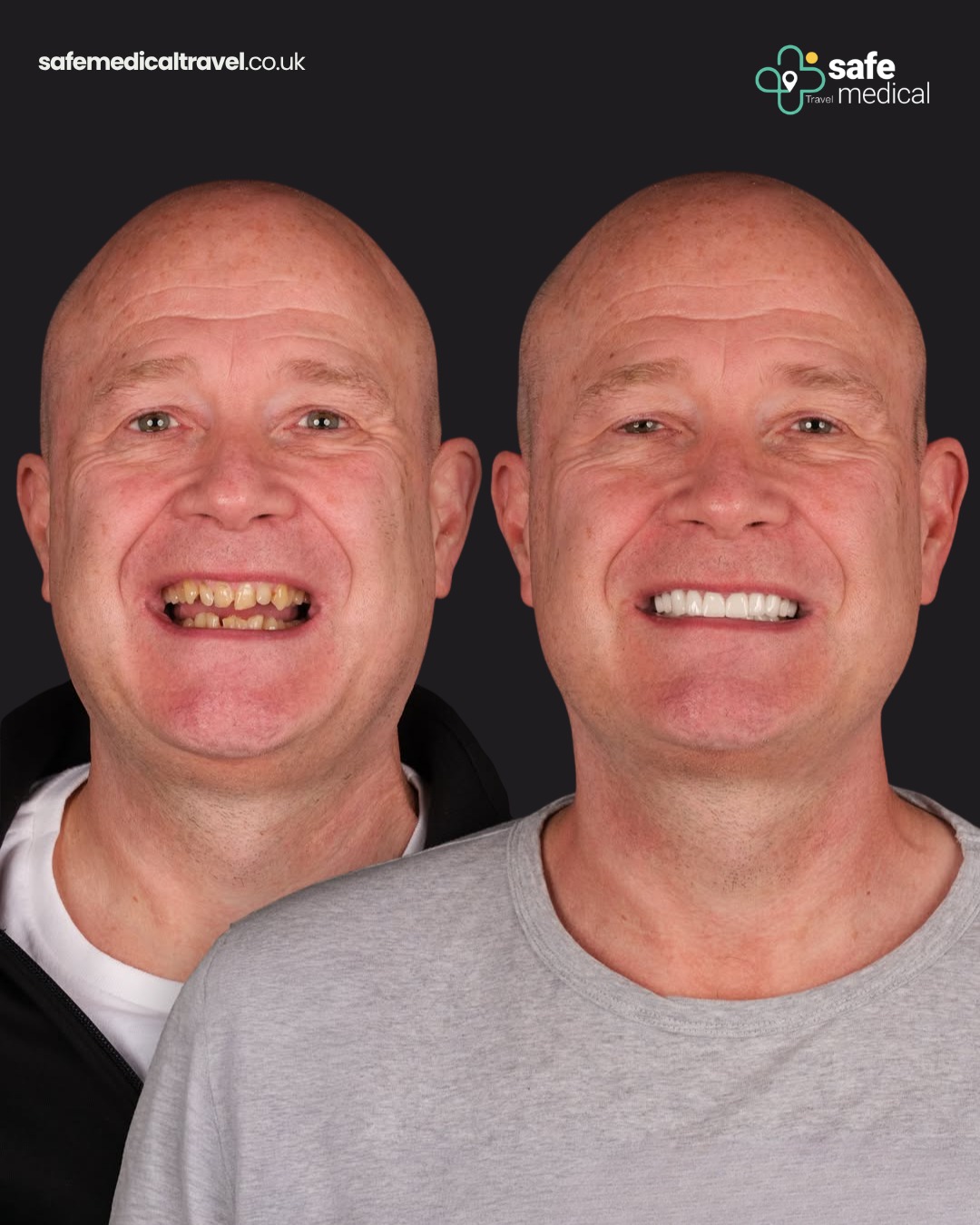
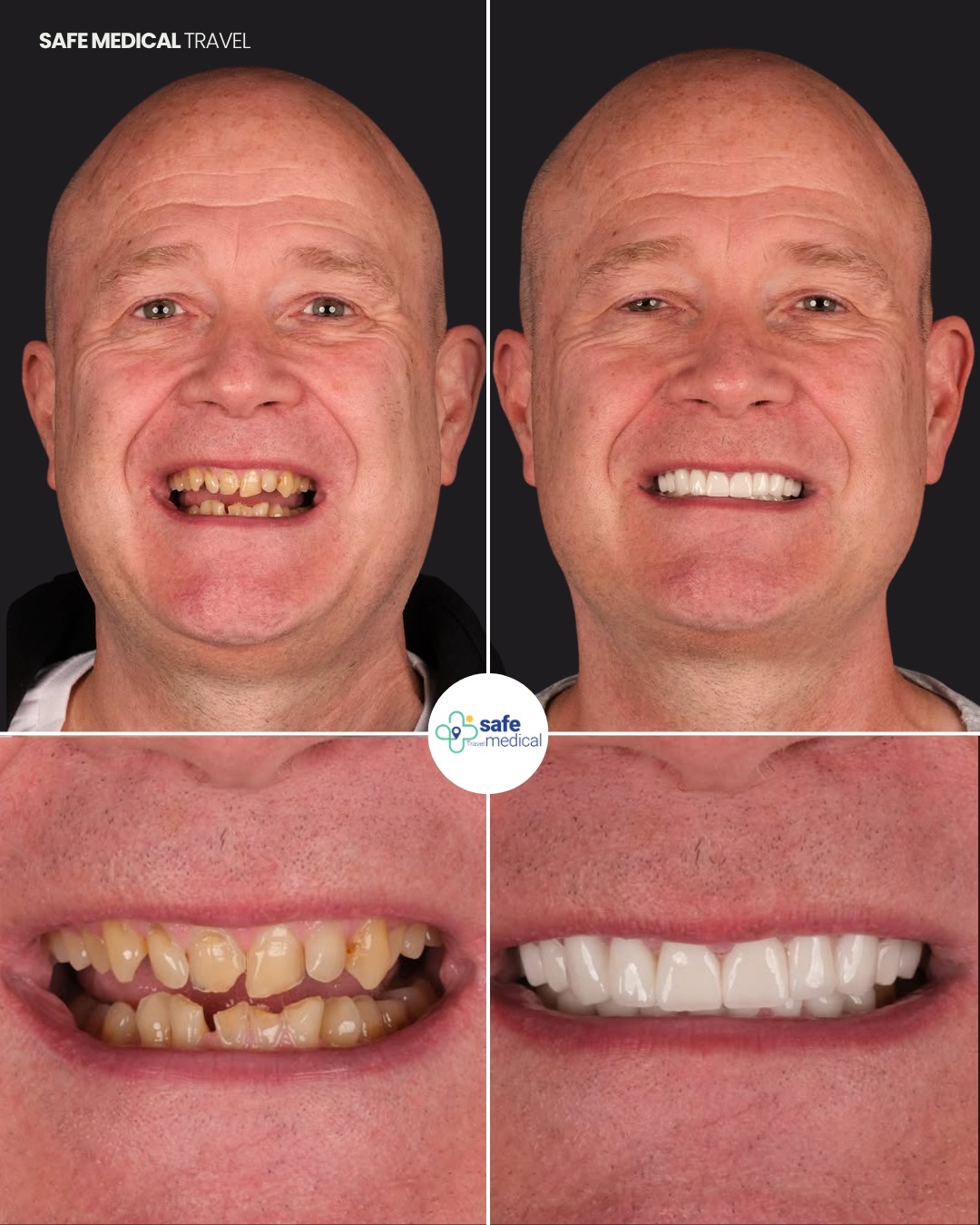
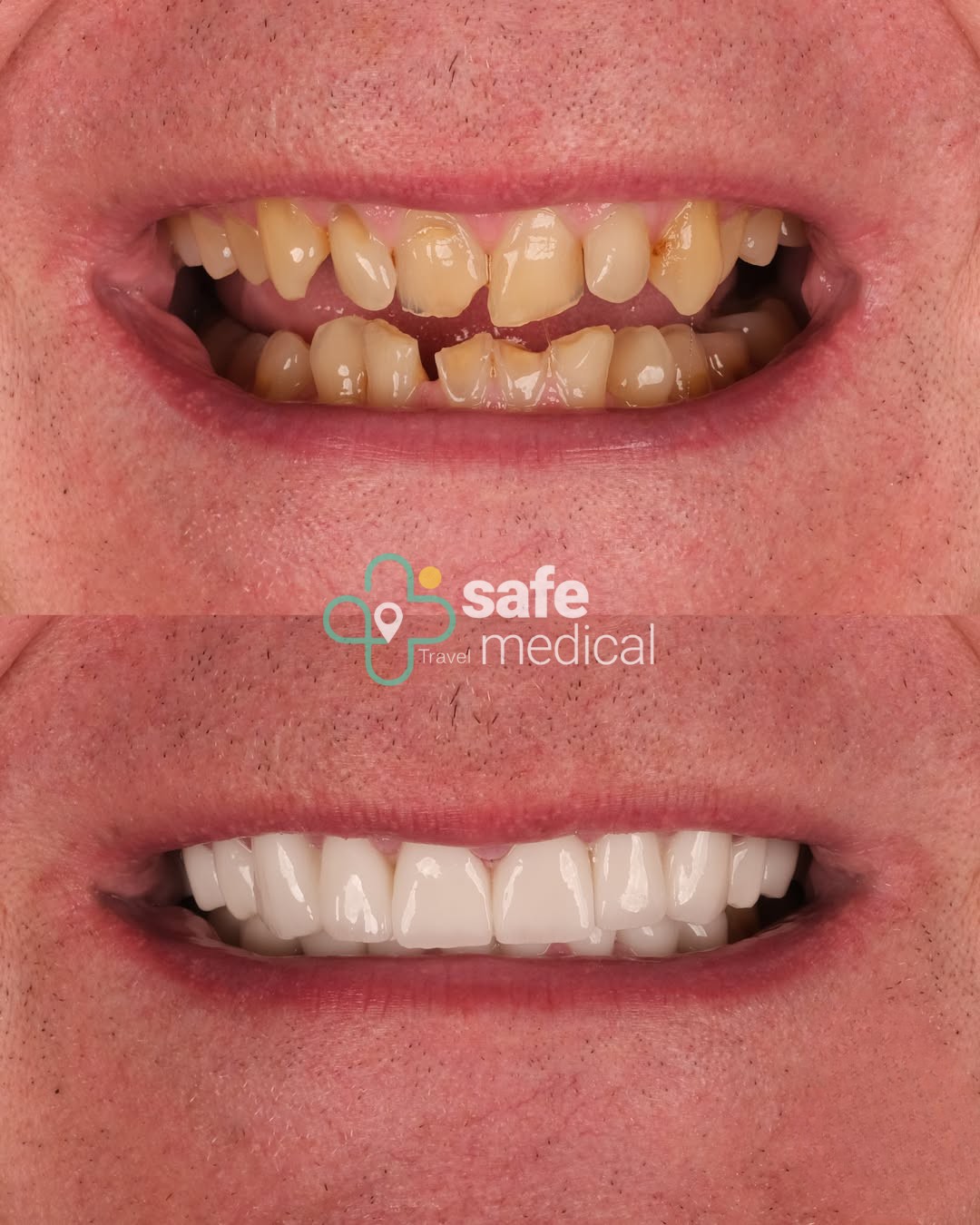
Darren chose zirconium crowns as part of his smile journey, achieving a fresh and confident look he can truly enjoy.
Every smile has its own character, and the details matter. From finding the right treatment approach to coordinating the journey, Safe Medical Travel helps patients move forward with clarity, confidence, and the right professional support.
How the Number of Crowns Affects the Price
Many clinics in Turkey price crowns per tooth, and the per-tooth price sometimes drops as the number goes up. That can make the bigger packages look like a bargain. They're only a bargain if you needed those extra crowns in the first place.
When you're comparing quotes, ask:
- How many crowns are included, and which teeth they're on.
- Which brand and type of zirconia the clinic uses.
- Whether X-rays, scans, temporary crowns and any root canal work are included or extra.
- Whether the hotel, airport transfers and follow-up appointments are covered.
- What the guarantee covers, and for how long.
A clinic that gives you a clear, itemised plan is usually a safer bet than one that just sends a single price.
How Many Trips to Turkey Will You Need?
Many straightforward zirconia crown treatments can be completed in one trip of around 5 to 7 days. You'll usually start with a consultation, X-rays and tooth preparation, and you'll have temporary crowns while the lab makes the permanent ones. Then you'll return to the clinic for a try-in and the final fitting.
If you also need root canal treatment, gum treatment or implants, things can take longer, and sometimes a second trip is needed. Extensive work involving 24 or 28 crowns may also require extra time to check and adjust your bite.
Your dentist should tell you this before you book flights, not after.
Frequently Asked Questions
Not necessarily. For someone with a wide smile and several worn or damaged teeth, 20 crowns may be appropriate. But if your teeth are healthy and you mainly want to change their appearance, there may be less invasive options.
Lots of people do, since the top teeth are often the ones that show most when you smile. Your dentist just needs to make sure the new crowns still look right next to your bottom teeth and that your bite isn't thrown off.
You can, although getting an exact colour and shape match years down the line isn't always easy. If you think you might want more later, plan the whole thing now and discuss whether it makes sense to do the treatment in stages.
They shouldn't. A lot of it comes down to the shade, shape and proportions. Something that suits your natural colouring usually looks far more convincing than the whitest option on the chart.
Not necessarily. Back teeth that are cracked, badly worn or heavily filled may benefit from crowns, even if they don't show when you smile. But healthy back teeth usually don't need crowns just to complete a cosmetic package.
Zirconia crowns can last for many years, often 10 to 15 years or longer with good care. But they won't necessarily last forever. Your bite, oral hygiene and the condition of the tooth underneath all make a difference.
Get an Honest Treatment Plan
The right number of crowns is however many your teeth actually need, and that isn't always the number in the package.
At Safe Medical Travel, we work with clinics in Turkey that assess your dental condition before recommending treatment. You'll know which teeth actually need crowns, which ones can be left alone and why.
If you'd like a second opinion, just send us a few photos of your smile or a recent X-ray. We can help you explore your options before you commit to anything. The final decision will still need a proper examination by a qualified dentist.