
Evaluating the Safety of Dental Implants in Turkey
The safety of dental implant treatments in Turkey is ensured through strict state supervision, international accreditations, the use of advanced technology, and an experienced team of specialists. For a safe treatment experience, patients are advised to pay attention to the following criteria:
Accredited Clinics and Standards
Clinics in Turkey are subject to standards set by both local and international authorities.
Ministry of Health Inspection:
All healthcare institutions are regularly inspected by the Ministry of Health in terms of physical conditions, equipment adequacy, and staff competence.
International Accreditations:
Leading clinics hold JCI (Joint Commission International) and ISO 9001 / ISO 13485 certifications, which represent a global gold standard in patient safety and quality management.
Hygiene and Sterilisation:
Class B autoclave devices compliant with international standards are used in clinics, and infection control protocols are monitored digitally.
Health Tourism Authorisation Certificate:
Organisations serving international patients must hold this certificate, which guarantees accommodation, translation, and patient rights.
Qualifications of Turkish Dentists
Dentists in Turkey undergo an intensive training and practice programme that is respected worldwide.
Long-Term Education:
In order for a dentist in Turkey to become an implant surgery specialist, they must undergo 3 to 6 years of specialised training after 5-6 years of basic education; this corresponds to a total of at least 10 years.
Case Experience:
Due to the high volume of dental tourism, Turkish dentists gain extensive clinical case experience by performing dozens of implant operations per month and hundreds per year.
Areas of Expertise:
Implant procedures are generally performed by specialists who have completed a doctorate in oral implantology, oral and maxillofacial surgery, or periodontology (gum disease).
Global Integration:
Turkish dentists actively participate in international conferences such as EAO and ITI, keeping abreast of the latest surgical protocols and participating in international certification programmes.
Why Trust Turkish Implants?
The trust placed in dental implants in Turkey is based on high success rates, strict government oversight, and the expertise of dentists.
Proven Success Rate:
Systematic reviews show that the implant survival rate in Turkey is 97.48% and that this rate is fully consistent with the global literature.
Strict Regulation and Accreditation:
The Ministry of Health goes to all healthcare facilities on a regular basis to check on them. To treat patients from other countries, these places need a "Health Tourism Authorisation Certificate". Many clinics also have international quality certifications, such as ISO and JCI (Joint Commission International).
Specialist Medical Staff:
In Turkey, for a dentist to specialise in implant surgery requires a 3 to 6 year doctoral/specialist training programme on top of a 5-year basic education, meaning a total of at least 10 years.
Global Brand Usage:
Good clinics use well-known, high-quality brands that are CE/FDA approved and come with a lifetime warranty. Other examples are Astra Tech, Nobel Biocare, and Straumann.
Benefits of Choosing Turkey for Dental Implants
Choosing Turkey offers patients not just a medical procedure but a comprehensive healthcare solution.
Holistic Treatment Approach:
Clinics do not just place implants; they offer personalised plans that include the patient's overall oral aesthetics and chewing function, using digital smile design and 3D tomography analyses.
Speed and Efficiency:
With modern methods and labs on site, all dental restorations can be done in less than a week.
Health and Holiday Combination:
Between treatments, patients can learn about the rich history and culture of cities like Antalya or Istanbul.
Packages that save money and are cheap
Turkey has a unique position with affordable prices, low labour and surgery costs, and government policies that facilitate health tourism.
- Up to 70% off: Getting implants in Turkey costs 50% to 70% less than getting them in the UK or the US.
- All-Inclusive Packages: These packages are made just for patients and include lodging, VIP airport transfers, X-ray/CT scans, all the medications they need, and 24/7 consultation services.
|
Procedure |
Turkey |
Germany |
UK |
USA |
|
Single Tooth Implant (including abutment & crown) |
€350 – €700 |
€2,000 – €3,500 |
€2,500 – €4,000 |
€3,000 – €5,000 |
|
All-on-4 (full arch, includes temporary prosthesis) |
€4,500 – €8,000 per arch |
€15,000 – €25,000 per arch |
€12,000 – €20,000 per arch |
€18,000 – €30,000 per arch |
|
All-on-6 (full arch, includes temporary prosthesis) |
€6,000 – €10,000 per arch |
€18,000 – €28,000 per arch |
€15,000 – €24,000 per arch |
€22,000 – €35,000 per arch |
|
Full Mouth Implants (both arches, typically All-on-4/6 or similar) |
€9,000 – €16,000 |
€30,000 – €50,000+ |
€25,000 – €40,000+ |
€35,000 – €60,000+ |
Advanced Technology and Modern Facilities
Modern clinics in Turkey have the most up-to-date medical equipment that meets international standards. This technological infrastructure cuts down on the time it takes to recover after surgery and makes treatment more likely to work.
- 3D Cone Beam Computed Tomography (CBCT) finds the structure, density, and nerve pathways in the jawbone with millimetre accuracy.
- Guided Surgery (also called Computer-Guided Surgery) uses computer-aided surgical templates to make sure that implants are placed perfectly and without any mistakes, often with very small cuts.
- CAD/CAM Labs on the premises let the clinic design and make dental crowns and bridges on the same day.
- Class B Autoclave Tools remove even the most resistant bacterial spores, ensuring the highest level of sterilisation.
How to Choose a Safe and Reliable Dental Clinic in Turkey
The very first rule of safe implant treatment in Turkey is to pick a clinic which is certified and complies with international standards. To choose the right clinic:
- Make sure the clinic has a Health Tourism Authorisation Certificate from the Turkish Ministry of Health. Major international certifications like JCI (Joint Commission International) or ISO 9001 quality management certificates are undoubtedly the best proof that the clinic conforms to global safety standards.
- Choose the clinics which give you a written treatment plan and quote for the whole treatment, without any hidden charges.
Researching Clinic Reputation
A clinic's reputation is truly the clearest sign of its service quality. When you look into clinics, you should use the following ways:
- Patients' Reviews and Experiences: One should look at reviews on independent platforms. A trustworthy clinic that may have more than 500 reviews and a rating higher than 4.5 is usually considered a good indicator.
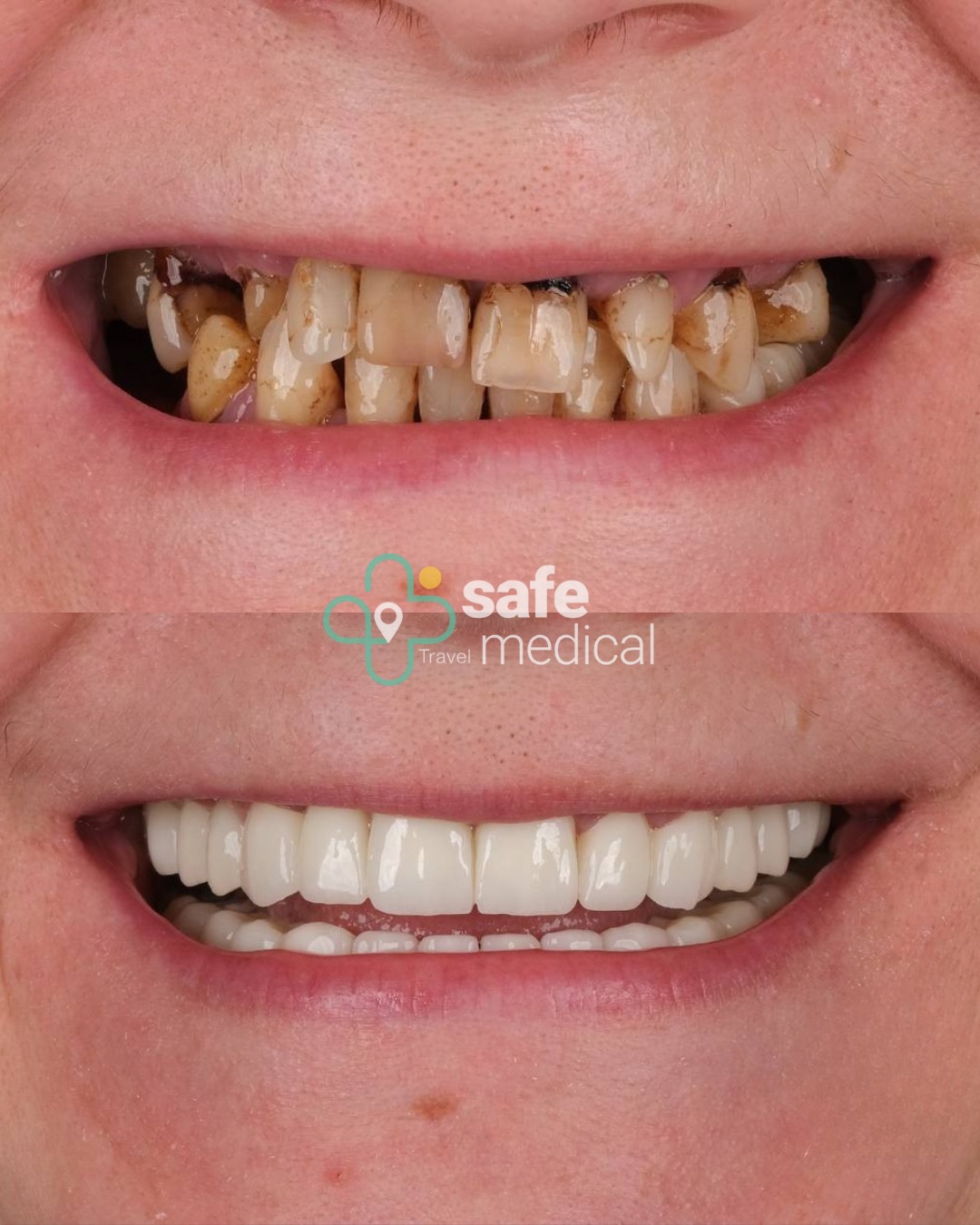
- Visual Proof: One should confirm the photos and videos of actual patients used in the before and after procedure that the clinic has published on its website or social media accounts.
- Social Media Interaction: Comments under clinics' posts reveal a lot about patient satisfaction and how the clinic handles feedback.
Verifying Dentist Credentials
The competence of the practitioner performing the treatment directly determines the success of the operation. The following criteria should be considered when verifying the practitioner's qualifications:
- Area of Expertise: Implant surgery should be performed by specialists who have completed a doctorate in oral and maxillofacial surgery or periodontology.
- Case Experience: The physician's years of experience in implant surgery and, in particular, their experience with challenging cases such as All-on-4/6 or complex bone grafting should be enquired about.
- Continuing Education: The physician's membership in international associations such as the ITI (International Team for Implantology) and whether they follow current surgical protocols can be verified from their CVs on their websites.
Assessing Clinic Facilities and Equipment
- Advanced Imaging: The presence of a 3D Tomography (CBCT) device within the clinic is of vital importance; this device enables the bone structure and nerve pathways to be viewed with millimetre precision.
- Digital Dentistry: The presence of computer-aided design and manufacturing (CAD/CAM) systems and in-house laboratories enables the preparation of prostheses with greater speed and perfect fit.
- Sterilisation Protocols: Clinics should use Class B autoclave devices that comply with EU standards and have HEPA-filtered air purification systems in surgical rooms.
- Material Quality: The clinic should be able to provide the patient with a warranty certificate that includes the brand and serial number of the implants used.
Preparing for Your Dental Implant Journey in Turkey
The dental implant journey in Turkey is a multi-stage process that typically spans several months and requires meticulous planning. For the treatment to be fully successful, it is important for patients to pay attention to both the logistical and medical preparation stages.
The implant process in Turkey is typically planned as two separate visits. During the first visit, the implants are placed into the jawbone, and stitches are applied (3-5 days). This is followed by a 3-6 month healing period to allow the implant to fuse with the bone (osseointegration). The process is completed during the second visit (5-10 days) with the placement of permanent crowns or bridges.
Travel and Accommodation Planning
The comprehensive healthcare tourism infrastructure in Turkey enables the country to greatly facilitate patients' logistical process.
- Flights and Accommodation: Patients book their return flights to Turkey themselves. However, many clinics provide all-inclusive packages that also cover accommodation.
- Transfers and Support: These packages generally include VIP airport transfers, city transport between the hotel and the clinic, and 24/7 translation and consulting services.
- Timeline: 3–5 days in Turkey will be enough for the first stage, but the second stage requires 5–10 days for the restoration, so a 5–10 day stay should be scheduled accordingly.
- Holiday Combination: The treatment can be seen as a holiday with a chance to explore the cultural and historical heritage of cities like Antalya or Istanbul.
Pre-Operative Instructions
Preoperative medical preparation is the main factor for the safe surgery and the fast recovery.
- Online Consultation: Usually, the first step is an online consultation based on X-rays, during which the patient receives the personalised treatment plan and the cost estimate.
- Medical History and Approval: The patient should disclose to the doctor all information about his chronic diseases (diabetes, hypertension, etc.) and the medication he takes. Patients who have systemic disorders should be considered for approval of their personal doctor concerning the travel and surgery.
- Imaging and Planning: A 3D Cone Beam Computed Tomography (CBCT) scan is done after a patient's arrival at a clinic to check the jawbone's quality and identify nerve pathways.
- Lifestyle Restrictions: It is recommended to stop alcohol and tobacco consumption during the whole time of treatment and even before surgery for successful healing.
- Written Consent: It is a legal requirement that patients sign an Informed Consent Form after being fully informed of all risks and the procedure before surgery.

Dental Implant Procedure in Turkey
In Turkey, a dental implant is a surgical operation which can additionally offer an aesthetic as well as a functional solution for lost teeth. The whole treatment takes several months and involves different stages.
Dental implant treatment is done in Turkish clinics to world standards with the use of the latest equipment and under the guidance of highly qualified doctors.
The process essentially consists of the following stages:
Consultation and Detailed Planning
- Preliminary Assessment: The journey typically starts with a virtual consultation utilising the patient's dental X-rays. A detailed treatment plan along with the cost is shared with the patient by the orthodontist.
- Advanced Imaging: After the patient's arrival in Turkey, the clinicians utilise a 3D Cone Beam Computed Tomography (CBCT) scanner to explore the exact layout of the jawbone, nerve routes, and the location of the sinus cavities.
- Personalised Analysis: Besides examining the patient's past and current health conditions, they also check the patient's level of oral hygiene to see if implant treatment is appropriate.
Surgical Procedure and Recovery (Osseointegration)
- Surgical Placement: Small cuts on the gum tissue are done under local anaesthesia to expose the jawbone, and then implant posts are inserted into the bone.
- Guided Surgery: Nowadays, several clinics use computer-guided surgical templates to accurately implant the fixture at the planned angle and depth, causing hardly any trauma.
- Osseointegration Process: Once the surgery is over, the patient needs to wait for 3 to 6 months for the implant to attach to the jawbone (osseointegration). To meet the patient's appearance needs, temporary crowns can be placed during this time.
Permanent Restoration and Aftercare
- Placement of Permanent Crowns: After the healing is done, the dentist fixtures the crowns or bridges permanently on the implants at the second appointment.
- Follow-up and Hygiene: After the procedure, the dentist gives detailed oral hygiene instructions and care recommendations to ensure a long-lasting implant.
Travel Plan and Timeline
The implant process in Turkey typically requires two separate visits:
- First Visit: The implant placement procedure usually takes 3-5 days.
- Second Visit: A period of 5-10 days should be allocated for the fitting of the permanent teeth.
Common Risks Associated with Dental Implants
Risks related to dental implants can broadly be categorised as 'early stage' (pre-integration) and 'late stage' (post-loading), which is reflected in the investigation of their clinical outcomes. The following dental implant risk cases, based on clinical data from Turkey, are the most frequently occurring:
- Osseointegration Problems (44.4%): Lack of osseointegration, the failure of an implant to biologically integrate with the jawbone (lack of osseointegration), is the most common cause of failure.
- Infection (38.9%): Infections that develop during or after surgery are a serious risk that can result in the loss of implant.
- Mechanical Complications: Late-stage risks include fractures in the implant body or neck (5.8%) and loosening of prosthetic screws.
- Sensory disturbances (2.65%): Numbness or pain may rarely occur due to nerve damage during surgery, but this problem usually goes away within a year.
Infection Risks and Hygiene Standards
Infection risk is one of the most significant concerns in dental surgery. Minimising this risk thus depends to a large extent on the hygiene standards of the clinic.
- International Protocols: Most well-known Turkish clinics strive to meet EU sterilisation standards and often use Class B autoclaves so as to get rid of even the toughest bacteria.
- Sterile Environment and Equipment: Surgical rooms have HEPA-filtered ventilation systems, and items like needles, gloves, and surgical gowns are used only once.
- Hygiene Control: The Ministry of Health stipulates that clinics must keep digital records of their sterilisation cycles and must be subject to regular biological controls. One of the most basic reasons why implants might be rejected by the bone is inadequate hygiene.
Quality of Materials Used
The longevity and safety of an implant are directly related to the quality and certification of the materials used.
- Approved Brands: All implants used in reputable clinics in Turkey must be CE (European Union) and FDA (US) approved and must also be registered with the Turkish Medicines and Medical Devices Agency (TİTCK).
- Premium vs. Generic: Premium brands such as Straumann, Nobel Biocare, and Astra Tech are the safest options with their biocompatible titanium structures and lifetime guarantees.
- Traceability: Patients have the right to receive a guarantee certificate/card containing the brand, model, and serial number of the implant they use; this document proves the authenticity of the material.
- Prosthetic Materials: Not only the implant post but also the crowns attached to it (zirconium, E-max, etc.) must be manufactured in high-quality laboratories in accordance with standards.
Post-Procedure Care and Follow-Up
The success of an implant operation depends not only on the surgeon's skill but also on the patient's discipline during the postoperative care process.
- Oral Hygiene Awareness: Implants require care just like natural teeth (and sometimes even more); inadequate cleaning can lead to inflammation around the implant (peri-implantitis) and ultimately implant loss.
- Follow-up Support: Reputable clinics monitor the process by offering 24/7 support lines and remote consultation options, even after patients return to their home countries.
- Signs of Recovery: It is vital that patients report any excessive pain, swelling, or loosening to their dentist during the 3-6 month healing period (osseointegration) until permanent crowns are fitted.
- Lifestyle: To accelerate the healing process and reduce the risk of complications, it is strongly recommended to avoid alcohol and tobacco use during the postoperative period.
Tips for a Successful Dental Implant Journey in Turkey
Be Meticulous in Choosing a Clinic and Dentist
- Check Accreditations: The clinic must have a Health Tourism Authorisation Certificate issued by the Turkish Ministry of Health. The JCI (Joint Commission International) and ISO 9001 certificates are the most reliable proof that the clinic complies with the international safety standards.
- Confirm Physician Experience: It is highly recommended that the implant surgery be conducted by oral and maxillofacial surgeons or periodontists who are considered specialists in the respective field (at least 10 years of additional training).
- Ask About Technological Infrastructure: One of the most successful factors is if the clinic utilises the 3D Tomography (CBCT) for accurate planning and the Guided Surgery systems for error-free placement.
Do Not Compromise on Material Quality
The longevity of an implant is directly related to the biocompatibility of the material used and the reliability of the brand.
- Choose Premium Brands: Opting for globally recognised, CE and FDA approved premium brands such as Straumann, Nobel Biocare, or Astra Tech will make it easier for you to receive support in your own country in the event of any technical issues that may arise in the future.
- Request a Certificate and Warranty Card: Do not forget to obtain a warranty card that includes the serial number and brand of each implant used.
Plan Your Treatment Process and Logistics
The implant process in Turkey normally follows a timeline with two different trips.
- Understand the Timeline: The first appointment is for implant placement (3–5 days), and the second appointment is for the permanent/dental crown fitting (5–10 days) after a 3–6 month healing period (osseointegration).
- Look at All-Inclusive Packages: Packages mixing VIP transfers, accommodation, post, and treatment medication are not only very handy in terms of logistics but also offer financial benefits.
- Keep Communication Channels Open: Studies show that almost all patients (96.3%) find this the main way of communication with the dentist. Thus, one can ask for all the treatment information directly from the dentist.
Take Care After Your Operation
The most common reasons for implant failure include infection and poor oral hygiene.
- Meticulous Oral Hygiene: Brush your implants as carefully as your natural teeth (or even more so). Neglecting hygiene can lead to implant loss (peri-implantitis).
- Avoid Bad Habits: Avoiding smoking and alcohol consumption during treatment and the healing period is critical for successful bone integration.
- Regular Check-ups: Do not neglect your annual dental check-ups after returning to your country.
Frequently Asked Questions
Is it worth getting implants in Turkey?
Turkey has become a global centre in this field, hosting over 500,000 international patients each year. Patients can save money thanks to the low operational costs and favourable exchange rates in Turkey.
What are the risks of dental implants in Turkey?
Systematic reviews of implant cases in Turkey list the main causes of failure as follows:
- The most common cause of failure is the implant failing to integrate biologically with the jawbone.
- Infection of the surgical site is one of the greatest risks leading to implant loss. Inadequate oral hygiene and lack of regular check-ups particularly increase this risk.
- Fractures in the implant body or neck are among the technical risks that can occur, albeit rarely.
- Numbness (paraesthesia) may occur when working close to nerves during surgery, but this condition usually resolves within 1 year.
- Inflammation of the tissues surrounding the implant can lead to implant loss in the long term.
- To meet travel schedules, rushing the diagnosis, planning, and implementation processes into a few days may lead to bone loss or infection risks being overlooked.
- Implant treatment requires long-term follow-up. When patients return to their home countries, local doctors may be reluctant to intervene in procedures performed in another country if complications arise, creating a logistical problem.
- Some clinics offering very low prices may use non-CE certified or generic (off-brand) materials to reduce costs; this can lead to problems finding replacement parts or durability issues in the long term.
What are the safety standards in Turkish dental clinics?
The basic safety standards applied in clinics in Turkey are as follows:
- Operating Licence: Every clinic and hospital must obtain an operating licence from the ministry by meeting numerous criteria, ranging from the physical condition of the building to the adequacy of equipment.
- Medical Tourism Authorisation Certificate: Clinics serving international patients must possess this special certificate, which guarantees the quality of services such as accommodation, translation, and communication.
- Continuous Monitoring: Clinics undergo regular and unannounced inspections by the ministry to ensure compliance with sterilisation and hygiene standards.
- JCI Accreditation: This certificate is the strongest proof that a clinic meets global gold standards in patient safety, medication management, and quality management.
- ISO Certifications: ISO 9001 certification for quality management and ISO 13485 certification for medical device management are standard in many prestigious clinics.
- CE and FDA Approval: All implants and surgical materials used must be approved by the European Union (CE) and the United States (FDA) and must also be registered with the Turkish Medicines and Medical Devices Agency (TİTCK).
- Traceability: Every patient has the right to receive a warranty certificate containing the brand and serial number of the implant used.
How do I verify the qualifications of Turkish dentists?
To verify the qualifications of dentists in Turkey, you can review the official websites of clinics, check the Turkish Ministry of Health databases, and directly request the dentist's specialisation certificates.
You can verify the competence of dentists for a safe treatment process in Turkey by following these steps:
Official Records and Legal Requirements
- Ministry of Health Registration: Every dentist must be a graduate of a Faculty of Dentistry and have a Doctor ID Card registered with the Ministry of Health.
- Official Database Query: You can use the Ministry of Health's official databases to verify the practitioner's identity and clinical competence.
- Clinic Licence: The clinic where you will receive treatment must have a working licence issued by the Ministry of Health, indicating that the practitioners work under this supervision.
Specialisation Process
- Areas of Specialisation: Implant surgery should generally be performed by specialists in oral and maxillofacial surgery or periodontology.
Certifications and International Memberships
Any additional certifications the practitioner holds demonstrate their mastery of current technologies and global standards:
- Specific Certifications: You may enquire whether the practitioner holds specialised certifications in areas such as implantology, radiology, sedation, and anaesthesia.
- International Accreditations: The practitioner's membership in reputable international organisations such as ITI (International Team for Implantology) or AAOMS (American Association of Oral and Maxillofacial Surgeons) is an important indicator of prestige and trust.
Digital Verification and Patient References
Before contacting the clinic directly, you can use the following digital methods:
- Website and CV: You can review the doctors' detailed CVs, educational information, and surgical experience on the clinics' websites.
- Visual Evidence: Reviewing before/after photos of cases the doctor has previously performed will give you an idea of the quality of their work.
- Video Consultation: Many clinics offer free video consultations so you can meet the doctor and ask questions; this is the most direct way to test the doctor's professionalism.