
Sinus Lift
As we grow older, our faces become a diary of memories, bearing the marks of all our joys, sorrows and surprises. Our bodies begin to deform, and our energy becomes limited. While we can accept these changes to a certain extent, how can we give up performing our vital functions healthily and as needed? Of course, we should not give up. Oral and dental health are very important for our overall health because digestion begins there. Considering the lack of self-confidence caused by tooth loss, having proper dental hygiene is also important for maintaining psychological health.
Tooth and bone loss are common conditions associated with ageing. However, even at an advanced age, we still need our teeth to cut and crush food. Furthermore, self-confidence is needed at any age, and missing teeth can cause a loss of self-confidence. Smiling makes both the person and those around them feel good at any age.
So, how can reconstructive treatment be applied after major tooth loss, despite the deformation of the upper jawbone due to age or the long time that has passed since the loss? Fortunately, modern dental treatment technology offers solutions to compensate for such erosion. Thanks to techniques developed by scientists who believe that people of all ages deserve to smile, patients experiencing bone and tissue loss can regain their former smile and healthy chewing function through implant treatment.
You can find answers to all your questions about the sinus lift operation, which forms part of this treatment method, in our article.
What is a Sinus Lift?
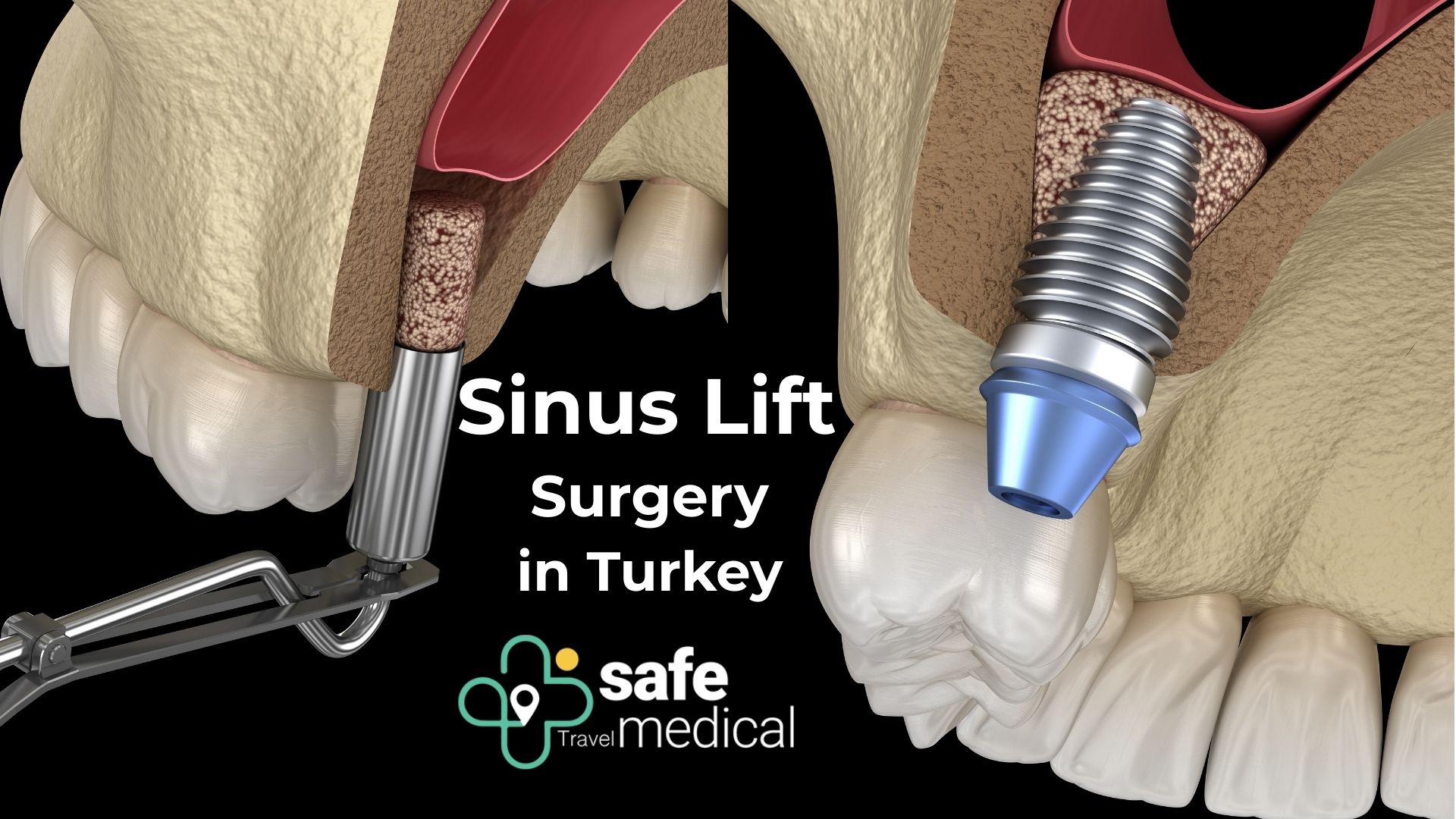
A sinus lift is a procedure that involves lifting the sinus cavity, which has descended as a result of bone loss in the area where the upper molar teeth are located. The operation is performed to create sufficient space for a bone graft in this region. This makes dental implant treatment applicable in this area. If the jawbone is not high enough for a dental implant due to bone loss, a sinus lift operation is performed to achieve the necessary height. Afterwards, the required treatment area is created in the upper molar tooth region with the applied bone and, if needed, tissue graft. The Sinus Lift procedure creates a solid bone volume and density. This makes it possible to apply planned treatments to patients who have experienced jawbone loss and could not undergo reconstructive treatment due to sinus collapse.
This preliminary treatment method makes it possible to perform implant treatments with fewer screws, such as the All-on-4 technique, despite lost bone tissue.
Why is a Sinus Lift Necessary?

A sinus lift is a treatment method applied to patients who do not have sufficient bone height in the upper molar region. It makes reconstructive treatments, such as dental implants, possible for patients who have experienced a loss of upper jawbone density and volume. It is a very important treatment option for enabling patients to chew properly. The Sinus Lift procedure is used to treat patients who have experienced bone loss. The reasons for these losses in bone density and volume vary.
Insufficiency in bone height
Dental implants cannot be used if there is insufficient volume or density in the jawbone. In fact, even removable prosthesis treatment may not be possible in cases of very severe erosion. The upper jawbone has a softer structure than the lower jawbone. Shortly after tooth loss, the upper jawbone is no longer nourished and erosion begins. Once erosion starts in the upper jawbone, the bone height required for implant treatment gradually falls below the minimum threshold. A sinus lift creates an area in which bone and tissue grafts can be applied to compensate for bone loss.
Sagging in the sinus
The maxillary sinus, located above the upper molars, expands and sags downward following tooth loss. This situation also causes thinning of the bone and eventually leads to insufficient space for placing a dental implant. A sinus lift aims to treat this deterioration.
Tooth loss
After some time following tooth loss, erosions begin to occur in the jawbone. The loss of density and volume in the jawbone caused by upper tooth loss, along with sinus sagging, prevents the application of dental implant treatment. However, when Sinus Lift and bone graft treatments are applied as preliminary procedures, the necessary reconstructive treatments can be performed.
Genetic factor
Some people are born with an insufficiently high upper jawbone. In such cases, a sinus lift procedure is also required. Once sufficient height has been achieved through this treatment, dental implants can be used to replace missing teeth.
Infection
Gum disease can lead to infections in the tooth roots, resulting in tooth loss and bone erosion. For this reason, gum health is very important. In such cases, gum disease is treated first. Then, bone loss and sinus sagging are treated.
Trauma
Loss of jawbone volume may occur due to external impacts. In such cases, sinus lift and bone graft treatments may also be necessary.
What are The Types of Sinus Lift Procedures?
Sinus lift treatment can be performed in different ways. A specialised dentist will choose the most appropriate procedure according to the patient’s health condition and the necessity of the procedure.
Closed sinus lift
A closed sinus lift, also known as a crestal sinus lift or the osteotome technique, is a dental procedure used to increase the height of the jawbone. This treatment is integrated with the dental implant procedure. During placement of the implant, the sinus membrane is lifted a short distance upwards through an opening made in the gum. Bone grafting is applied when necessary, after which the implant is placed. This treatment method is suitable for patients with a bone height of at least 6 mm. No additional surgical intervention is required beyond the dental implant placement procedure itself. Therefore, the healing time is shorter than for the open sinus lift operation. The procedure takes less time than an Open Sinus Lift. However, the amount of bone grafting that can be performed is limited. For this reason, it cannot be used in patients with severe bone loss.
Open sinus lift
Also known as a lateral sinus lift, this procedure involves creating an opening in the side of the upper jaw and lifting the sinus membrane upwards. Bone graft material is applied to the opened area to support the growth of bone tissue in the desired volume. This treatment is used for patients with severe bone resorption, i.e. those who have lost a significant amount of bone height. It is preferred for patients with less than 5 mm of bone height remaining. This technique works even in patients with extensive bone erosion and allows a large volume of bone graft to be applied. However, it is an invasive surgical procedure and the healing process may take time.
Piezoelectric sinus lift
This method is used to support the other two techniques. Bone cutting is performed using ultrasonic devices. This significantly reduces the risk of tearing the sinus membrane.
Balloon sinus lift
Also known as the Hydraulic Balloon method, this procedure supports sinus lift treatments. The sinus membrane is lifted using the hydraulic balloon. Similar to the Closed Sinus Lift, this technique helps to lift the sinus more precisely. In cases of small sinus membrane tears, Balloon or Piezoelectric Sinus Lift treatments may be sufficient.
What Grafting Materials are used in Sinus Lift Procedures?
Following the sinus lift procedure, a bone graft is placed to restore the bone volume and density to the desired level. This allows the bone to reach the density and volume required for a dental implant. Bone grafts can be categorised into four main groups based on their material composition. You should consult your specialist physician to decide which graft is ideal for you after examination and diagnostic evaluations.
The patient’s own bone
In this type of graft, known as an autogenous graft, the material used is taken from the patient's own jawbone, mandibular ramus or, in exceptional cases, skull bone. This method is highly biocompatible. Bone forms quickly. However, it requires an interdisciplinary surgical procedure. Sensitivity may occur in the area from which the bone is taken.
Bone from human donors
In this method, also known as allogeneic grafting, bone donated to bone banks by humans is used. These sterilised bones have high biocompatibility and a short healing time, similar to autogenous grafts. However, the cell content of an autogenous graft is richer.
Animal-derived bone
In this option, also known as a xenogeneic graft, the graft is usually obtained from cow bone. Less commonly, pig and horse bones may also be used. This graft has a structure similar to human bone and maintains its volume and density for a long time. However, it takes longer for this graft to transform into natural human bone.
Synthetic graft
This type of graft uses synthetic materials. Examples of synthetic grafts include those made from hydroxyapatite, bioglass, and other components. The risk of infection is quite low. Since they are man-made, their properties are consistent. However, biological activity may not be observed to the same extent as with biological grafts.
Sinus Lift Procedure Steps & How is Sinus Lift Done?
A sinus lift is a surgical procedure that involves expanding the sinus area to increase bone density in the upper jaw. The method used for sinus lift surgery may vary depending on the patient’s bone density. However, the general procedural steps are as follows:
Initial examination and tests
Your specialist dentist will carefully listen to your concerns. If you have experienced any tooth loss, you should inform your dentist of when this occurred. Afterwards, your dentist will examine you. They will observe your oral and dental health condition through a physical examination. Panoramic X-rays and cone-beam CT imaging are required to assess your bone density. These tests help to determine the extent of your bone loss. Based on the results, your specialist dentist will decide which sinus lift technique to apply and how much bone grafting is needed.
Accessing the sinus membrane
Local anaesthesia is administered to the patient before starting this stage. This ensures that the procedure is painless. In an open sinus lift, the sinus membrane is accessed from the side of the upper jaw.
In a closed sinus lift, the sinus floor is reached and lifted through the opening created for placing the implant.
Lifting the sinus membrane
This process, known as membrane elevation, is a critical stage. During this step, the sinus membrane is lifted upwards. However, it is crucial that the membrane does not tear. This procedure creates the necessary space to accommodate the bone graft.
Bone graft
A bone graft is placed beneath the lifted sinus membrane. Over time, it integrates with the existing bone, providing the necessary density and volume. The time taken for the bone graft to integrate can vary depending on the type of graft and the patient’s immune system.
Dental implant placement
The timing of this stage depends on whether the patient has sufficient bone. If the patient has more than 5 mm of bone height, the implant can be placed at the same time as the graft. However, in cases of significant bone loss, it is first necessary to allow the bone to reach sufficient volume. In other words, the implant is placed in a second surgical procedure after the bone graft has integrated with the existing bone.
Closure of the surgical opening
Once the above procedures have been completed, the sinus pathway is closed with a biological membrane. The surgical opening is then closed with medical sutures.
Recovery of Sinus Lift
The recovery time for a sinus lift procedure depends on various criteria. As it is a surgical procedure, the healing period may vary depending on factors such as the patient’s bone volume, the technique used, the amount of graft added, the source of the graft and the patient’s overall health.

- Patients generally heal within 3–6 months after a closed sinus lift, whereas the recovery period after an open sinus lift operation occurs within 4–9 months.
- It is normal to experience mild pain, swelling and nasal congestion the first week after the sinus lift procedure. Bruising on the gums and minor bleeding from the mouth or nose may also occur. However, these symptoms usually diminish and disappear after one week.
- During the first two weeks, it is important to avoid activities that could increase pressure in the body. Keep your mouth open when you sneeze. Heavy lifting should also be avoided. Bending should also be avoided. Air travel should also be avoided. Smoking negatively affects the healing process, so it is recommended that you either don't smoke or reduce how much you smoke if you can't stop completely. Drinking or eating extremely cold or hot foods and drinks can adversely affect blood circulation and may cause bleeding.
- The first doctor's check-up takes place within one week.
Sinus Lift Cost in Turkey
For a sinus lift procedure, it is essential that your doctor specialises in the field and has experience, and that the clinic has the necessary technology and hygiene standards. Therefore, maintaining high standards when selecting a clinic and doctor is beneficial.
Although the cost of a sinus lift procedure varies depending on the technique used and the type and amount of bone graft applied, information about the general cost of the treatment can be provided.
In Turkey, the sinus lift procedure costs between $500 and $1,500.
In the United Kingdom, the cost is between £1,500 and £2,500.
In other developed European countries, the cost ranges from €1,500 to €3,500.
There are several reasons why prices in Turkey are generally lower than in Europe and the USA. Dental clinics in Turkey use products of the same quality, and often the same brands, as in Europe. The Ministry of Health of the Republic of Turkey regularly monitors compliance with European standards. Lower fixed clinic expenses, exchange rate differences and other factors make it possible to access high-quality treatment at a lower cost.
What are The Risks of Sinus Lift Procedures?
A sinus lift is a surgical procedure. It must be performed by an experienced and specialised doctor under appropriate clinical conditions. Otherwise, undesirable situations may occur. Following the doctor’s recommendations after the operation and attending follow-up visits as advised helps to reduce risks. The risks that may occur during a sinus lift procedure are as follows:
- Rupture of the sinus
- Graft displacement into the sinus
- Risk of infection
- Development of sinusitis
- Failure of the graft to integrate with the bone
- Persistent bruising and bleeding
- Allergic reactions
- Chronic infection within the sinus
- Displacement of the implant into the sinus
Sinus Lift Long-Term Side Effects
A sinus lift is a safe procedure with long-lasting effects. Provided that no complications arise during the procedure, patients will generally enjoy the lifelong benefits of the treatment. However, although very rare, some patients may experience undesirable effects. These effects are as follows:
- Thickening of the sinus membrane
- Chronic sinusitis
- Failure of the graft to ossify
- Decrease in bone volume over time
- Migration of the implant towards the sinus
- Chronic feeling of sinus fullness
- Biocompatibility issues
To avoid such side effects, careful consideration should be given to clinical and physician selection, and the physician’s recommendations should be followed. However, despite all the care of the physician and the patient, some side effects may still develop, albeit with a low probability.
How to Avoid Sinus Lift
Although the sinus lift technique is successful, the best-case scenario is to never need this procedure. If you do not have a genetic issue, you can undergo dental implant treatment without needing a sinus lift.
- It is important to start implant treatment soon after tooth loss. This will prevent the jawbone from eroding after the tooth root separates from it.
- The need for a sinus lift may be eliminated if the dental implant is short enough.
- If the implants are short and angled, a sinus lift may not be necessary.
- Implants can be placed in alternative areas instead of the sinus floor.
- It is important to prevent gum disease, or if it has already started, to begin treatment early to prevent it from progressing. This will protect both your jawbone and your teeth.
- If necessary, placing a bone graft in the socket after extraction will protect your bone.
- Having your bone density checked at regular intervals will make it easier to take precautions against undesirable situations.
Frequently Asked Questions
What are the alternatives for sinus lift?
Instead of performing a sinus lift, your specialist dentist may choose an area away from the sinuses as the region where the dental implant will be placed. The cheekbones and the back of the jaw are two alternative areas where the implant can be placed. If the implant is to be placed in the sinus area, a short implant screw can be used. Angling the implant screw will also reduce the required bone height. If the bone width is sufficient, it can be minimally expanded if the desired height is not achieved.
What happens before a sinus lift surgery?
An initial examination is performed before the operation. Your dentist will observe your oral and dental health. Then, imaging of your mouth is examined using a panoramic X-ray and CBCT tomography. CBCT tomography is a three-dimensional cone-beam imaging technique. This technique measures your bone volume and density. At the same time, your sinus structure can also be examined using this imaging technique. Thanks to these imaging methods, a treatment plan with alternatives can be made and shared with you. All planning is carried out based on the information you provide about your medical history. For the sinus lift operation, the gum tissue must be healthy. Otherwise, gum treatment is performed first. Before the operation begins, the operating area is numbed with local anaesthetic.
How long does sinus lift recovery take?
The healing process after a sinus lift operation can vary depending on the surgical technique used, the type and amount of bone graft required, the patient’s health and the postoperative care provided. The healing process generally takes between 3 and 12 months. Patients who undergo a closed sinus lift tend to heal faster than those who undergo an open sinus lift.
Who needs a sinus lift?
Patients who have lost their upper molar teeth, have a short upper jaw bone and have not undergone intervention for a long time may need sinus lift treatment. This is because these conditions can also lead to sinus drooping. Sinus lift surgery is also required for patients who have experienced bone density loss in the jaw due to periodontal disease. This treatment may also be necessary for patients who have experienced bone loss due to trauma or tumours. It is also used to treat sinus enlargement in older patients.
Can you have sinus lift without bone graft?
In some cases, sinus lift treatment can be performed on its own, without the need for a graft. With this method, which is generally preferred for closed sinus lift procedures, the implant is placed after the sinus has been lifted and the bone allowed to integrate. However, for this method to be possible, there must be sufficient bone height and density.
Is sinus lift painful?
Local anaesthetic is administered before the sinus lift procedure. This ensures that the patient does not feel anything during the procedure. They may feel pushing movements in the area, but these will not be disturbing. The first 48 hours after the operation may be mildly painful. However, this pain and soreness can be managed with the painkillers recommended by your doctor. These pains will decrease noticeably after the first two days. By the end of the first week, the pain will have almost completely disappeared.
What happens 2 weeks after sinus lift?
Two weeks after the operation, the stitches will have dissolved and the wounds will have closed. The soft tissue will have healed to a great extent. The swelling and bruising commonly seen after surgery will have disappeared. Pain and soreness will have largely disappeared. The feeling of heaviness in the sinus area will also disappear. Bone formation begins. However, behaviours that may create high pressure in the body should still be avoided during this period.