
Is it better to have a bridge or an implant?
One of the most frequently asked questions in the treatment of tooth loss is whether a bridge or an implant is the better option; both methods have advantages and areas of application that vary depending on the individual. In this article, we will explain the answer to this question.
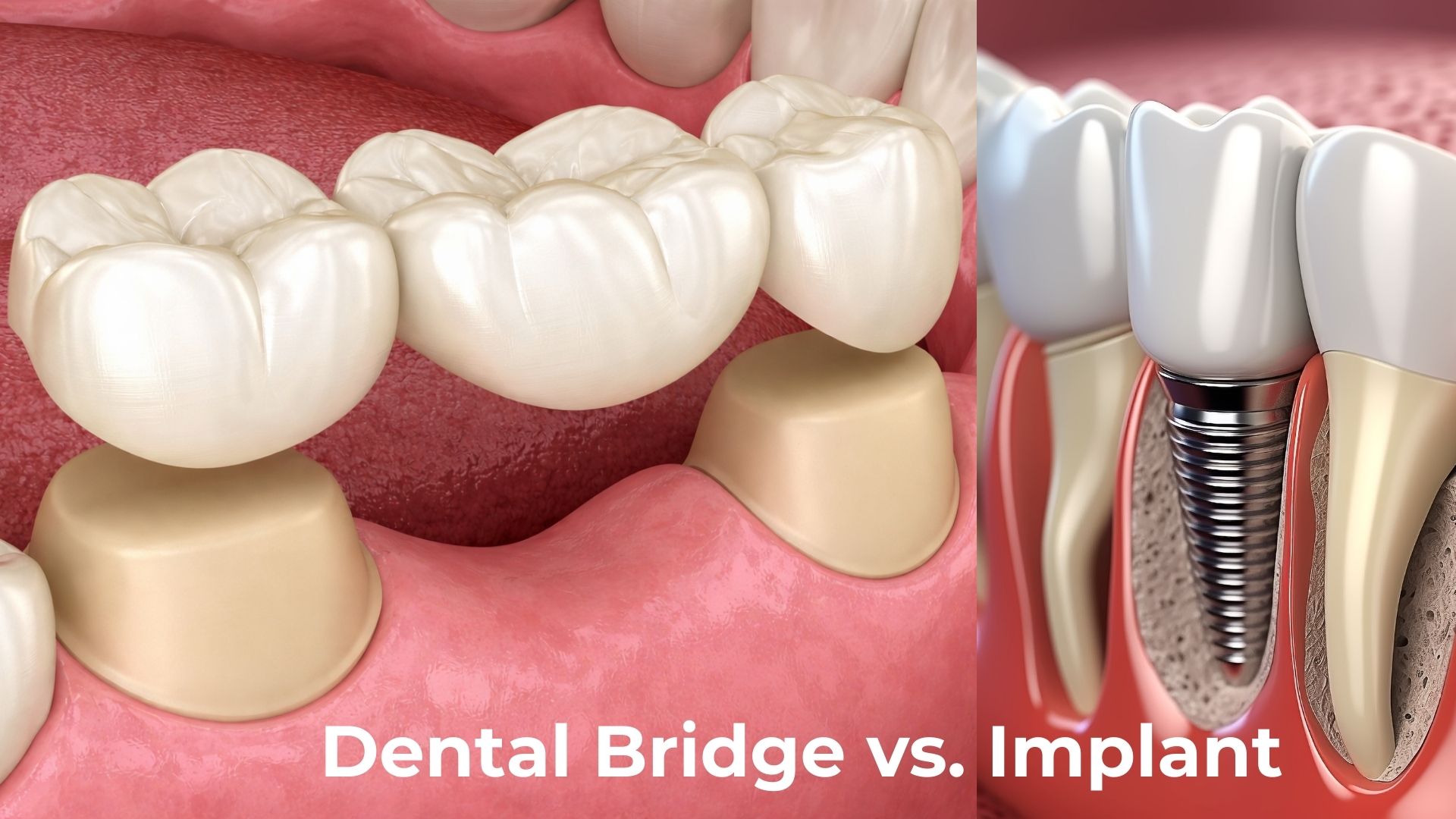
What is a dental bridge?
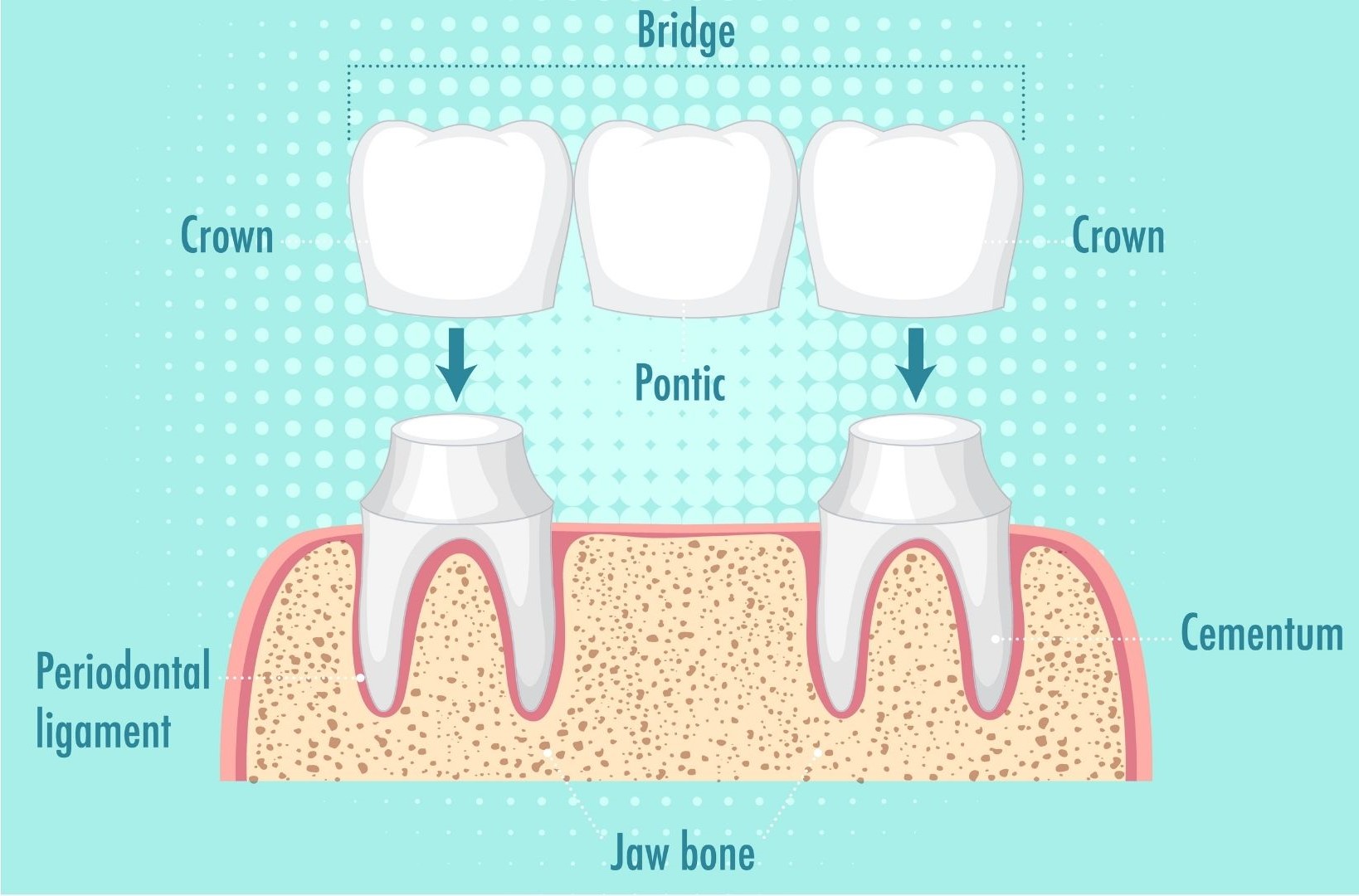
A dental bridge is a fixed dental prosthesis designed to close the gap created by one or more missing teeth. In this method, the healthy teeth on either side of the gap are used as supports (abutments), and an artificial tooth called a ‘pontic’ is placed between these teeth. Bridges offer a much more comfortable and aesthetic solution than removable prostheses. However, in this procedure, the healthy teeth on either side that will support the bridge must be reduced in size (ground down).
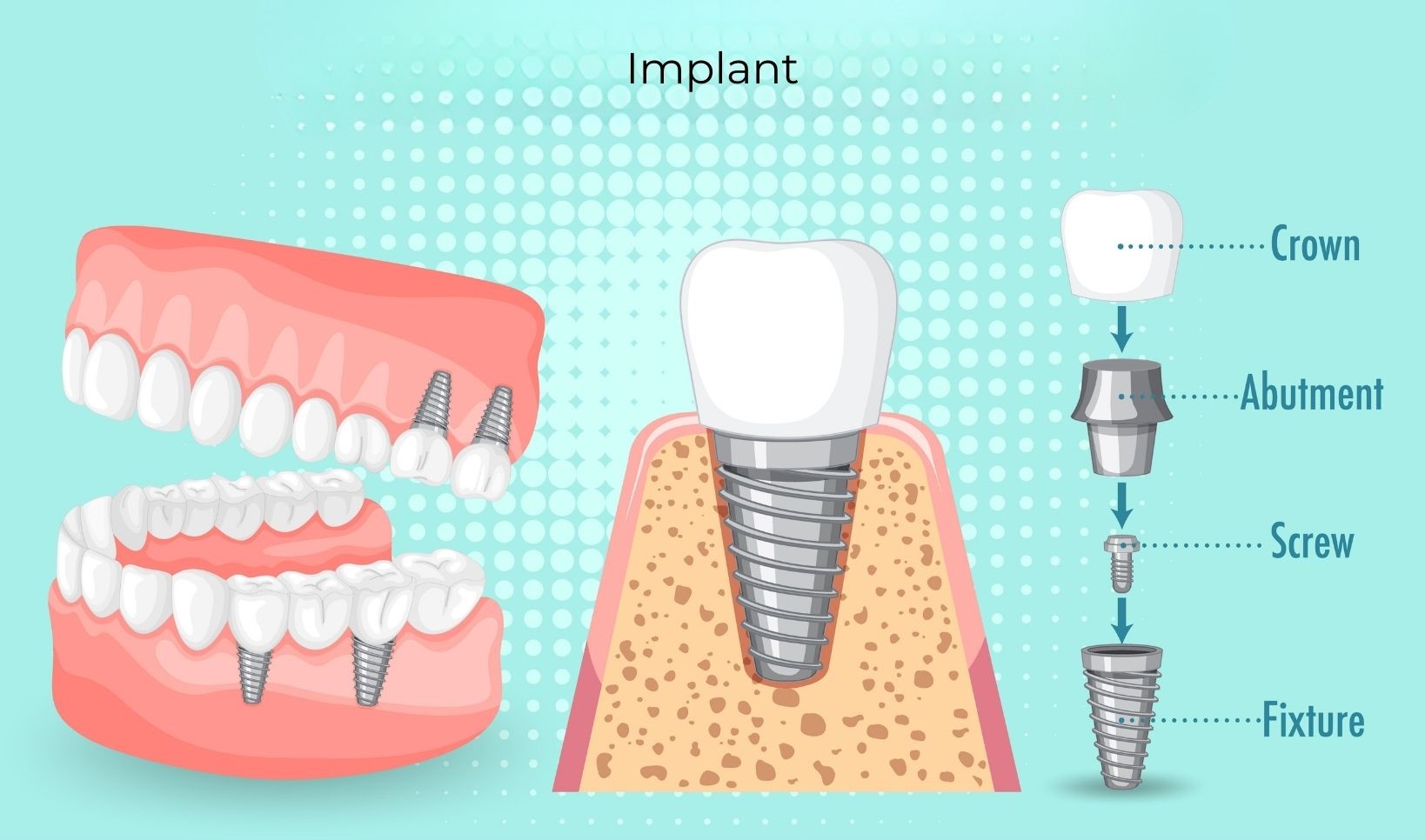
What is a dental implant?
A dental implant is a titanium screw surgically placed into the jawbone to replace the root of a missing tooth. This artificial root, which is fully compatible with the body, gradually integrates with the jawbone (osseointegration); this process typically takes 3 to 4 months. Once fused with the bone, an ‘abutment’ and a dental crown are placed on top to restore both the appearance and function of the tooth. Implants are a significant treatment option for single tooth loss today, as they can be applied without causing any damage to neighbouring teeth.
Types of dental bridges
Types of dental bridges are as follows:
Traditional fixed bridges
This is the most commonly used type of bridge. It is made by placing crowns on the natural teeth (abutment teeth) on either side of the gap created by the missing tooth.
The dentist prepares space for the crowns by reducing (grinding down) the healthy teeth on either side of the gap. Then, an integrated structure consisting of two crowns and an artificial tooth (pontic) in the middle is bonded onto these teeth. It is usually applied as a ‘three-unit bridge’ in cases where a single tooth is missing.
Maryland (Resin-bonded bridges)
It is a more conservative approach compared to traditional bridges.
In this method, the entire surfaces of the adjacent teeth are not ground down; preparation is limited to the back surfaces of the supporting teeth. The artificial tooth is bonded to the back of the supporting teeth using metal or porcelain wings.
Implant-supported bridges
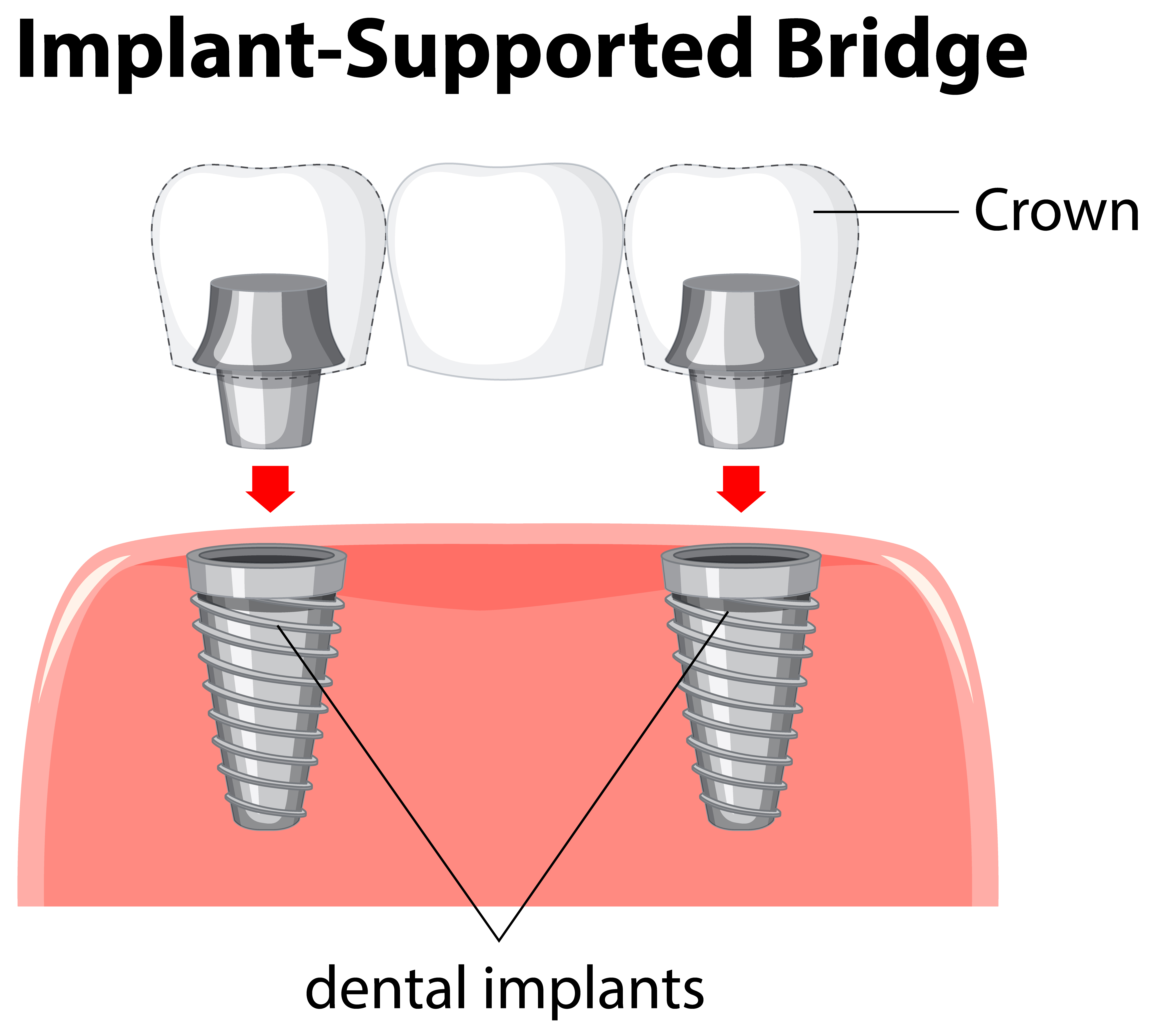
These are bridges placed on dental implants inserted into the jawbone instead of natural teeth.
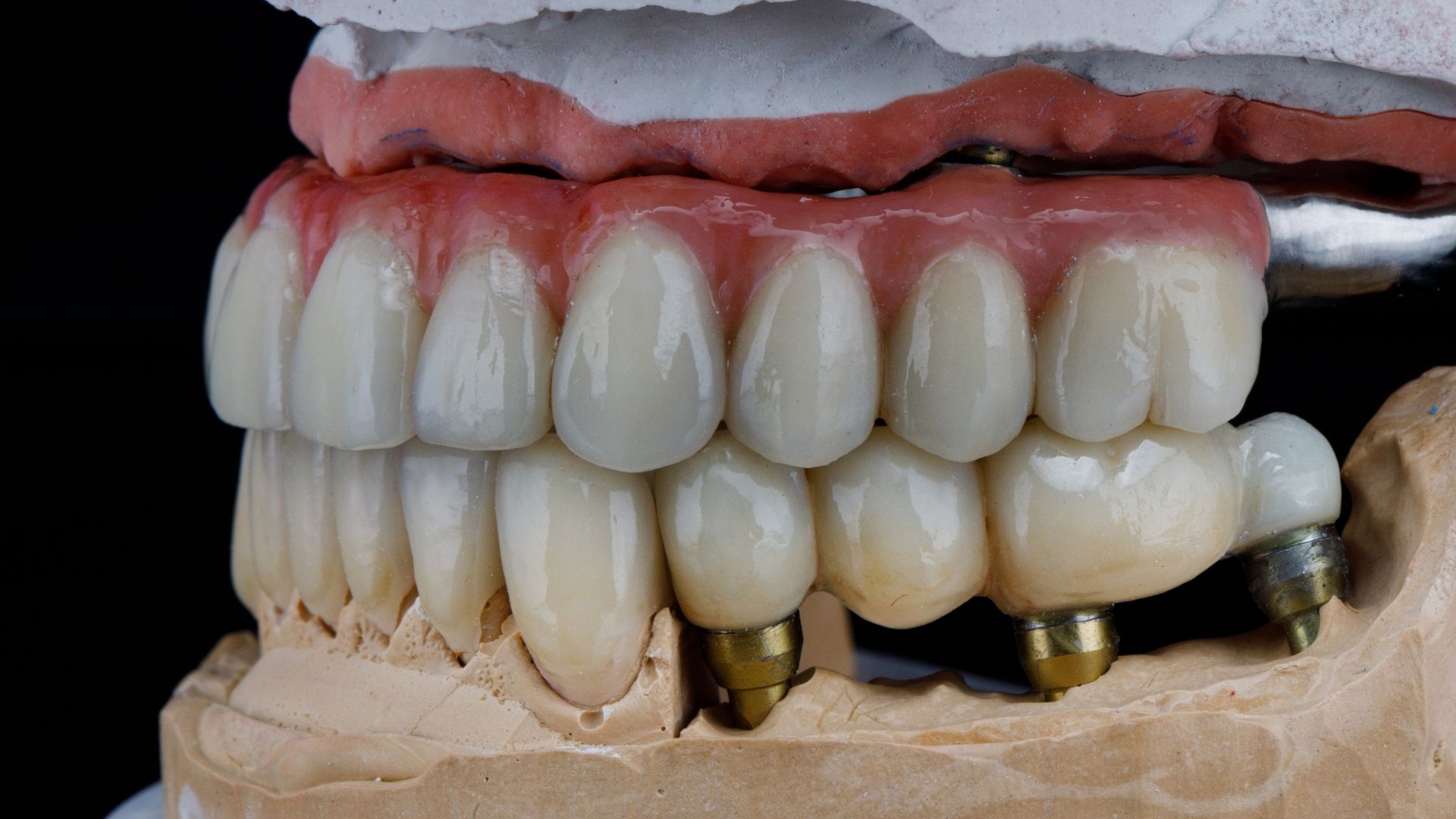
In cases of multiple tooth loss (e.g., when 3 or 4 adjacent teeth are missing), an implant is placed at each end of the gap, and these two implants support a bridge structure. In this system, for example, only two implants are used for a four-tooth gap, allowing the teeth in between to be suspended as ‘pontics’ (artificial teeth).
Bridges made of full ceramic with an empress design
This kind of porcelain bridge is better when people have high aesthetic expectations.
These bridges are made entirely of ceramic and have no metal substructure. They look the most like natural teeth because they let light through.
They work well for aesthetic cases in the front of the mouth, when implants can't be placed because there isn't enough bone, and for restoring lateral teeth.
Bridges with cantilevers
These bridges are used when there is only one tooth on one side of the gap that can hold them up.When implants or traditional bridges aren't possible, they are usually seen as a "second-priority" option.
Types of dental implants
The following types of implants are the most common:
Single dental implants:
These are used to fill in the space left by a missing tooth without hurting the teeth next to it. There is a titanium screw (artificial root) in the jawbone and a single crown on top of it in this system.
Full mouth dental implants:
These are implants put in the same spots as the original teeth when all of the teeth in the mouth have been lost. Compared to full dentures, this method is much more comfortable to use and requires the same care as natural teeth.
Bridges that are supported by implants:
- If you have three or more missing teeth next to each other, you need to put in two or more implants to support a bridge structure. In this design, there may be fewer implants than crowns. For instance, three implants can be used to fill a gap of four teeth, and a bridge can close the gaps in between.
- There are also systems that use "snap-on" systems or adhesives to attach to implants. These systems make sure that removable dentures stay in place better in the mouth.
All on 4 or All on 6:
This is a new method that uses just 4 or 6 implants to hold up the whole dental arch (upper or lower jaw). This method speeds up the healing process because it doesn't require separate surgeries for each tooth. It's also a more cost-effective option than replacing each tooth with an implant.
Implants that are made for a specific purpose:
There are also special surgical procedures, like mini implants that help with orthodontic treatments and zygomatic and pterygoid implants that are used when the jawbone volume is very low.
Dental Bridge and Implant Pros and Cons
Dental Bridges: Pros and Cons
Pros of dental bridges
- Unlike implants, bridge treatment does not require any surgical procedures on the jawbone, which is a significant advantage for patients who are apprehensive about surgery.
- Bridge treatment can usually be completed within a few weeks and in one or two appointments, whereas the implant process can take months for osseointegration.
- Bridges are initially less expensive than implants, particularly when one or two teeth are missing.
- Bridges can fix speech impairments and restore your smile, giving them a very natural-looking and chewing feel.
- By sealing the space left by the missing tooth, it stops nearby teeth from rotating, tilting, or shifting into this area.
Cons of dental bridges
- The size of the healthy teeth on either side of the gap must be decreased (shaved down) in order for the bridge to be supported; this requires the permanent sacrifice of healthy tooth structure.
- There is a higher chance of decay, gum disease, or future root canal therapy for the supporting teeth that have crowns placed on them.
- Bridges typically last five to fifteen years; at the end of that time, structural issues may require the removal and replacement of the entire bridge.
- Over time, gum recession and bone loss may result from bridges' failure to stimulate the underlying jawbone because they do not replace the tooth root.
- Cleaning can be challenging because food particles and bacteria can become lodged beneath the pontic, or artificial tooth, of the bridge. Bridge floss and other specialised tools are needed to clean this area.
- The supporting teeth in a bridge system bear the entire chewing load, these teeth may eventually become weaker and more worn out.
- The entire bridge restoration is deemed a failure and the system needs to be removed if there is a problem with even one of the teeth supporting the bridge, such as tooth decay.
Dental Implants: Pros and Cons
Pros of dental implants
- The main benefit of implants is the fact that they do not require any alterations to the healthy teeth that are next to the gap. In comparison to the conventionally fixed bridges, the method of which involves the grinding of teeth that are next to the gap and the use of them for support, thus destroying their structural integrity, implants do not make any changes in this respect.
- Implants are able to perform the same functions as natural tooth roots because they are fixed with titanium screws in the jawbone, thus the bone is constantly being stimulated and therefore, bone loss (atrophy) is avoided. This stops the skeletal structure of the face from shrinking over time and the resulting appearance of getting old.
- Implants are built to be very robust and can last a very long time: If well taken care of and oral hygiene is maintained, implants are made to be a lifetime. Successful implant studies have been found to be around 95% over 20 years.
- Implants give the same sensation, look, and use as real teeth as they become one with the bone (osseointegration).
- Simply brushing and flossing implants are as easy as your natural teeth; no special tools are needed to care for implants.
- Implants not only bring back the complete chewing power but also help to correct speech disorders.
Cons of dental implants
- Implant placement is a surgical procedure and may be a cause for concern for some patients. It is normal to experience mild pain or discomfort within the first 24 hours after the procedure.
- It generally takes between 3 and 6 months for the implant to fully integrate with the jawbone. This is a much longer process than bridge treatment, which can be completed in a few weeks.
- Implants are a more expensive initial investment than other dental restoration methods.
- If the patient's jawbone volume is insufficient, additional surgical procedures such as bone grafting or sinus lifting may be required before the implant can be placed.
- Active infections, severe gum disease, or uncontrolled systemic diseases (including smoking) that affect the healing process can complicate or delay treatment.
Compare of Dental Bridge and Dental Implant
In the table below, you will find a comprehensive comparison of dental bridge and dental implant treatments.
|
Dental Bridge |
Dental Implant |
|
Treatment Type: Non-surgical; involves reducing (shaving down) the healthy teeth on both sides of the missing tooth to use them as supports. |
Surgical procedure; involves placing a titanium screw into the jawbone to replace the missing tooth root. |
|
Appearance & Function: Provides a very natural appearance and largely restores chewing function. However, bone loss over time may cause gum recession beneath the bridge. |
The closest option to natural teeth; mimics real teeth in both appearance and feel, and transmits chewing force directly to the bone. |
|
Treatment Duration: Generally a quick solution, completed in a few appointments over a few weeks. |
The process is longer; requires a healing period of typically 3 to 6 months for the implant to fuse with the bone (osseointegration). |
|
Lifespan: Typically lasts between 5 to 15 years and may need replacement over time. Some sources indicate it can last up to 20 years. |
Made to be a long, lasting, if not forever, solution with appropriate care. |
|
Care / Cleaning: It is necessary to use special cleaning tools such as floss threaders and carry out very careful hygiene, as food particles may be trapped below. |
The upkeep is similar to that of natural teeth; ordinary brushing and flossing are required, and no additional steps are necessary. |
|
Cost: Initial cost is lower and is most of the time covered by dental insurance. |
The initial cost is higher; nevertheless, it may be more economical in the long run because of its permanency. |
|
Suitability: It is an excellent solution if the teeth next to the one to be replaced are already filled/crowned or if there is not enough bone for an implant. |
It is referred to as the "gold standard" when the adjacent teeth are healthy (in order not to damage them) and there is enough jawbone. |
Cost of Dental Bridge and Implant
Below is a comparison table showing the average price ranges for dental bridge and implant treatments in four countries. All prices are approximate and may vary depending on the clinic location, materials used, complexity of the treatment, and additional procedures.
| Treatment Type (EUR) | Turkey | UK | US | Germany |
|---|---|---|---|---|
| Single Implant | 540 – 1,255 | 1,750 – 2,900 | 2,800 – 5,600 | 1,500 – 2,500 |
| Implant + Crown | 715 – 1,610 | 2,350 – 4,100 | 3,700 – 6,550 | 2,000 – 3,500 |
| Traditional Bridge (3-unit) | 365 – 1,080 | 935 – 1,750 | 1,870 – 4,200 | 800 – 1,800 |
| Implant-Supported Bridge | 1,805 – 4,510 | 4,700 – 9,350 | 6,550 – 14,000 | 4,000 – 7,000 |
| All-on-4 (Full Arch) | 6,275 – 10,785 | 12,350 – 18,800 | 18,700 – 28,000 | 11,000 – 16,000 |
How to choose between an implant and a bridge?
The following factors are considered when making a choice:
Condition of adjacent teeth:
If the neighboring teeth are very healthy (virgin teeth), implants should definitely be preferred to avoid cutting them. However, if the neighboring teeth already have large fillings or crowns, a bridge may be a logical option.
Bone quantity:
If the jawbone is insufficient and grafting is not possible, a bridge may be the only option.
Time and budget:
If a quick solution and low initial cost are desired, a bridge should be chosen; if a long-lasting and protective treatment is desired, an implant should be chosen.
How does a dental bridge work?
The working principle of this system consists of the following stages:
Preparation of the abutment teeth:
In the first stage, the healthy teeth on either side of the gap (abutments) are reduced or shaped by the dentist so that they can accept the crowns that will be placed on them. This grinding process is necessary for the restoration to fit properly onto the teeth and achieve a natural size.
Creation of the integrated structure:
In a traditional bridge, three units are usually joined together: a false tooth (pontic) in the middle, replacing the missing tooth, and two crowns on either side that will sit on the supporting teeth. This structure is produced as a single piece.
Cementation:
This prepared integrated bridge structure is placed over the reduced abutment teeth and fixed with a special dental adhesive.
Force transmission and function:
When the bridge is seated, all pressure and forces generated during chewing are transmitted directly to the abutment teeth via the bridge. Therefore, the abutment teeth must bear a greater functional load than normal.
Closing the gap:
The artificial tooth fills the gap in the middle, providing an aesthetic appearance and preventing the adjacent teeth from tilting or shifting towards the gap.
Dental Bridge vs Implant for Front Teeth
The loss of front teeth is important for looks and should not be taken lightly because they are directly visible when a person smiles. Losing teeth in this area not only changes how it looks on the outside, but it can also make it harder to eat and speak. Here are the main differences between implants and bridges for restoring front teeth:
- Looks and naturalness: Implants become part of the jawbone, which stops side effects like gum recession and bone loss and gives the person a very natural look and feel. They stimulate the jawbone and keep the facial structure from collapsing over time, which stops the person from looking older than they are.
- Keeping nearby teeth safe: Implant treatment is the best way to protect a single tooth that is missing in the front because it can be done without touching the healthy teeth next to it (virgin teeth). To make room for the crowns on traditional bridges, the teeth on either side of the gap must be made smaller. This permanently damages those teeth.
- Soft tissue and bone volume: To meet high aesthetic standards for the front teeth, the area needs to have the right amount of soft tissue and bone. If there is too much bone loss and not enough support for an implant, all-ceramic bridges like Empress 2 may be the "best option" because they look and feel very natural in the front of the mouth.
- Long-term success: Single tooth implants in the front teeth are restorations that will look and work well for a long time. Bridges, on the other hand, last for an average of 7 to 10 years (some say 5 to 15 years), and they may need to be replaced if the gums recede or the teeth that support them decay.
- Speech and chewing: Because implants are fixed and stable, they make it easier for patients to bite with their front teeth and say words more clearly. Bridges can make your smile look better in a similar way, but you might have to be careful when eating certain foods.
Dental Bridge vs Implant for One Tooth
Preservation of adjacent teeth
Dental implant: The greatest advantage of an implant is that it does not affect the teeth adjacent to the gap in any way. The implant functions like a root on its own and bears its own load. This is the most conservative option for preserving the integrity of adjacent healthy (untreated) teeth.
Dental bridge: In a traditional bridge, crowns are placed on the solid teeth on either side of the gap to act as ‘anchors.’ To do this, these healthy teeth must be permanently filed down and reduced in size. This causes irreversible damage to the structure of those teeth.
Longevity and durability
Dental implant: Designed to last a lifetime with proper care and oral hygiene. The 20-year success rate of implants is approximately 95%.
Dental bridge: Bridges generally last between 7 and 10 years. A young patient may have to replace this bridge many times throughout their life. Furthermore, if there is a problem with even one tooth in the bridge system (for example, decay in one of the supporting teeth), the entire bridge must be removed and replaced.
Jawbone and gum health
Dental implant: As it is placed in the jawbone just like a natural tooth root, it stimulates the bone and prevents bone loss (resorption). This helps maintain a more youthful appearance by preventing facial contours from sagging.
Dental bridge: Bridges do not replace the tooth root. Since the bone beneath the bridge is not stimulated, bone resorption and gum recession (collapse) may occur in that area over time.
Health risks
Dental implant: It is an independent structure and does not pose a risk to other teeth.
Dental bridge: Cutting the supporting teeth increases the risk of root canal treatment and root decay in these teeth in the future. In addition, food debris can accumulate under the artificial tooth (pontic) under the bridge, making it more prone to gum disease.
Which should be chosen in which situation?
- If the adjacent teeth are very healthy, implants should definitely be preferred so as not to damage them.
- If the adjacent teeth already have large fillings or are broken or crowned: If these teeth already need to be covered, a bridge may be a more practical solution for this case.
- If the jawbone is insufficient, a bridge is the only option in cases where bone grafting (bone powder) cannot be performed for the implant or if the patient avoids surgery.
What is Implant-Supported Bridges?
Implant-supported bridges involve placing two or more implants in place of natural teeth to support a bridge when there are multiple adjacent missing teeth. With this method, for example, three missing teeth can be replaced with two implants and an artificial tooth in between, thereby preserving healthy teeth and achieving fixed teeth with less surgical intervention.
What is more painful bridge or implant?
Although the bridge procedure may initially appear easier as it does not require surgery, cutting the teeth can cause sensitivity. Implant surgery, on the other hand, is performed under local anesthesia, so no pain is felt during the procedure. There may be mild pain within 24 hours after the procedure, but this can be easily controlled with over-the-counter painkillers.
Other options instead of bridges or implants
For patients who do not want another option, the main alternative is removable partial dentures. Although these visually complete missing teeth, they are the weakest link in terms of comfort and function. They must be removed at night, have low chewing capacity, and do not prevent bone loss.
Frequently Asked Questions
Is a dental bridge permanent?
Dental bridges are ‘fixed’ prostheses, meaning they cannot be removed by the patient. However, they are not permanent in terms of material; they usually need to be replaced within 10-15 years.
Is it better to get implants or a bridge?
In terms of overall oral health and longevity, getting implants is better. Implants stop bone loss and do not damage your other teeth.
Can a dental bridge be removed and recemented?
The adhesive under the bridges may become ‘washable’ or loosen over time. If the bridge is sound, it can be readhered; however, if decay begins in the teeth under the bridge, the entire bridge usually needs to be removed and replaced.
Can you eat normally with a dental bridge?
Yes, most foods can be consumed with bridges. However, care should be taken with very hard or sticky foods, as they may damage the bridge. Implants, on the other hand, offer the same chewing performance as natural teeth.
What is single tooth bridge?
This is a three-unit bridge system where two adjacent teeth are used to replace a single missing tooth.