
What are all on 4 dental implants in Turkey?
All-on-4 dental implants are a cutting-edge restorative technique that uses just four titanium implants to support a full-arch restoration, or a complete set of teeth in the upper or lower jaw. This concept was developed to provide edentulous patients, or those facing complete tooth loss, with a long-lasting and natural-looking alternative to traditional dentures.
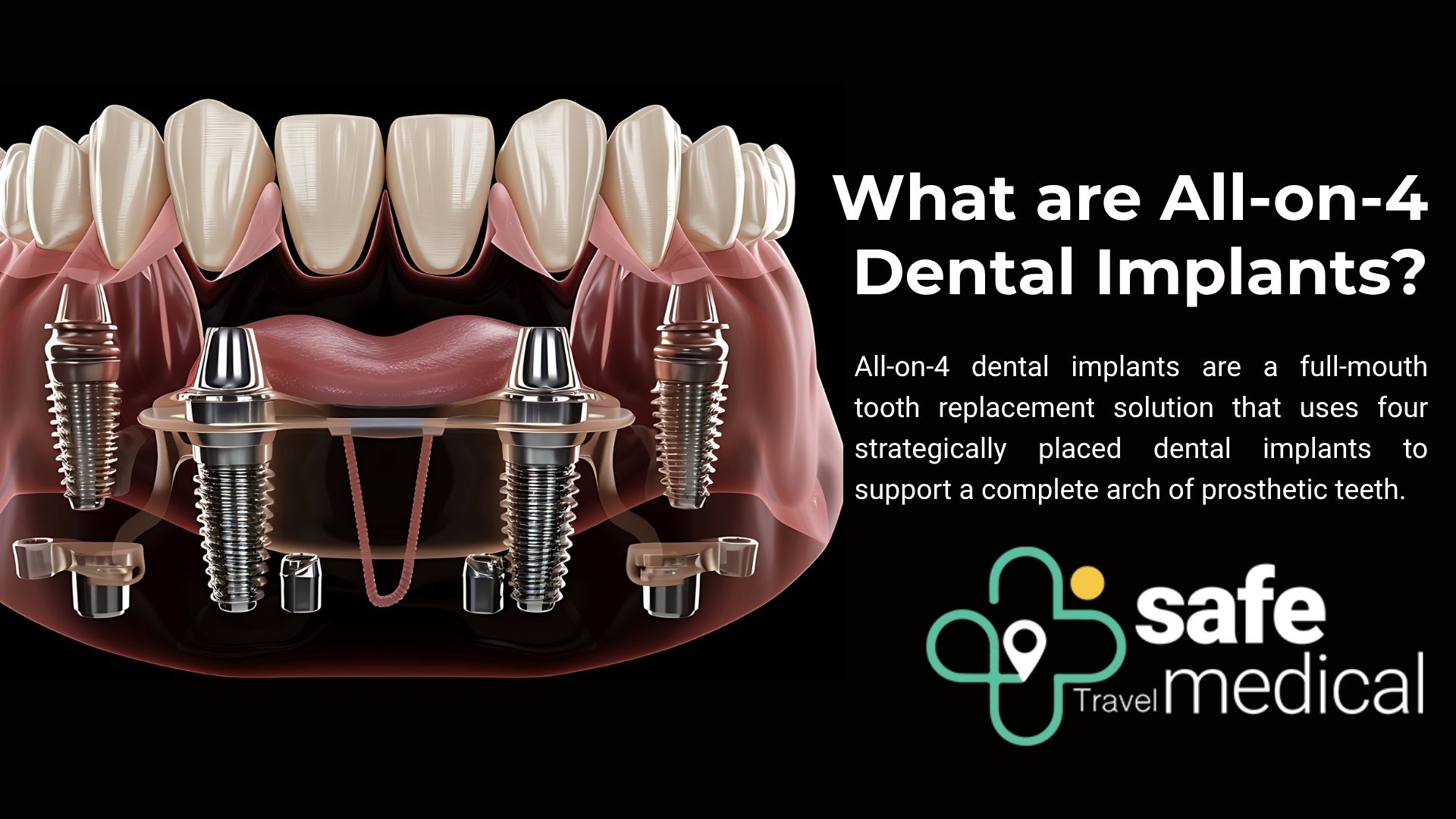
All on 4 dental implant procedure in Turkey, Antalya
The All-on-4 dental implant procedure offered in Antalya has established the city as a global destination for dental tourism by providing advanced restorative technology at significantly more attractive prices compared to countries such as the UK. Clinics in Antalya have specialized in this ‘Teeth in a Day’ protocol to restore oral function and aesthetics for patients suffering from significant tooth loss.
The procedure steps in Antalya clinics
Initial evaluation and 3D planning:The process begins with a complete assessment, using CBCT (3D tomography) images to evaluate the density and volume of the jawbone. The implants are strategically placed digitally, using software to ensure accuracy and avoid critical structures such as nerves and sinuses.
- Surgical phase: The four titanium implants are surgically placed in the jawbone. Two are vertical in the front and two in the back at an angle of up to 45 degrees, allowing maximum use of the available bone while often eliminating the need for bone grafting procedures.
- Temporary bridge: A fixed temporary bridge is fitted to the implants during the surgery. This means the patient can walk out of the clinic straight away with a working smile.
- Healing (osseointegration): The titanium posts fuse to the jawbone—this can take 3 to 6 months. Patients are advised to eat soft meals throughout this period. Final restoration: After healing is complete, the temporary bridge is replaced with a very durable and aesthetically pleasing permanent bridge made of Zirconia, Ceramic, or Composite on a titanium framework.
Why choose Antalya, Turkey for All-on-4?
- Affordable: Turkey offers high-quality dental care at significantly lower prices than the UK and most European countries.
- Technology Clinics in Antalya use international standards, including Nobel Biocare equipment and CAD/CAM technologies for precise prosthesis fit.
- Aftercare: Specialists in Antalya offer complete aftercare, including 6-step cleaning guidelines to avoid infections such as peri-implantitis. They suggest soft-bristled brushes, interdental devices, and water flossers.
With Safe Medical Travel, comfortable, safe, and personalized healthcare awaits you.
- Meet our expert doctors
- Modern and hygienic clinics
- Personalized treatment plans
- Relaxed and stress-free travel experience
All-on-4 Advantages
The All-on-4 dental implant process has various advantages over regular dentures and implant operations. The main advantages include treatment efficiency, improved aesthetics, and long-term oral health preservation.
Immediate results (“Teeth in a Day”)
- All-on-4 treatment can provide patients with functional teeth in one day, whereas standard treatments can take months.
- Patients are fitted with a fixed temporary bridge at the clinic and experience rapid improvements in eating, comfort, aesthetics, and speaking.
Surgical and technological efficiency
- Posterior implants are tilted at a 45° angle to maximize available bone, thus avoiding bone grafting. This often removes the need for invasive and expensive bone grafting procedures.
- With this procedure, only four implants per arch are needed to support a full set of teeth, compared to earlier systems that may require up to 10.
- Strategic angulation of the implant allows physicians to avoid critical tissues such as the maxillary sinus and mandibular nerve.
Aesthetic and functional benefits
- Prosthetic teeth are designed to look and function like real teeth, restoring patients' smiles and self-esteem.
- Stability: Fixed in the jawbone, they prevent slipping, shifting, and friction on the gums, unlike removable dentures.
- Implants operate as natural tooth roots, stimulating the jawbone while chewing to prevent bone loss and maintain facial structure.
Long-term value and maintenance
- Long-term cost-effectiveness: Although initially costly, permanent dentures are more cost-effective than regular dentures due to their durability and lack of frequent adjustments or replacements.
- Easy to maintain: Brushing and flossing are all that's needed, no special soaking solutions required.
Dentist all on 4 in Turkey, Antalya
Dentists performing All-on-4 treatments in Antalya are highly experienced and accustomed to treating international patients. Antalya is a key location for dental tourism, and there is a large concentration of dentists and facilities specializing in All-on-4.
- Education and specialization: Most dentists graduate from well-established Turkish universities and receive advanced training in implant dentistry. Many have a master’s or doctoral degree in implantology, prosthodontics, or oral and maxillofacial surgery. International certificates (Nobel Biocare, Straumann, ICOI - International Congress of Oral Implantologists) are common.
- Experience: They have a high patient volume, so they work on thousands of cases of full-arch restorations like All-on-4 and All-on-6. Many surgeons are utilizing modern techniques such as angled implant placement, immediate loading (temporary teeth on the same day), and zygomatic implants.
All-on-4 dental implants Turkey price
All-on-4 Prices in Turkey (Single Jaw)
Price Range (€) €3,500 – €6,500
What is included in all-on-4 package in Turkey?
Most Turkish clinics offer an all-inclusive package:
- All medical examinations (CT scan)
- Surgery and anaesthesia
- 4 implants
- Temporary fixed prosthesis (immediately after surgery)
- Permanent zirconium or acrylic teeth after 3–6 months
- Optional: 3–5-star hotel accommodation, VIP transfer, interpreter support
Factors affecting the price:
- The brand of implant used (premium brands are more expensive)
- Material of the permanent teeth
- The city where the clinic is located
- Number of nights included in the package (usually 5–7 nights)
All on 4 dental implant cost in Turkey, UK, US, and Europe
| Country / Region | Average Cost per Jaw (€) | Typical Price Range (€) |
|---|---|---|
| Turkey | €4,500 | €3,500 – €6,500 |
| Bulgaria | €6,000 | €4,500 – €7,500 |
| France | €15,500 | €13,000 – €20,000 |
| Netherlands | €17,500 | €15,000 – €23,000 |
| Germany | €18,000 | €14,000 – €22,000 |
| United Kingdom | €19,500 | €15,000 – €25,000 |
| United States | €22,000 | €18,000 – €32,000 |
All on 4 Dental Implant Turkey Review
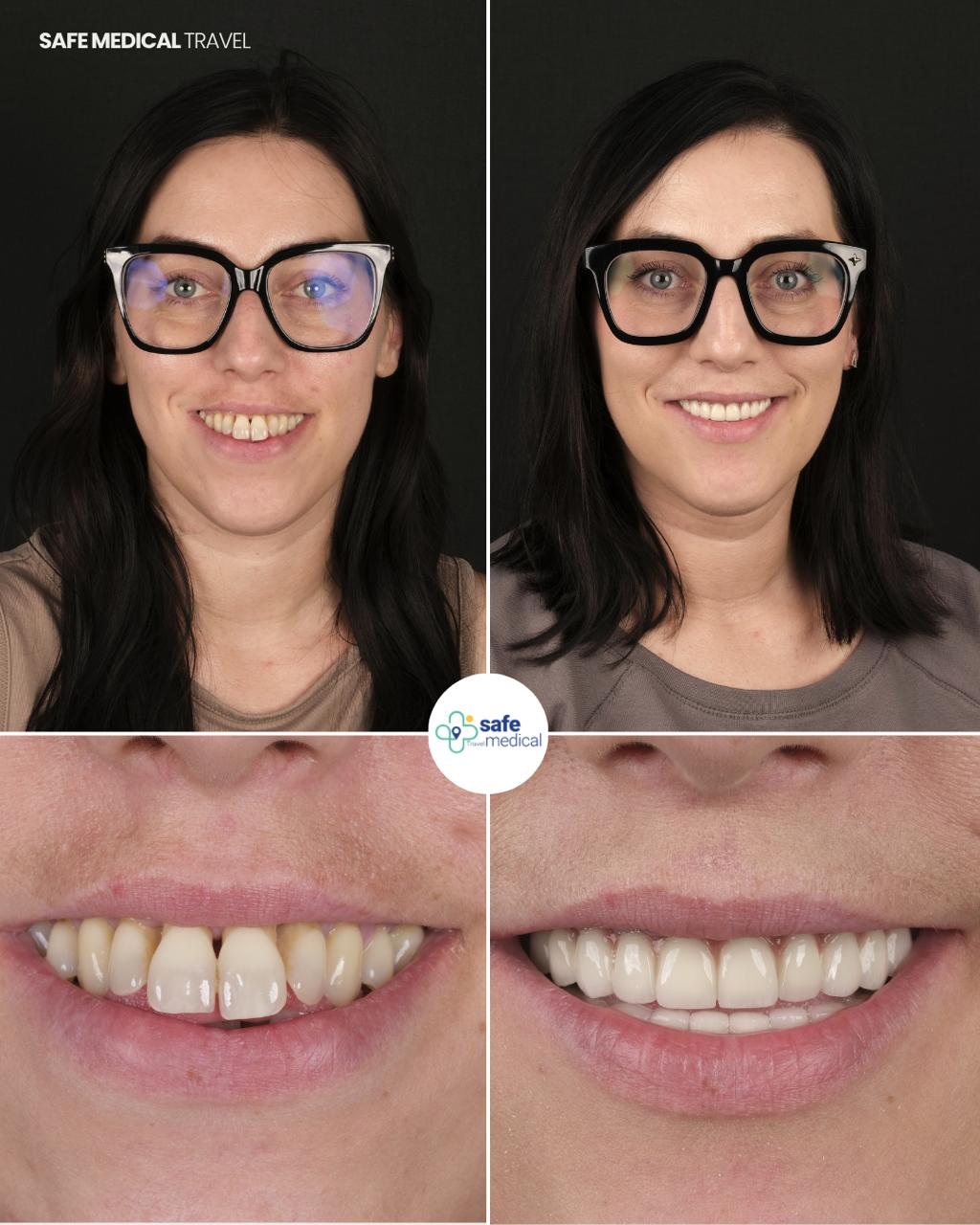
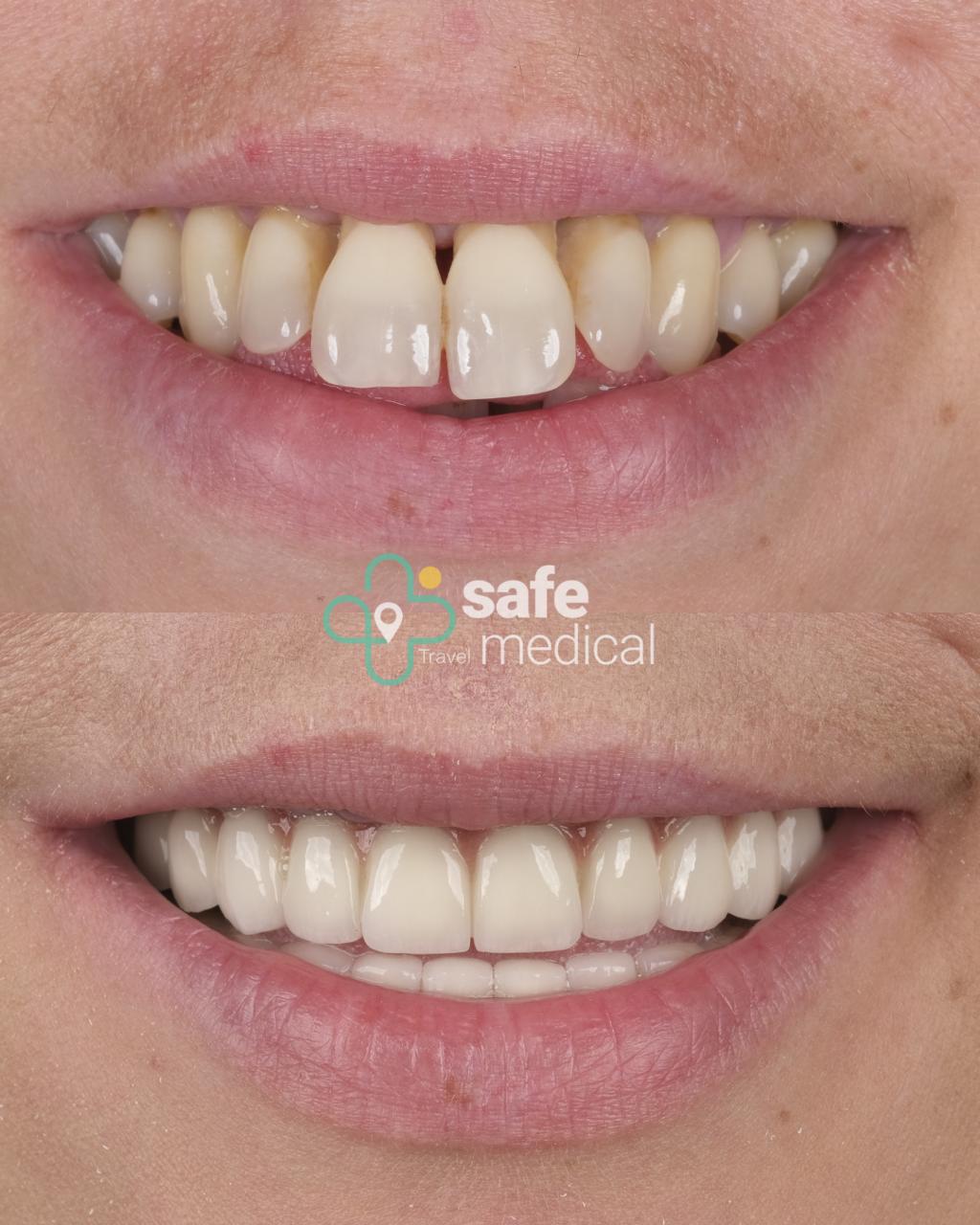
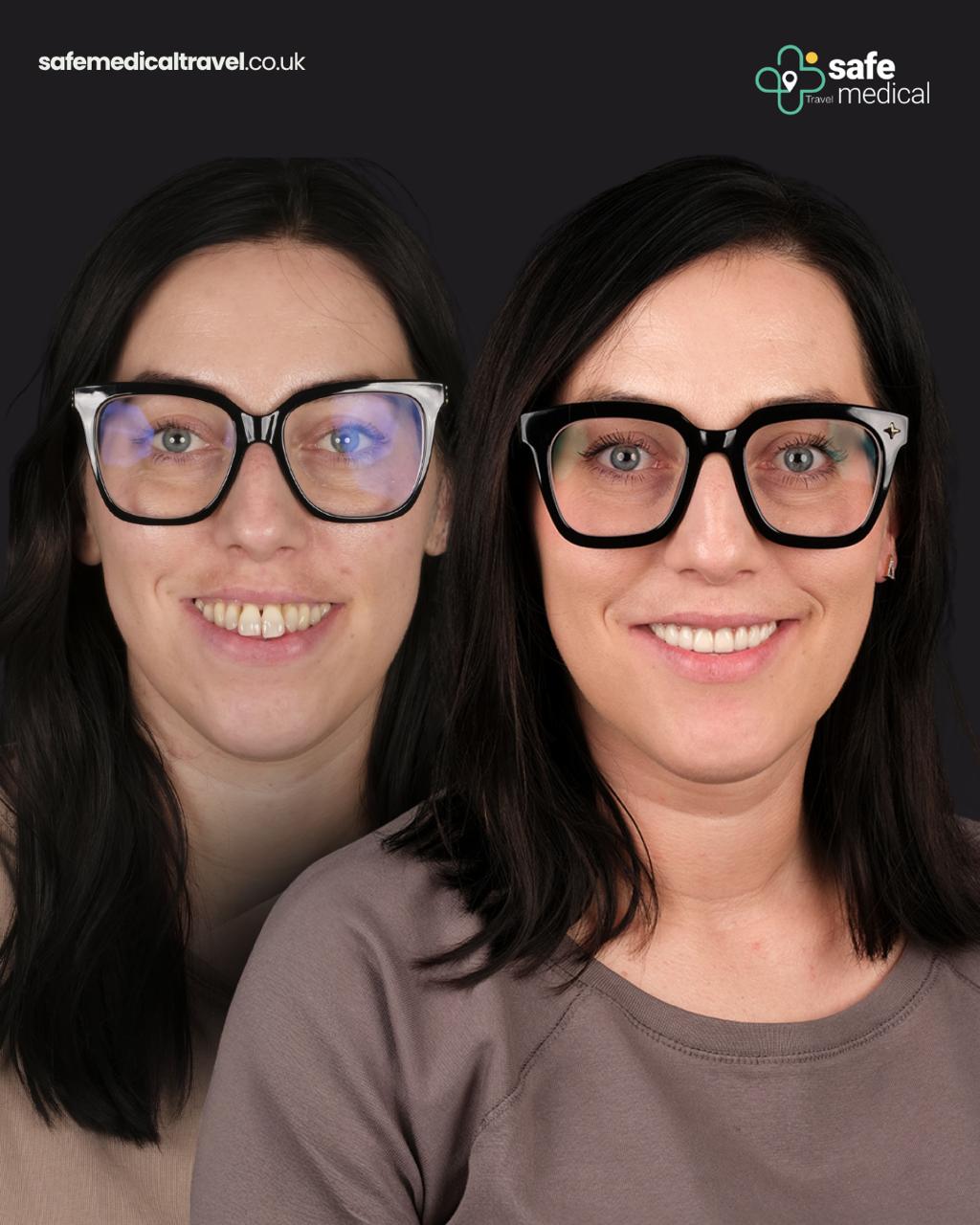
During Anna’s first consultation with the Safe Medical Travel team, we carefully planned the entire process and selected the All-on-4 treatment as the most suitable solution for her needs.
Throughout her journey, our professional approach, transparent communication, and personalized care helped Anna feel completely safe and supported.
Now she has not only a new smile, but a renewed confidence.
All-on-4 vs. Traditional Implants
All-on-4 dental implants are a new breakthrough in restorative dentistry, providing a more efficient alternative to traditional implant techniques and dentures. While standard treatments frequently necessitate a large number of implants and significant bone volume, the All-on-4 technique is intended to maximize the utilization of accessible bone with fewer components.
Number and placement of implants
- All-on-4 means that the full upper or lower set of teeth is supported by only four titanium implants. 2 implants are placed vertically in the anterior area, and two implants are placed at an angle up to 45° in the posterior area. This angle increases the surface area of the implant and provides a sturdy basis when there is not enough bone density to insert it vertically.
- Traditional full-arch restorations typically require six to ten implants per jaw and sufficient bone volume throughout the jaw.
Bone grafting requirements
- All-on-4 implants are designed to sit on the denser bone at the front of the mouth. The strategic placement often eliminates the need for surgical bone grafting or sinus lifts, even in individuals with very little bone volume.
- For patients with substantial bone loss, such as those who have been missing teeth for a long period, bone grafts may be required for traditional implants to create adequate "ground" for 6-10 vertical implants.
Treatment Time (Teeth in a Day)
- All-on-4, sometimes called “Teeth in a Day.” Patients can typically have their remaining problematic teeth extracted, implants placed, and a fixed interim bridge inserted all in the same appointment.
- Conventional implant therapy may need multiple steps over months. This process typically requires multiple surgeries to place grafts and implants followed by a lengthy healing time before the teeth can be placed.
Cost and Invasiveness
- All-on-4 is a cost-effective and less invasive alternative to typical full-mouth reconstructions, as it uses fewer implants and avoids additional surgeries like bone grafting.
- Traditional implants require additional components and surgical procedures, making them more expensive and physically demanding for patients.
What is the best material for all-on-4 implants?
When it comes to the “best” material for All-on-4 implants, it really depends on the material used for the surgical implant post and what is used for the final prosthetic bridge. The ideal material should provide both excellent aesthetics and long-term durability.
Titanium for surgical implants
Regarding the actual implant posts (the “roots" that are inserted in the jaw), titanium is the standard and recommended material.
- Biocompatibility: Titanium is “bio-active,” meaning it attaches to the jawbone (osseointegration) for a solid, permanent attachment.
- Proven Success: Systems like NobelSpeedy titanium implants have a scientifically proven success rate with 10 years of clinical follow-up.
Final prosthetic bridge materials
The materials for the last set of teeth are in three grades depending on patient needs and requirements:
Premium (Highest grade): Zirconium or ceramic crowns on a titanium framework
- For this purpose, good aesthetics and maximal strength are recommended.
- Zirconia is especially noted for being stain resistant and less porous, which makes it easier to maintain cleanliness at home.
- Usually requires less frequent professional deep cleanings (every 6-12 months) than acrylic choices, as they are more resistant to tartar growth.
Medium: Titanium, veneered with composite
This solution employs a titanium framework with a composite veneer and offers good aesthetics with the advantage of being easily repaired in the laboratory and chairs-side.
Basic: Acrylic teeth with titanium framework
While they work, acrylic teeth are more porous and attract bacteria and stains faster than zirconia, and they normally need more frequent professional care (every 3–4 months).
Abutment materials
The connectors between the bridge and the implant are usually manufactured from titanium or zirconia. Both are durable, but the decision often comes down to the specific aesthetic demands of the case.
What is all on 4 concept in Turkey?
In Turkey, the ‘All-on-4’ idea is a dental implant technique for patients who have lost most or all of their teeth. It supports a full, fixed bridge of new teeth in one jaw with only four strategically placed implants.
This approach is extremely popular in Turkey because of the key advantages include lower treatment costs, getting excellent quality care, and getting rapid results. Here’s a summary of the main points:
Cost Advantage
For many, the draw of Turkey is, above all, its price. It's 70-80% cheaper than in places like the UK or US.
- All-inclusive packages: Most clinics have packages that include the treatment, transfers to and from the hotel, accommodation, and even a post-op checkup.
- Per-arch pricing: The price mentioned is usually “per arch” (upper or lower jaw), not for the complete mouth.
- Care: Although the prices are lower, the calibre of care is a big draw. Clinics that cater to international patients generally advertise advanced facilities and expert surgeons.
- High-tech planning: They use 3D CT scans and computer-guided surgery for precise implant placement.
- High-quality materials: The use of high-end brands such as Straumann and Nobel Biocare is common among several clinics.
- Approved clinics: Turkey boasts numerous globally approved dentistry clinics, especially in places such as Istanbul and Antalya.
What is all on 4 bridge?
An All-on-4 bridge is the fixed prosthetic component of the All-on-4 treatment concept, designed to provide a full-arch restoration by replacing a complete set of upper or lower teeth using only four titanium implants. Unlike traditional removable dentures, this bridge is permanently fixed into the mouth and is functionally and aesthetically similar to natural teeth.
Structure and components
The complete restoration consists of three distinct parts:
- Titanium roots: Four implants surgically inserted into the jawbone to act as natural roots.
- Abutments: Connector pieces screwed onto the implants that serve as the foundation for the bridge.
- The bridge (Prosthesis): The visible part that mimics the natural crown of the teeth and gums. Typically, these bridges are designed to contain a maximum of 12 teeth.
Types of bridges
Patients generally receive two types of bridges during the course of treatment:
- Provisional (Temporary) bridge: An all-acrylic bridge that is usually screwed onto the implants on the same day as surgery. This allows the patient to leave the clinic with a functional set of teeth while the implants osseointegrate (fuse) with the bone.
- Final (Permanent) bridge: Fitted after a healing period of approximately 3 to 6 months. These are often milled from a biocompatible titanium monobloc using state-of-the-art CAD/CAM technology to ensure a precise fit.
Functional benefits
Because the All-on-4 bridge is fixed and stable, it eliminates common denture issues like slipping, friction on the gums, and the need for adhesives. It restores near-perfect oral functionality for chewing and speaking, while the implants stimulate the jawbone to prevent the bone loss typically associated with missing teeth.
All-on-4 Dental Implant Problems
Early difficulties after surgery
After the operation, patients often have certain temporary side effects as the body heals:
- Discomfort and Inflammation: Some redness, swelling, and physical discomfort at the surgery site are usual for a few days.
- Speech changes: Many patients have a transient lisp (lisping) as their tongue and mouth learn to adapt to the new prosthetic structure.
- Limitations during the healing period: Osseointegration (the fusion of the implant to the bone) takes a few months. For the first few weeks, patients need to have a soft food diet to prevent harming the unstable implants.
Long-term health problems
The most major long-term hazards pertain to dental hygiene and the health of the tissue around the implants:
- Peri-implant mucositis: This condition is an inflammation of the gum tissue caused by plaque build-up surrounding the implant abutments.
- Peri-implantitis: If mucositis is not treated, it can escalate to peri-implantitis, a dangerous bacterial infection that leads to loss of bone around the implant posts. This is one of the main reasons for a failure of the implant.
- Hygiene-related odors: The fixed bridge creates a space between the bridge and the gum tissue that the tongue cannot sense, allowing food particles and bacteria to accumulate there. If not cleansed by appropriate instruments like water flossers, this might result in persistent bad breath (halitosis) or a foul taste in the mouth.
Implant failure risks
While total implant failure is rare, it can happen for a number of reasons:
- Poor Bone Quality or Volume: Implants require a minimum breadth of bone (5 mm) and height (10 mm in maxilla, 8 mm in mandible) to be successful.
- Health and Lifestyle Factors: Smoking and uncontrolled diabetes or disorders impacting bone health greatly increase the risk of failure.
- Primary Stability Concerns: For success with “Teeth in a Day," implants need to be placed with a certain tightness (35-45 Ncm torque). If the bone is too fragile to accomplish this, the teeth cannot be immediately loaded, and a traditional healing time is necessary.
Technical and Behavioral Risks
- Bruxism (Teeth Grinding): Bite force applied laterally on the implant posts during severe grinding or clenching of the teeth might cause fractures or failure. Often these patients need a bespoke night guard.
- Surgical Precision: Incorrect placement can result in nerve injury or sinus problems. For example, lifelong numbness of the lower lip can ensue from misidentification of the mental foramen.
All on 4 dental implants before and after in Turkey
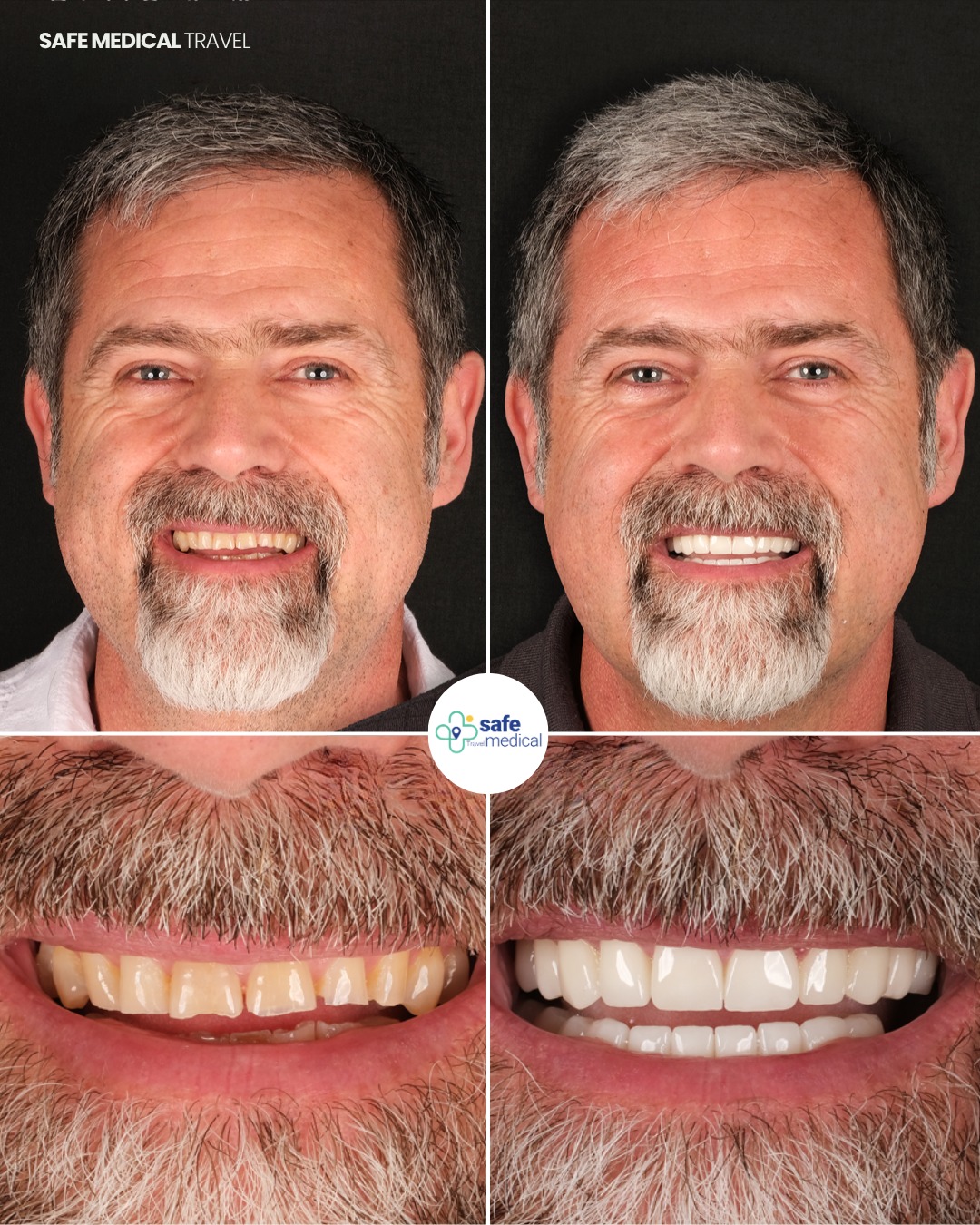
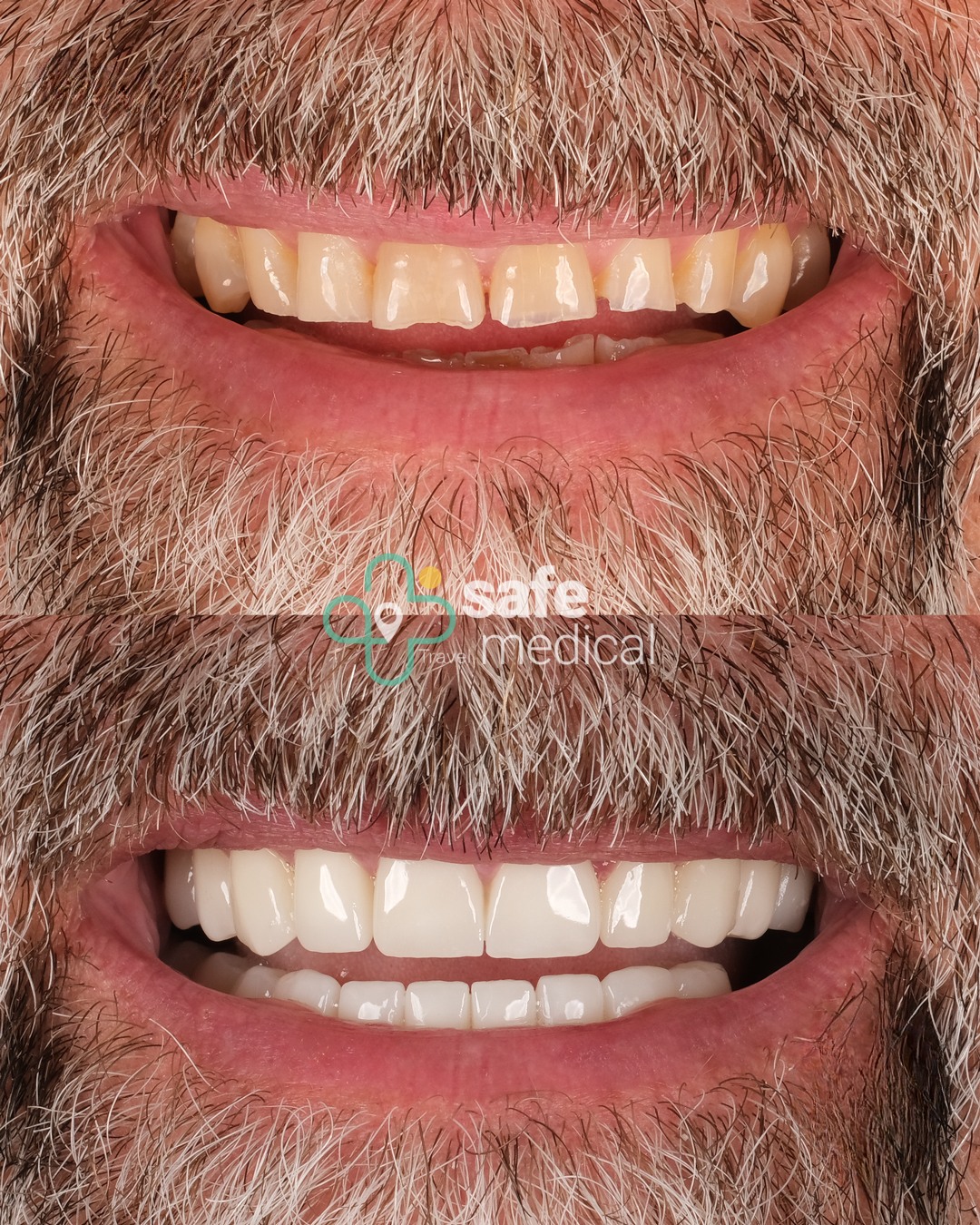
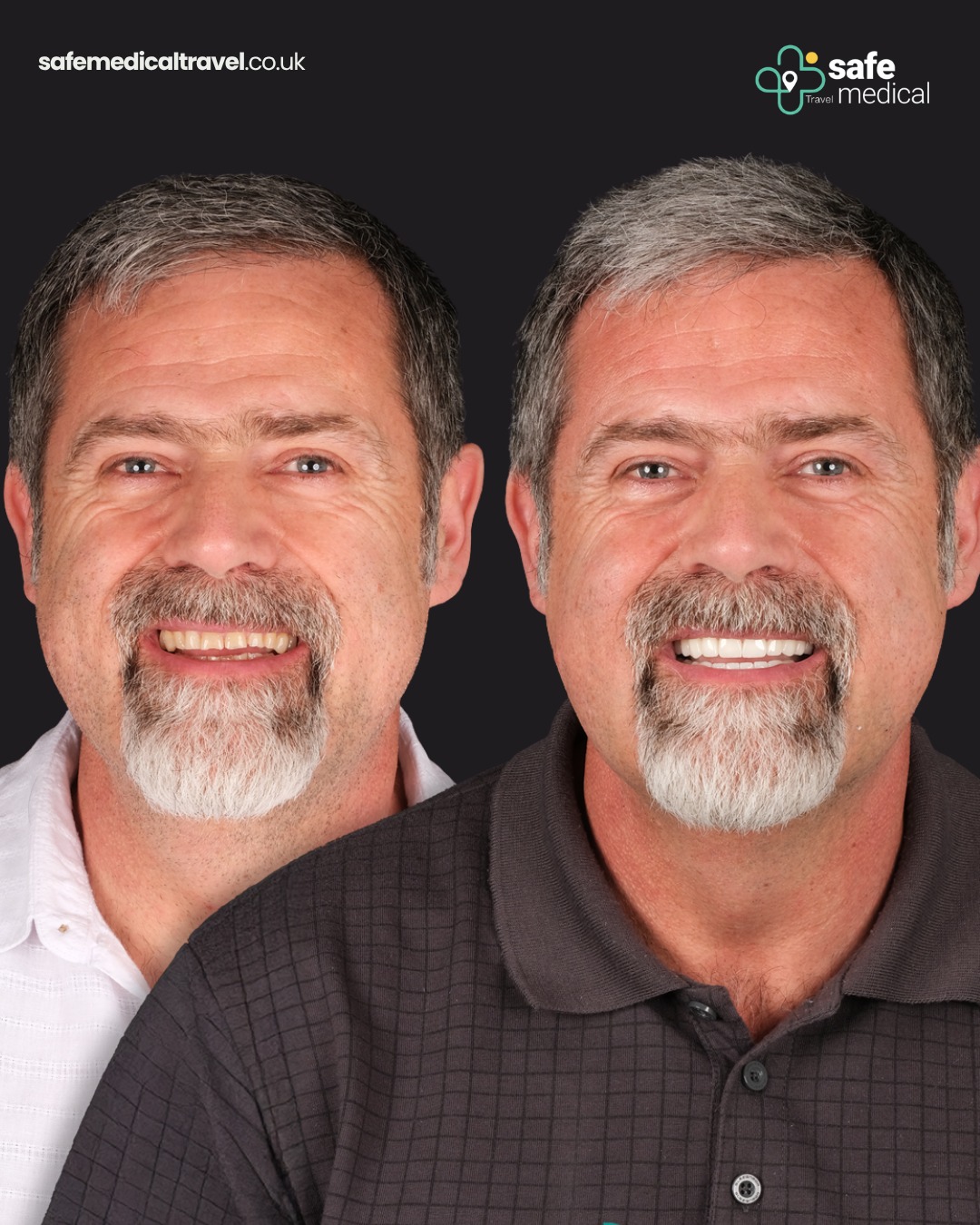
All-on-4 dental implants - how many teeth?
Number of teeth involved:
- Maximum of 12 teeth: The immediate provisional (temporary) bridge and the final permanent bridge are normally intended to support a maximum of 12 teeth.
- Optimal load distribution: The posterior implants’ tilting results in a better distribution over the alveolar crest, which safely supports this 12-tooth prosthesis.
- Complete mouth replacement: A patient can have All-on-4 on their upper and lower jaws, replacing a full set of teeth that would normally need 28 or more separate implants.
Who is a good candidate for all-on-4 dental implants?
All-on-4 dental implants are a wonderful solution for patients who have lost most, or all, of their teeth, or are facing significant tooth loss. They are also a good choice for those with low density in the jawbone and who want to avoid extensive grafting procedures. Eligibility is determined following a comprehensive dental examination.
How long does all-on-4 treatment take in Turkey?
The All-on-4 treatment process in Turkey usually takes between 3 and 7 days, depending on the patient’s oral health and treatment plan. Temporary teeth can often be fitted at the same time as the implants, allowing patients to leave the clinic with a functional smile while the implants heal.
Recovery after all-on-4 dental implant surgery
Most patients are able to return to their normal daily activities within a few days after All-on-4 surgery. Mild swelling, discomfort and bruising are common during the first week and usually disappear quickly. It usually takes about 3 to 6 months for full healing and implant integration. Once the implants have healed and integrated, the final permanent prosthesis is fitted.
Frequently Asked Questions
How long do All-on-4 implants last?
All-on-4 dental implants are meant to be a long-term, permanent solution. They are built to last a lifetime with good oral hygiene and frequent dental examinations. Regular expert maintenance and persistent home care mean they can easily survive 20 years or more, several sources say. However, their long-term success depends on careful daily cleaning to prevent infections like peri-implantitis.
All-on-4 vs. All-on-6 dental implants: Which is better?
Neither is “better” in general. It depends on your particular jawbone architecture and clinical requirements.
- All-on-4: This concept is frequently excellent for patients with little bone volume, especially in the back of the jaw. The posterior implants are angled at 45 degrees to take the best advantage of the bone available and usually do not require bone grafting.
- All-on-6: This provides greater support and stability with two more implants, distributing the chewing pressures more equally on the jawbone. Generally, it is better for the patient to have enough bone density and volume for the additional posts. Typically, a CBCT (3D) scan is used to assess the bone volume and density and is also used for the final decision.
What is the downside of all on four dental implants?
While highly successful, there are potential drawbacks and risks to consider:
- Implant failure: Though rare, implants can fail due to poor bone quality, smoking, or systemic diseases like uncontrolled diabetes.
- Peri-implantitis: This is a bacterial infection that affects the gum and bone around the implants. It is a leading cause of failure and is usually linked to inadequate oral hygiene.
- Surgical risks: As with any surgery, there are risks of infection, swelling, or minor nerve/sinus damage during the procedure.
- Behavioral constraints: Patients who suffer from bruxism (teeth grinding) may put excessive force on the implants, requiring a night guard to prevent damage.
- Temporary speech changes: Some patients may experience a slight lisp initially, though this usually resolves within a few days as the mouth adjusts.
Why are dental implants so affordable in Turkey?
- Cost-effectiveness: The costs are generally 50-70% lower (or more) than in the US, UK, or Western Europe, employing high-quality materials (e.g., Straumann, Nobel Biocare, or equivalent) and skilled surgeons.
- Quality & infrastructure: Many clinics in Istanbul, Antalya, and Izmir are modern, JCI-accredited, or internationally recognized, with English-speaking staff and advanced equipment (3D CT scans, digital planning).
- Packages: All-inclusive packages usually include implants, temporary/permanent prostheses (acrylic, porcelain, or zirconia), extractions if necessary, consultations, hotel accommodation, VIP transport, and sometimes excursions. A 6- to 10-day stay is usually required for the treatment of one arch. • Patient volume: Extensive experience with international patients means streamlined processes.