
What are All-on-6 Dental Implants in Turkey?
All-on-6 dental implants are a modern method used to treat the entire upper or lower jaw of a person who has no teeth or whose teeth are severely damaged. In this method, six implants (artificial tooth roots) are strategically placed into the jawbone. These implants support a full-arch prosthesis, ensuring it remains fixed, stable, and secure.
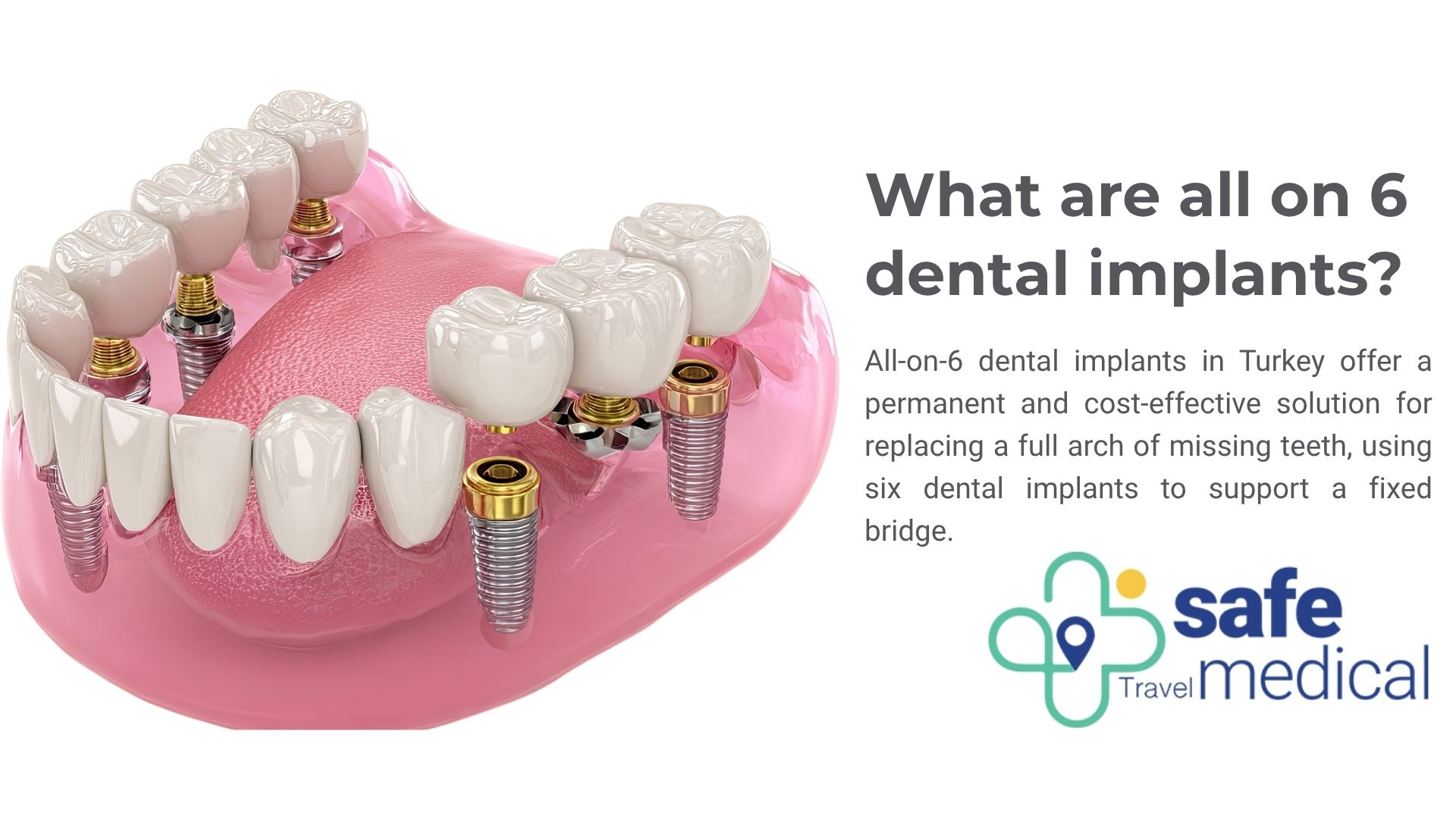
All on 6 dental implants in Turkey
Turkey, in particular, has become one of the leading destinations for dental tourism thanks to its experienced clinicians, modern facilities, and significantly lower treatment costs compared to many Western countries.
Clinics in Antalya specialize in full-mouth restorations, including the All-on-6 procedure, and often offer comprehensive treatment packages for international patients.
What to expect?
- All-Inclusive Packages: Many clinics provide all-inclusive packages, which include the dental procedure, airport transfers, accommodation, and sometimes even city tours.
- Extensive experience: Due to the popularity of dental tourism, dentists in Antalya perform a high volume of complex procedures such as All-on-6 implant treatments, allowing them to develop extensive expertise and efficiency.
- Quality of materials: Clinics usually use the best implant brands known internationally and materials such as zirconia for modern prosthetic restorations.
- Advanced techniques: Clinics offer advanced surgical methods such as the ‘flapless’ technique, which may result in less discomfort and quicker recovery periods.
All on 6 dental implant cost in Turkey, UK, US, and Europe
| Country / Region | Estimated Cost (Per Arch) |
|---|---|
| Turkey | €9,000 - €13,200+ |
| Portugal (Europe) | €8,125 - €12,575+ |
| Germany (Europe) | €10,500 - €16,500+ |
| United Kingdom (UK) | £9,995 - £16,000+ |
| United States (US) | $18,000 - $30,000+ |
All-on-6 Advantages
Better stability and performance
Six dental implants provide excellent stability and strength over techniques with fewer implants. This configuration provides a secure base for fixed dentures so that patients can chew, speak, and enjoy normal dental function with confidence. The system is supported by six implants, giving better stability, which is very useful in the maxillary jaw (upper jaw), which usually has less bone density and requires more support than the lower jaw.
Improved biomechanical function
The All-on-6 concept provides important biomechanical advantages in the management of forces in the mouth:
- Distribution of Stress: Six implants help in better spreading occlusal force over a larger area, which reduces the mechanical load on each individual implant.
- Reduced Deformation: It offers a stiff structure that is less susceptible to bending or deforming under masticatory forces than systems with fewer implants.
- Reduced Cantilevers: Additional implants improve anteroposterior distribution and reduce or eliminate distal consoles (unsupported parts of the bridge). This reduces the probability of mechanical issues such as loose screws or overloading the implant.
Bone maintenance and aesthetics
One of the most important long-term benefits is its effect on the structure of the jawbone:
- Avoiding Bone Loss: Implants stimulate the jawbone and promote bone preservation through osseointegration and help preserve jawbone volume and reduce the bone resorption that typically occurs after tooth loss.
- Preservation of Facial Structure: This procedure will help to preserve the natural facial structure of the patient and avoid the ‘sunken’ appearance often seen with traditional removable dentures.
- Customization of the prosthesis: The prosthesis is made according to the individual face shape, smile line, and other facial features of a patient so as to look natural and aesthetic.
A more minimally invasive and cost-effective approach
While it requires the use of more implants than some other methods, All-on-6 can be more efficient:
- Avoidance of Bone Grafts: The All-on-6 concept utilizes the areas of the mouth with the best bone structure available and thus avoids the need for complex and invasive procedures like bone grafting or sinus lifts.
- Immediate Results: In many cases a fixed temporary prosthesis can be fitted immediately following the implant placement (immediate loading), and patients can often leave the clinic on the same day with a functional temporary restoration.
- Cost-Benefit Ratio: The initial cost is more than removable dentures but is generally more economical than replacing each tooth with a single implant. The durability over time makes for an excellent cost-benefit ratio.
A better quality of life
In addition to physical restoration, literature suggests important psychological and lifestyle benefits:
- Comfort: The fixed nature of the prosthesis removes the discomfort, gum pressure, or instability associated with conventional removable dentures.
- Self-confidence: Patients have reported an increase in self-esteem and social confidence thanks to the stability of their new teeth and the elimination of concerns associated with removable dentures.
- Health: Improved chewing ability results in better nutrition and well-being.
All-on-6 Implants vs. Traditional Implants
Surgery approach and bone requirements
The most obvious difference is in how the techniques handle bone atrophy.
- Traditional Implants: Full-arch restoration with traditional protocols usually involves placing multiple individual implants (historically up to 13 per jaw) and often requires multiple surgical procedures, including bone grafting/sinus lifts, to create adequate volume to support posterior teeth.
- All-on-6 Concept: Frequently a graftless approach. Complex bone grafting or sinus augmentation can often be avoided if the six implants are strategically placed, and sometimes angled, to take advantage of the denser available bone.
Duration and efficiency of treatment
- Traditional Implants: Replacing an entire dental arch with individual implants is often time-consuming and has a long treatment time due to separate placements and a waiting period for healing after grafting procedures.
- All-on-6 Concept: This technique has been developed to provide a faster and more efficient solution. It provides immediate functionality, which is a significant advantage for many patients. In many cases, you can attach a temporary fixed prosthesis the same day as surgery (“teeth in a day"), and the patient can return to normal activities immediately without the hassle of a removable denture.
Success and mechanical stability
- Force Distribution: Conventional dentures can be uncomfortable and unstable. While each implant is stable, the All-on-6 system uses six strategically placed points to distribute the pressure from the fixed prosthesis equally, ensuring maximum stability even in atrophied maxillae.
- Success Rates: Both methods have high success rates. All-on-6 is a better option for patients with bone atrophy for a full arch, as the clinical and radiological results are better than with fewer implants or removable traditional options.
Cost-effectiveness and experience of patients
- Investment: Individual implants show a stable result but are much more expensive when applied to the entire dental arch. All-on-6 is considered a reliable and cost-effective solution, as it reduces the number of procedures and expensive grafting surgeries needed.
- Comfort and Aesthetics: Traditional removable dentures may contribute to bone resorption and alterations in facial appearance over time. All-on-6 implants stimulate your jawbone, so the bone won’t resorb, and you’ll maintain the volume of your face for a natural feel and look.
What is the best material for all-on-6 implants?
Titanium, the best material for implant bodies
Titanium is widely considered the gold standard material for the bodies of implants inserted into the jawbone. Reasons to choose titanium are the following:
- Biocompatibility: The risk of body rejection is very minimal, and it is highly resistant to corrosion.
- Osseointegration: It has the ability to establish a direct structural and functional connection with living bone tissue, which ensures the implant is integrated with the bone.
- Durability: Titanium implants are able to last for decades or a lifetime with adequate maintenance.
Prosthetic framework materials
- Zirconia and Cobalt-Chromium (CoCr): These materials are resistant to bending and have a high elastic modulus.
- Titanium: A popular framework material but with a lower elastic modulus (more flexible) than zirconium and CoCr.
Materials for the final restoration (Superstructure)
The material of choice for the visible section of the prosthesis in the mouth, which gives the aesthetic look, is generally chosen based on the balance between aesthetics and durability.
- Zirconia and Ceramic: These materials most closely replicate the appearance of natural teeth and provide the best aesthetic outcomes. Zirconia offers an attractive and functional combination, since it may be employed in the framework and the superstructure.
- Porcelain (Metal-Backed): A traditional option that is durable, but it might not have the same look as all-ceramic systems.
- Composite Resin and Acrylic: Used mostly in temporary prostheses or detachable hybrid prostheses where a cost reduction is sought.
What is all on 6 Technique?
Basic mechanism and layout
- Treatment of the entire jaw: The aim is to completely replace all missing or unusable teeth in the upper or lower jaw.
- Support from 6 points: As 6 implants are used instead of the fewer implants in methods such as All-on-4, the teeth are more stable, and the chewing force is distributed more evenly across the jawbone.
- Smart placement: The implants are placed in the densest and strongest areas of the jawbone. This ensures they make the best possible contact with the bone and provide the strongest support.
Clinical advantages.
- High stability and function: Compared to 4-implant systems (All-on-4), it has more support points, it distributes the chewing forces across a larger surface, and it minimizes the stress on each implant. This provides a significant clinical advantage, especially for the upper jaw (maxilla), where bone density is lower.
- Prevention of bone resorption: The implants mimic natural tooth roots, stimulating the jawbone and preventing bone resorption, which can occur after tooth loss, thus preserving the natural shape of the facial structure.
- Fast restoration (same-day teeth): An immediate loading procedure can be followed when appropriate, allowing the placement of a temporary fixed prosthesis on the day of the surgery; thus, the patient does not have to go through the process without teeth.
Treatment method
- Planning: The volume of bone is evaluated with 3D imaging methods like CBCT (computed tomography), and the exact sites for implant placement are determined with millimeter precision.
- Surgery: Six implants are inserted into the jawbone with local anesthesia or sedation.
- Healing (Osseointegration): Usually, 3 to 6 months is necessary for the implants to fully integrate with the surrounding bone.
- Final prosthesis: Once the healing is complete, a permanent and attractive final prosthesis, consisting of materials such as zirconium or porcelain, is fixed to the implants.
All on 6 dental implants problems
Although All-on-6 dental implant treatment has high success rates in cases of complete edentulism, it may involve certain problems and risks from a surgical, biological, and technical perspective. While most of these risks can be minimized through accurate diagnosis, digital planning, and the surgeon’s experience, it is important that patients are informed about these possibilities prior to treatment.
- Surgical complications: As with any surgical procedure, there are risks such as infection, excessive bleeding, nerve damage, or damage to the sinus cavities during implant placement.
- Failure of Osseointegration: Failure of the implant to successfully integrate with the surrounding bone tissue (failure of osseointegration) can lead to implant loss or loosening. The risk of failure is higher in the upper jaw (maxilla) as it has a lower bone density compared to the lower jaw.
- Peri-implantitis: Peri-implantitis, an inflammation of the soft tissues surrounding the implant, can compromise the implant’s stability and lead to its loss if rigorous oral hygiene is not maintained.
- Insufficient bone: The All-on-6 technique requires sufficient bone volume and quality in the areas where the implants are to be placed. In patients with severe bone loss, additional bone augmentation (grafting) or sinus lift procedures may be required.
- Mechanical complications: Over time, issues such as loosening of the prosthetic screws, fractures in the acrylic or porcelain components, and the detachment of the prosthetic teeth from the base may occur.
- Hygiene challenges: Plaque can accumulate beneath fixed dentures. Failure by the patient to regularly clean beneath the dentures using special dental floss and interdental brushes may lead to gum inflammation and bad breath.
All on 6 dental implants reviews
Clinical success and survival rates
- High survival rates: Comparative studies examining the upper jaw (maxilla) have shown that the All-on-6 technique has a 100% survival rate over 12 months; this rate is superior to that of the All-on-4 approach (85% survival) in the same study. Long-term evaluations of full-mouth implant rehabilitation report survival rates ranging from 90% to 100% in the lower jaw and 79% to 97% in the upper jaw over a period of 8 to 15 years.
- Predictable results: Retrospective studies of specific implant systems in all-on-6 configurations have reported cumulative survival rates of approximately 95% with a mean follow-up of 64 months.
- Lower jaw success: The lower jaw benefits from a proven and inexpensive therapy that heals quickly and usually obviates the need for sophisticated bone grafting.
Quality of life and patient experience
- Functional Improvements: Patients report significant improvements in chewing ability, speech, comfort, and overall quality of life.
- Immediate Function: A major feature of assessments is the ‘teeth in a day’ option. Immediate loading protocols allow insertion of a fixed temporary prosthesis on the day of surgery, offering immediate comfort and aesthetics.
- Visual Satisfaction: Custom-made prostheses are highly rated for their ability to blend with facial structure and create a natural-looking smile.
Comparison with other methods
- Why better than removable options: Most reviews compare the All-on-6 method with typical removable dentures. The implants are cemented in place, removing the instability and lower bite forces associated with removable dentures.
- Biomechanical benefits: For atrophied maxillae, the All-on-6 technique is thought to be better by clinicians since the extra implants will allow for more load sharing and a more robust structure than just four implants.
Complications and risks
While reviews and studies are mostly good, they also highlight potential challenges:
- Technical precision: The success depends to a significant extent on careful preparation and the ability of the surgical team. Failure to attain early stability or errors in computer-assisted placement may lead to loss of implants.
- Maintenance requirements: Reviews indicate that the long-term integrity of the system demands careful oral hygiene (including the use of interdental brushes and super dental floss) and annual dental check-ups to prevent infections such as peri-implantitis.
- Higher cost: The high initial cost may be perceived as a barrier by some patients compared to conventional alternatives.
All on 6 dental implants before and after in Turkey
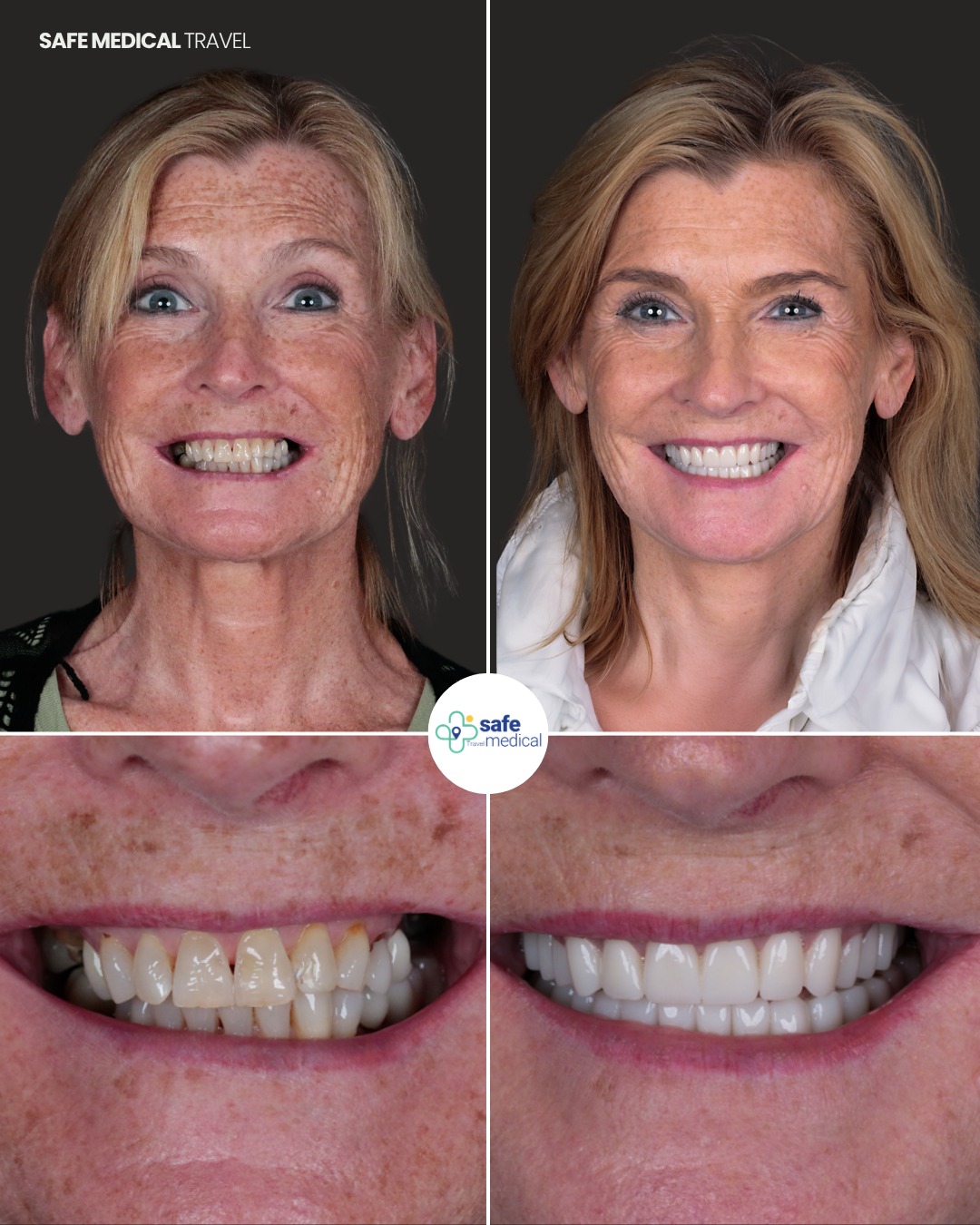
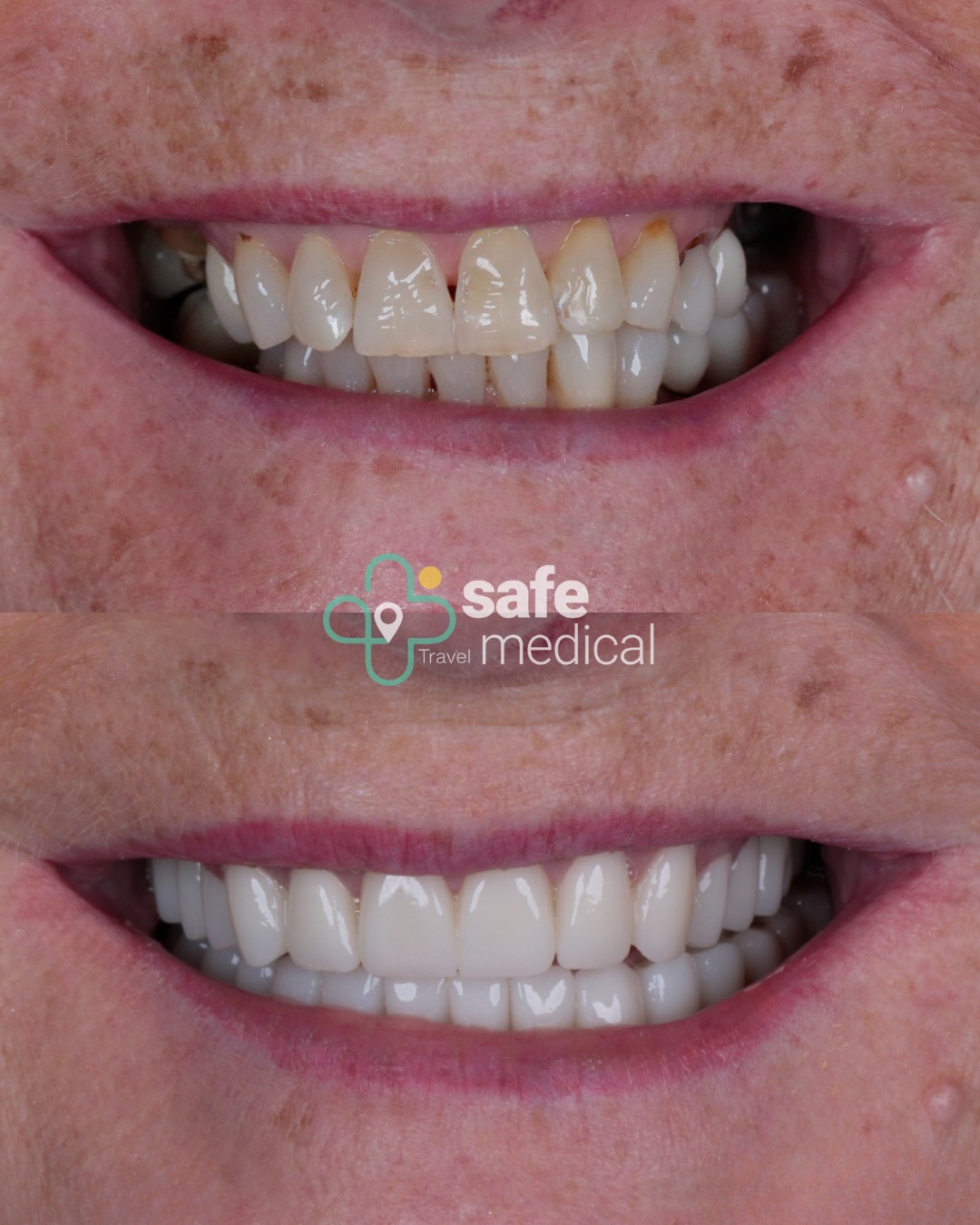

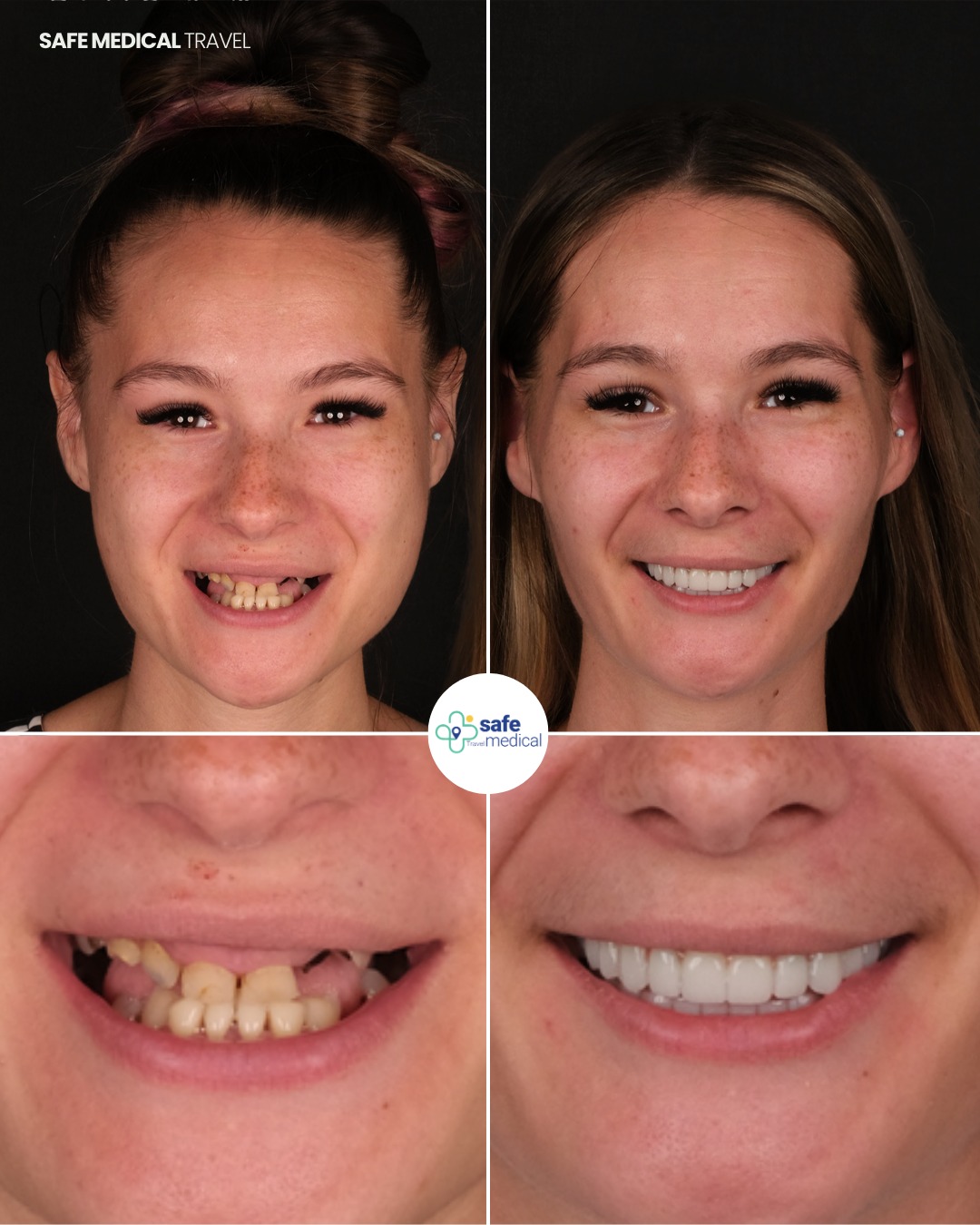
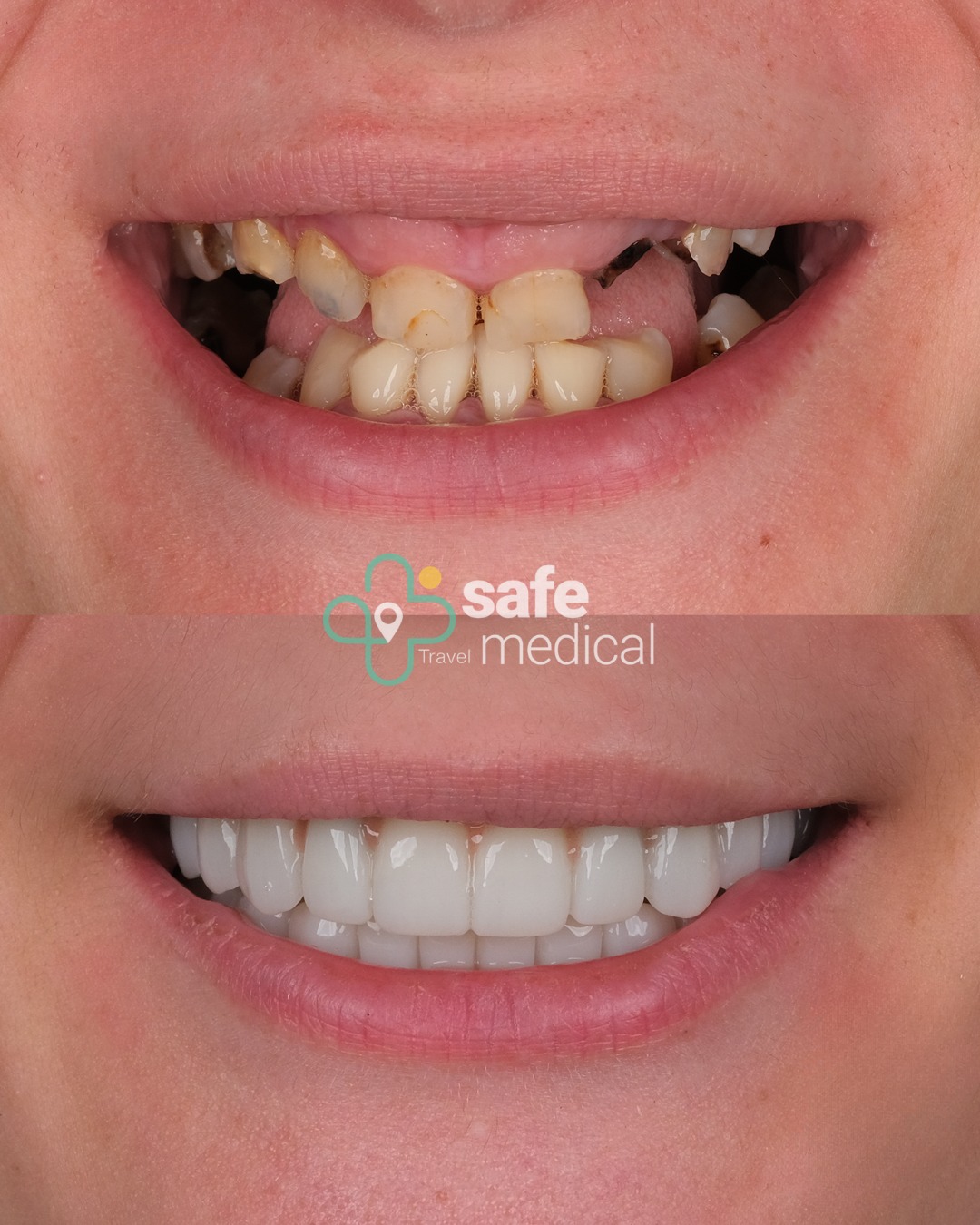

Our patient completed her All-on-6 implant treatment and is now enjoying a brand-new smile.
With six implants providing strong support, her new teeth look natural, feel comfortable, and bring back the confidence she was missing.
Throughout the process, Safe Medical Travel ensured everything was organized with care—from planning to follow-up—working closely with expert dentists to deliver a smooth and reliable treatment experience.
How many implants are required for a full arch?
The number of implants needed to restore a full dental arch (upper or lower jaw) depends on the treatment concept selected, the type of prosthesis, and the jaw structure.
Number of implants for fixed prosthesis
- All-on-6 concept: This technique is the placement of six strategically placed dental implants to support a complete dental arch. In particular, especially in areas of lower bone density, such as the upper jaw, the use of six implants offers additional stability and a more even distribution of chewing forces.
- All-on-4 concept: In this concept, the arch is supported by four implants (two straight in the anterior region and two inclined in the posterior region).
- More options: Planning for 7-10 implants in the upper jaw, especially to increase biomechanical safety in some patients.
Number of implants for removable dentures (overdentures)
- Minimum requirements: At least 2 implants are required in the lower jaw and at least 4 in the upper jaw to secure a removable denture.
- Fully implant-supported: In cases where the denture is entirely supported by implants (such as a screw-retained overdenture), typically between 4 and 6 implants are placed per arch.
Frequently Asked Questions
How long do All-on-6 implants last?
The titanium implants used in the All-on-6 system are permanent, and they are designed to last for decades once they have osseointegrated into the bone. With proper oral hygiene and regular dental check-ups, the implants themselves may last a lifetime. Clinical trials of full-mouth rehabilitation performed over periods of 8 to 15 years reveal remarkable success rates of 90% to 100% in the lower jaw and 79% to 97% in the upper jaw. However, the implants themselves are permanent, but the prostheses attached to the implants may have to be altered or replaced after 10 to 15 years due to natural wear and tear.
Which is better: All-on-4 or All-on-6 dental implants?
The choice between the two is mainly determined by the particular bone quality of the patient and the jaw being treated:
- The All-on-6 treatment is commonly proposed for the upper jaw (maxilla). The bone in the maxilla is usually less thick, with a thinner cortex, than the mandible. In the maxilla, comparative research reported a 100% survival rate for All-on-6 and an 85% survival rate for All-on-4. The additional two implants in the All-on-6 design allow for improved stability and load distribution and typically avoid the requirement for "cantilevers" (extensions of the bridge that are not supported), thus decreasing the risk of mechanical failure.
- Generally, all-on-4 is sufficient for the lower jaw (mandible). The mandible has denser bone; therefore, 4 implants can be used with great success rates (typically quoted near 99%). All-on-4 is often seen as a more affordable and less intrusive option when bone volume is insufficient, since it avoids the need for extensive grafting by employing slanted posterior implants.
Why are dental implants so affordable in Turkey?
Dental implants in Turkey are much cheaper due to the lower operational expenses, government backing for medical tourism, and the severe competition in the market. On top of lower labor expenses than in Western countries, clinics also enjoy cheaper rent and utility prices for competent dental technicians and personnel. The Turkish government actively promotes medical tourism with tax incentives and subsidized training programs, and the sheer volume of overseas patients allows clinics to negotiate better prices for premium implant brands.
Furthermore, the exchange rate (Turkish Lira – Euro/Dollar) makes costs much lower for foreign patients. However, cheaper prices do not mean lower quality. Many clinics use the same internationally certified implants (such as Straumann and Nobel Biocare) and advanced technology as clinics in the UK or Germany but offer package services (including transfers, hotel accommodation, and guarantees) to be competitive in a crowded market.
Is All-on-6 dental implants worth it?
- Improved quality of life: The therapy successfully resolves serious functional and aesthetic issues, substantially boosting a patient's self-image and social well-being.
- Restored Function: Patients enjoy significantly improved chewing ability, speech, and jaw function compared to conventional removable dentures.
- Bone preservation: Implants serve as prosthetic roots that stimulate the jawbone, preventing the bone resorption (shrinking) that usually follows tooth loss and helps retain natural face features.
- Long-term value: While the initial expenditures are greater than removable dentures, the All-on-6 is a long-lasting solution with a high success rate, making it an outstanding long-term cost-benefit ratio.